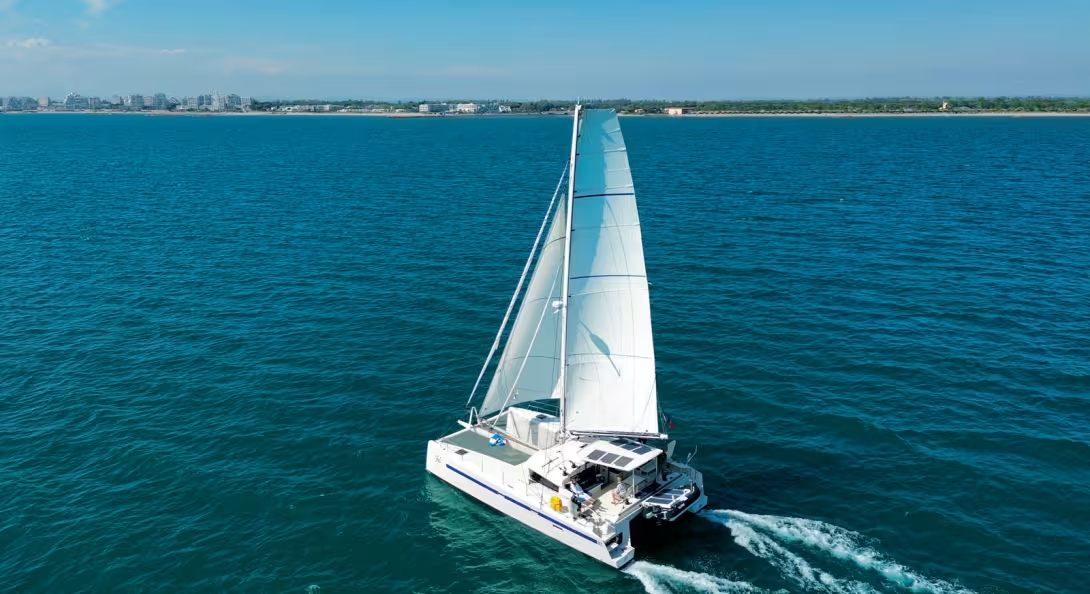
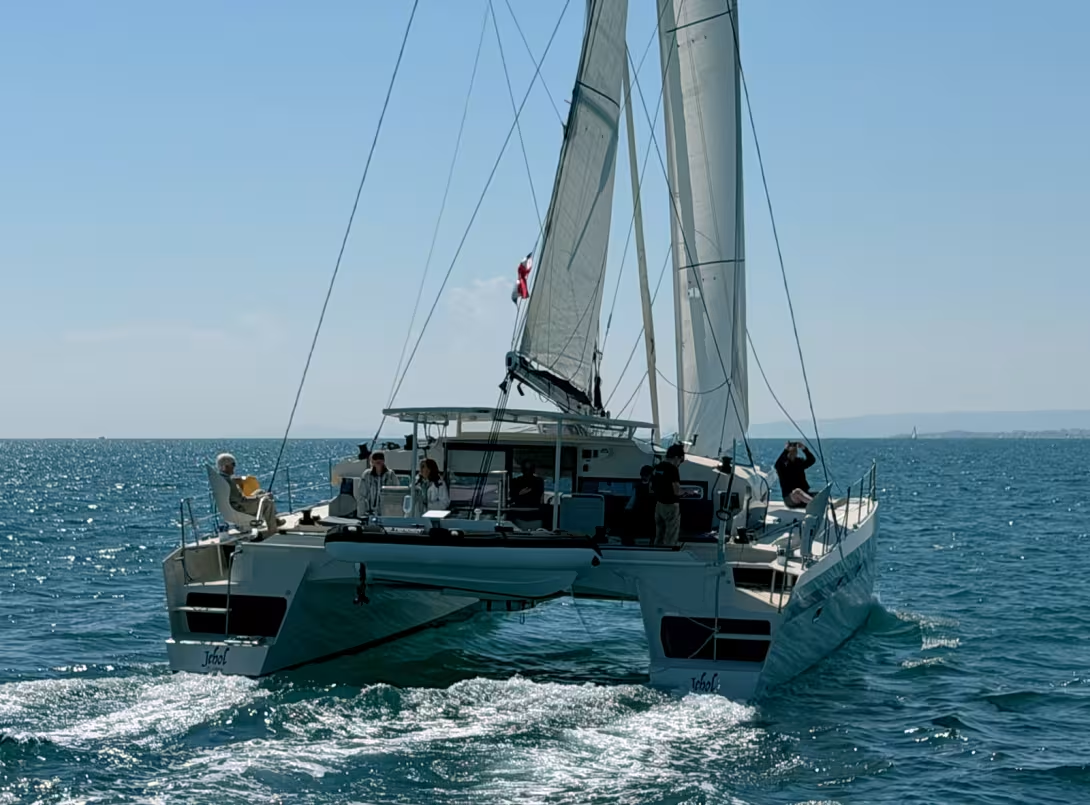
After sailing nearly 90% of a circumnavigation single-handed aboard his TS 52 Jehol, Philippe Nagelmackers wanted to continue his voyages on a more compact multihull that was easier to manage yet just as high-performing. Working with naval architects Christophe Barreau and Frédéric Neuman, as well as the Portuguese shipyard Trimarine, he created the TRM 43, an unconventional catamaran designed without any real commercial constraints, where every technical choice serves a specific purpose: to sail fast, for long periods, and short-handed.

Infos pratiques
- Le chantier : New 43’ Trimarine
- La fiche technique
-
 Découvrez notre vidéo exclusive
- Financez votre TRM 43
- Assuez votre TRM 43
- Articles autour du TRM 43
Conditions: 10 to 14 knots of wind, calm seas
A Project Born of Experience
The story of the TRM 43 is reminiscent of that of Moxie, the trimaran Dick Newick designed for Phil Weld for the 1980 OSTAR. At over 60 years of age, the American sailor wanted a boat capable of maintaining high performance while remaining manageable for solo sailing. He went on to win that race against a field of top-tier competitors.It is this same philosophy that drives Philippe Nagelmackers. After a three-year circumnavigation (nearly 90% of which he completed solo on a TS 52 renowned for its performance potential) he has gained a particularly keen understanding of the needs of a long-distance sailor. His return passage from South Africa to France, completed solo in 45 days at an average of nearly 190 miles per day, perfectly illustrates this experience.
During that voyage, he explains that he used only a fraction of his catamaran’s potential, consistently prioritizing safety, consistency, and ease of handling. This approach naturally led him to design a more compact successor, without sacrificing the seafaring qualities that had made Jehol such a success. The TRM 43 is therefore a small-series production yacht that places build quality and performance at the heart of its specifications. The result is reminiscent of the former TS 42 (now the ORC 42), drawn by the same architects.
A Particularly Ambitious Power-to-weight Ratio
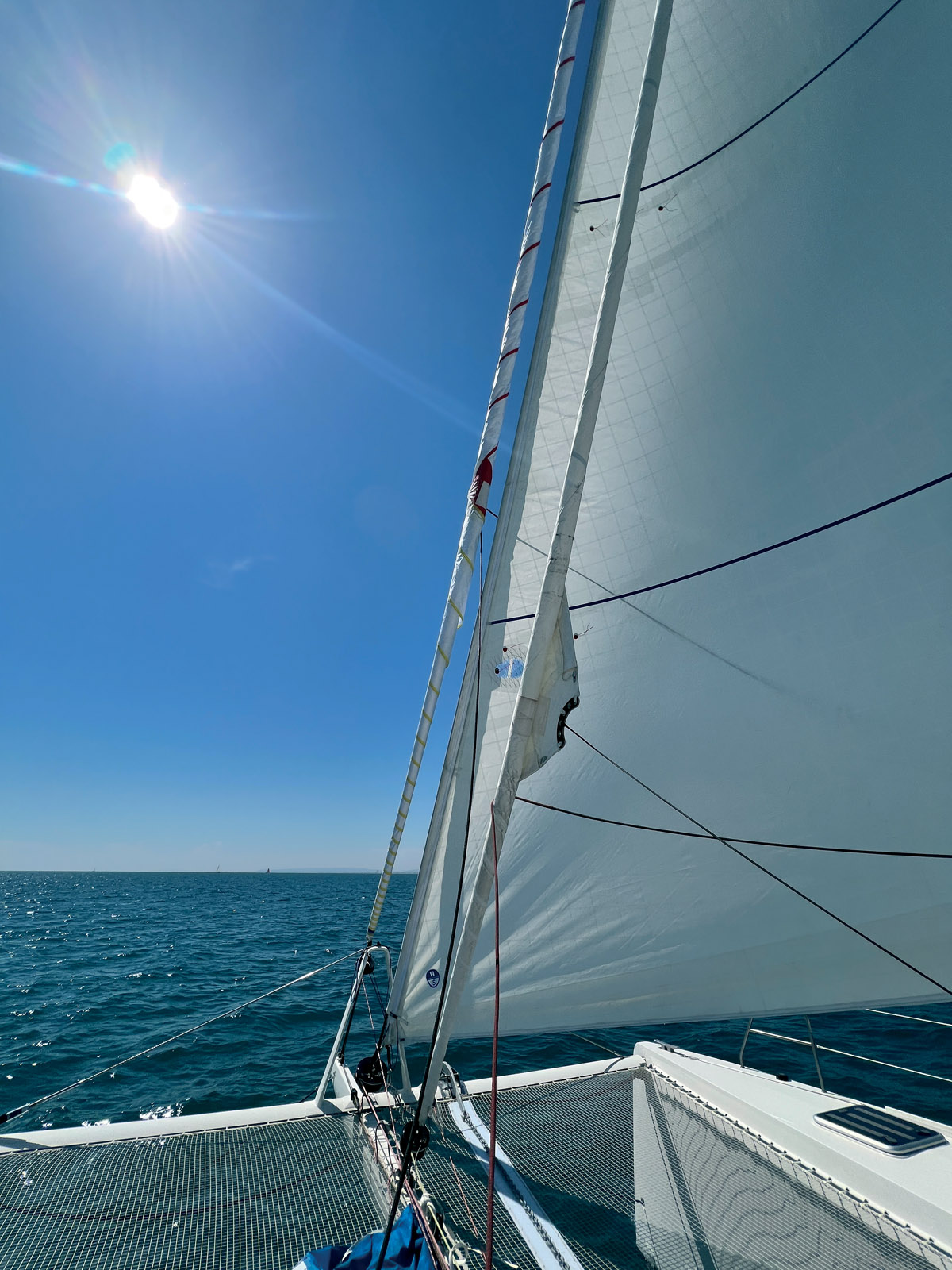
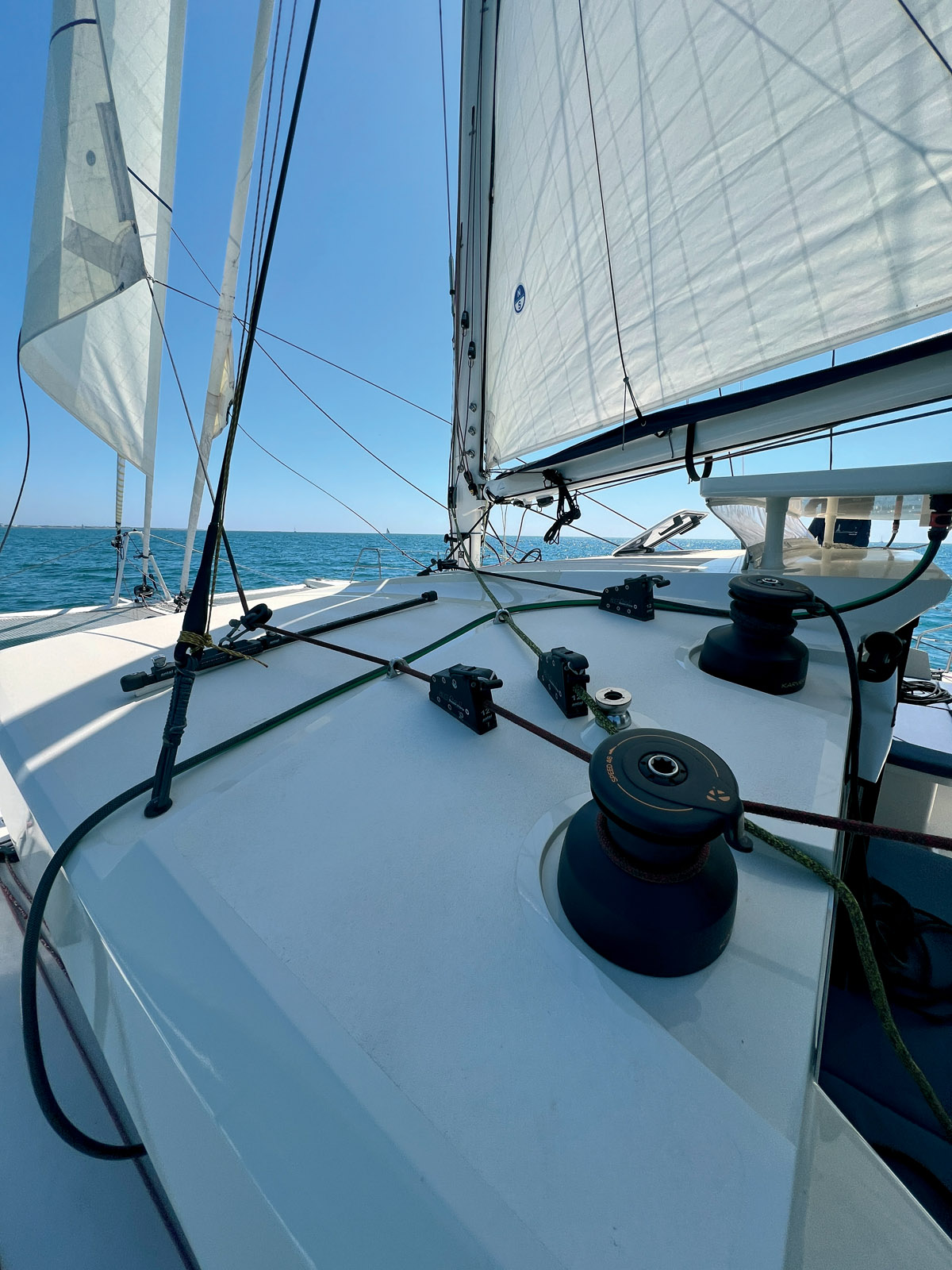
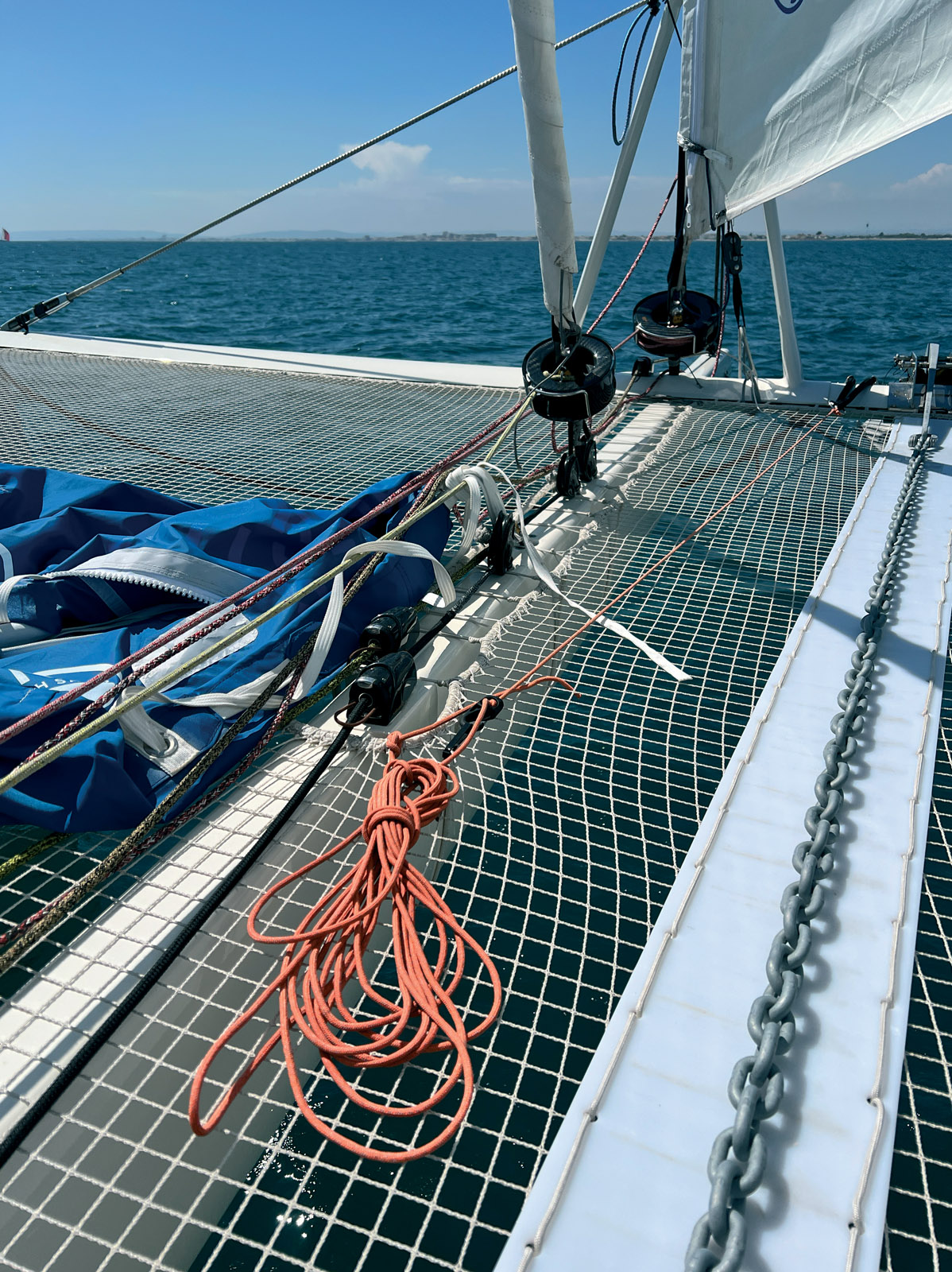
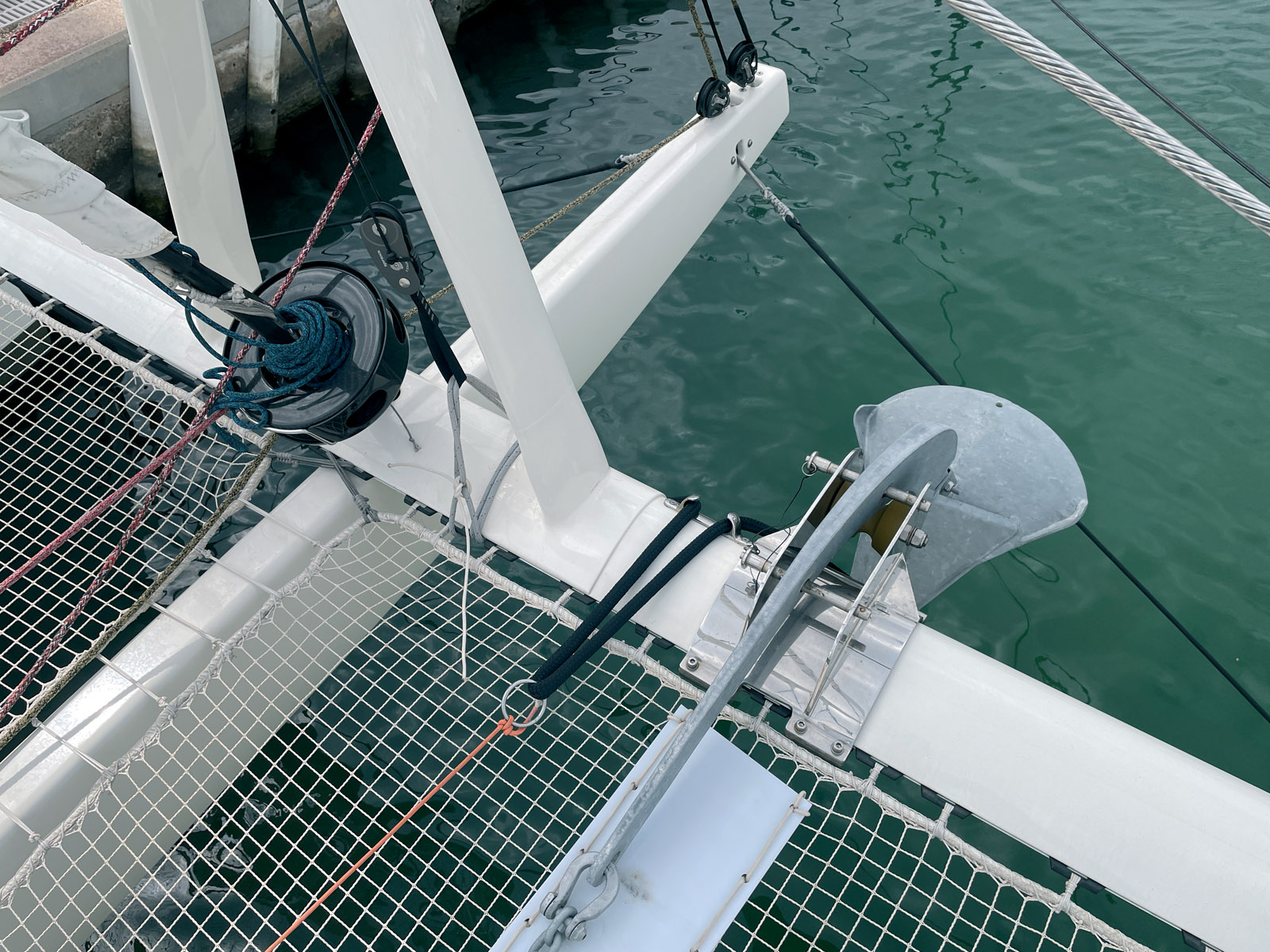
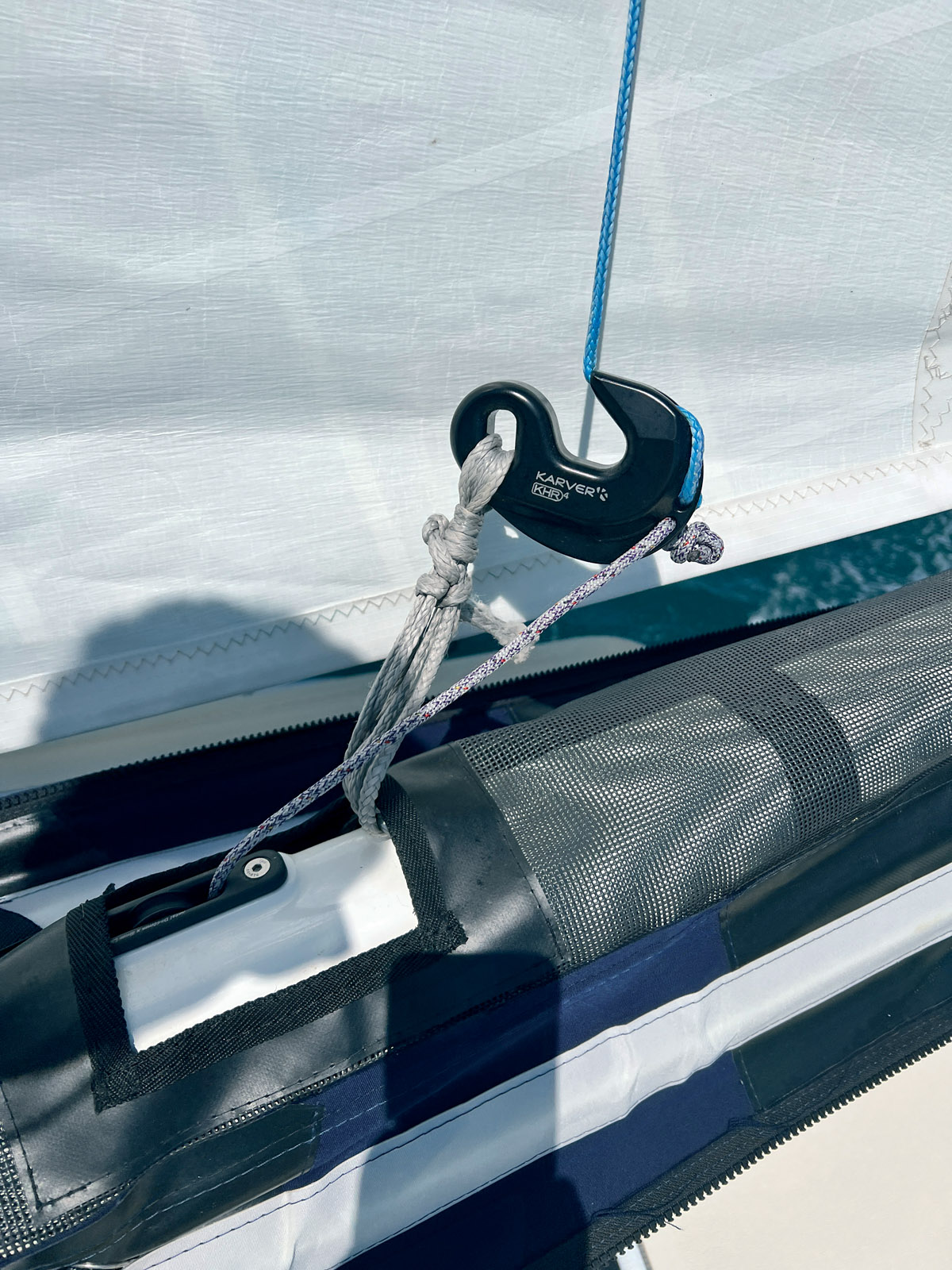
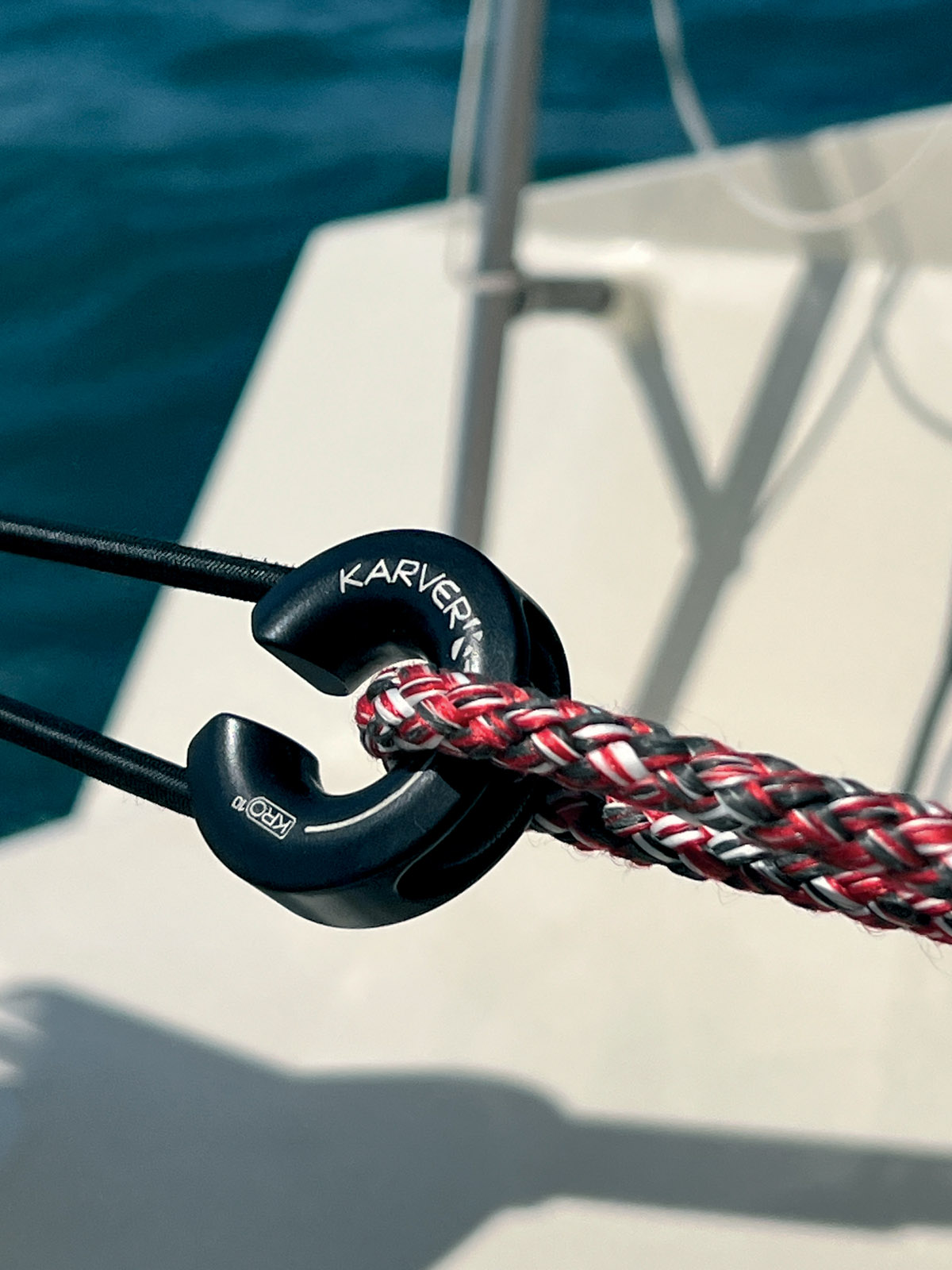
The TRM 43’s design philosophy is immediately apparent from its specifications. Its 54-foot (16.35-meter) carbon mast supports a 592-square-foot (55-square-meter) North Sails 3Di mainsail paired with a 457-sq-ft (42.5 m²) solent. When sailing close-hauled, the sail area reaches nearly 1,080 sq ft (100 m²) for just 14,350 lbs (6.5 tons) in cruising configuration. Under gennaker, that climbs to 1,850 sq ft (172 m²). These figures reflect a particularly favorable power-to-weight ratio of 15.38 m²/t. However, the TRM 43 was not designed to achieve spectacular top speeds - it prioritizes, above all, a high average speed over the long term. The sail plan follows this same logic. The gennaker on the bowsprit, solent, J2, and storm jib are all mounted on fiber halyards with hook systems and furlers. This solution, though more expensive than a conventional rig, allows only the sail best suited to the conditions to remain set, while limiting weight aloft. The construction, again, follows the same logic. Built using a glass/carbon/epoxy sandwich over a thermo- formed Corecell core created via infusion molding, it prioritizes both rigidity and durability. More than just a catamaran designed to be constantly pushed to its limits, the TRM 43 offers a comfortable margin of safety. The attention to detail in the appendages is also worth noting: JP3 self-aligning bearings, tapered titanium rudder shafts, and Isotop rudders reflect a constant pursuit of precision at the helm.
A Silhouette as Elegant as it is Efficient
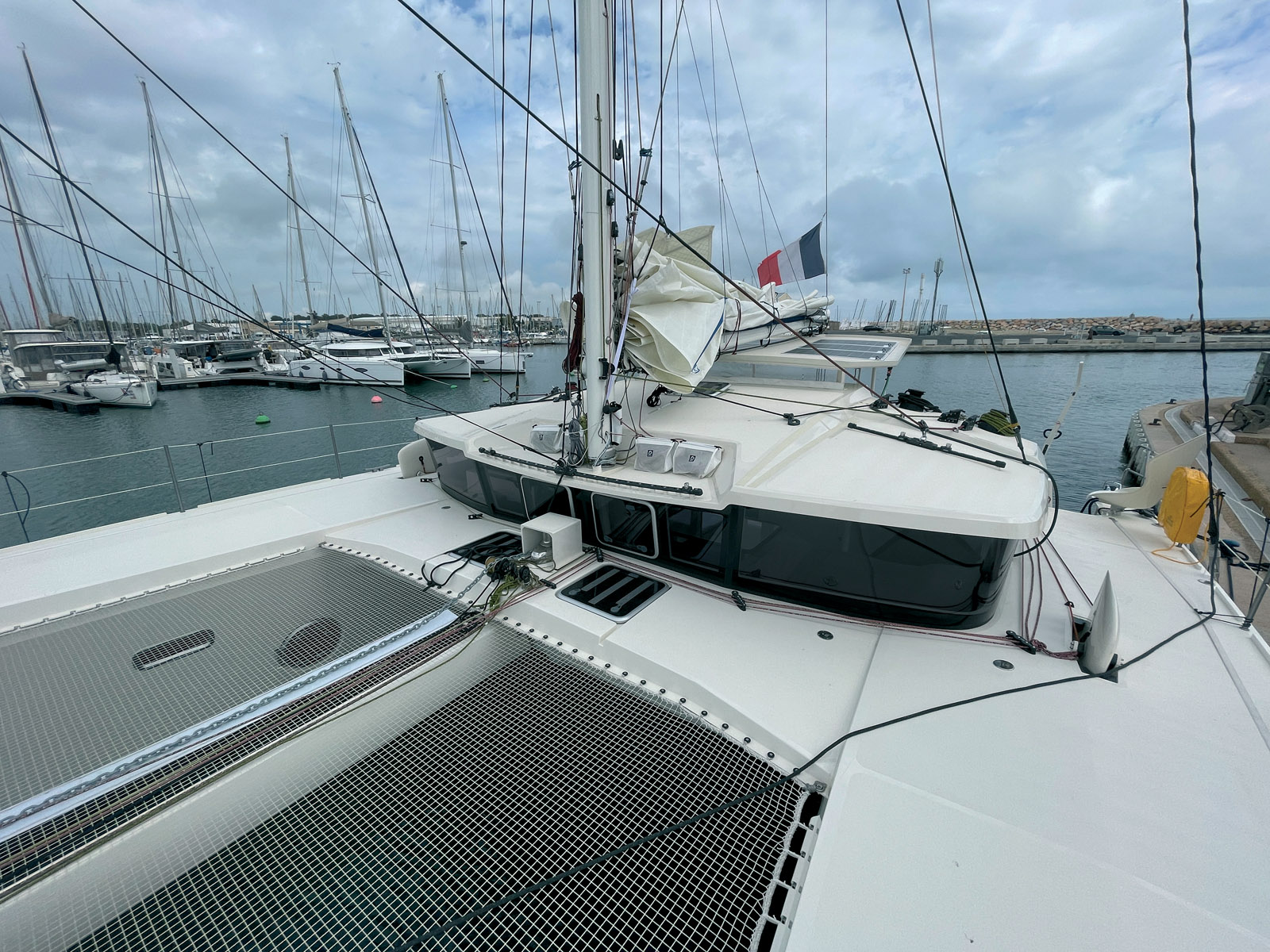
The design by Barreau-Neuman incorporates certain elements that have become characteristic of the two naval architects. The deliberately low and set-back coachroof ensures excellent visibility from both the cockpit and the saloon. The slightly inverted bows blend naturally into the hulls’ progressive contours, while the convex above- water sections help minimize spray. The deck features a slight camber accentuated by a central rib that facilitates water runoff while adding to the global stiffness of the structure. The overall design conveys a sense of restrained power, without resorting to unnecessary stylistic flourishes. The TRM 43 asserts its personality through the coherence of its lines rather than through barefaced aesthetics.
An Interior Designed First and Foremost for Sailing
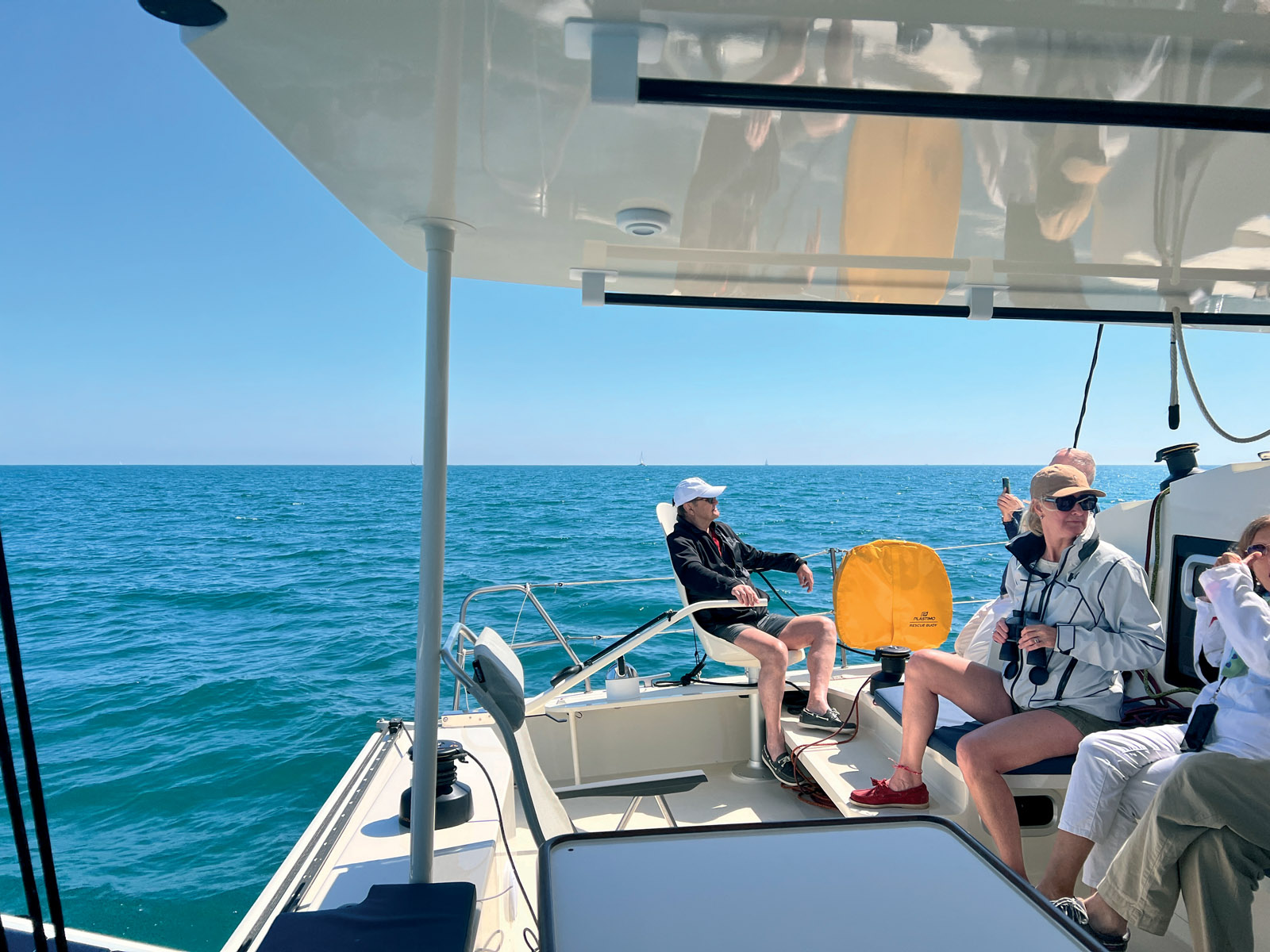
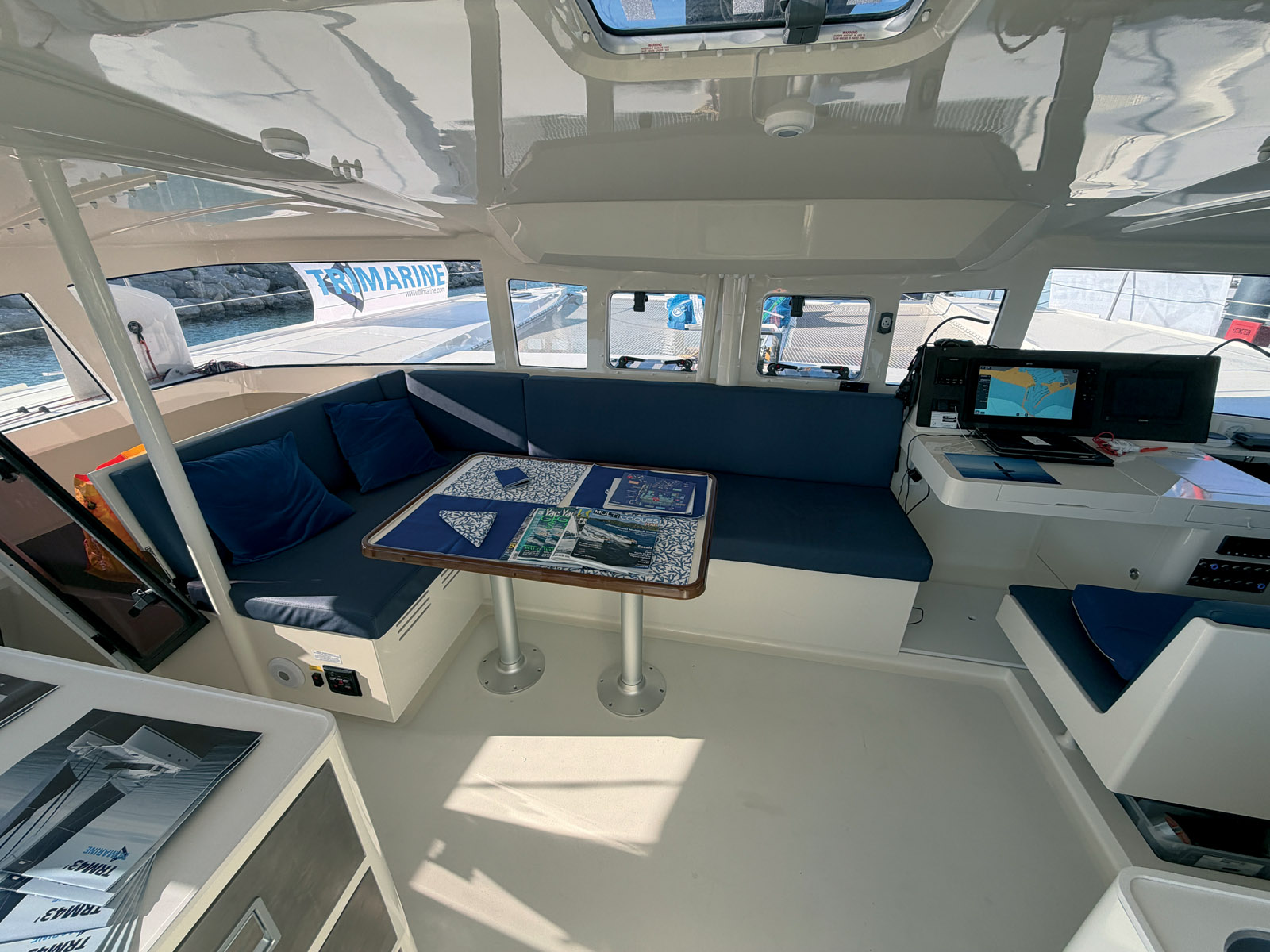
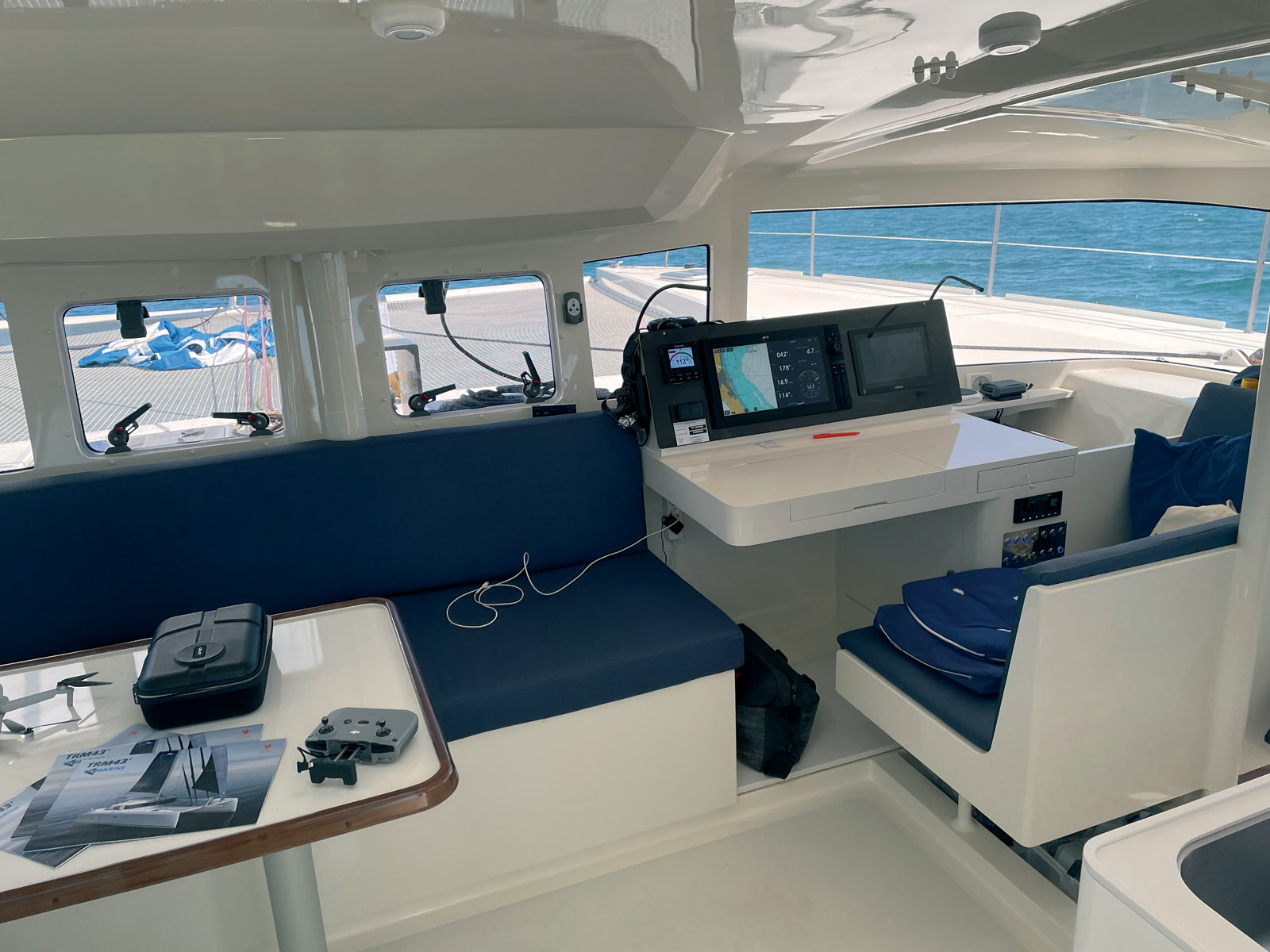
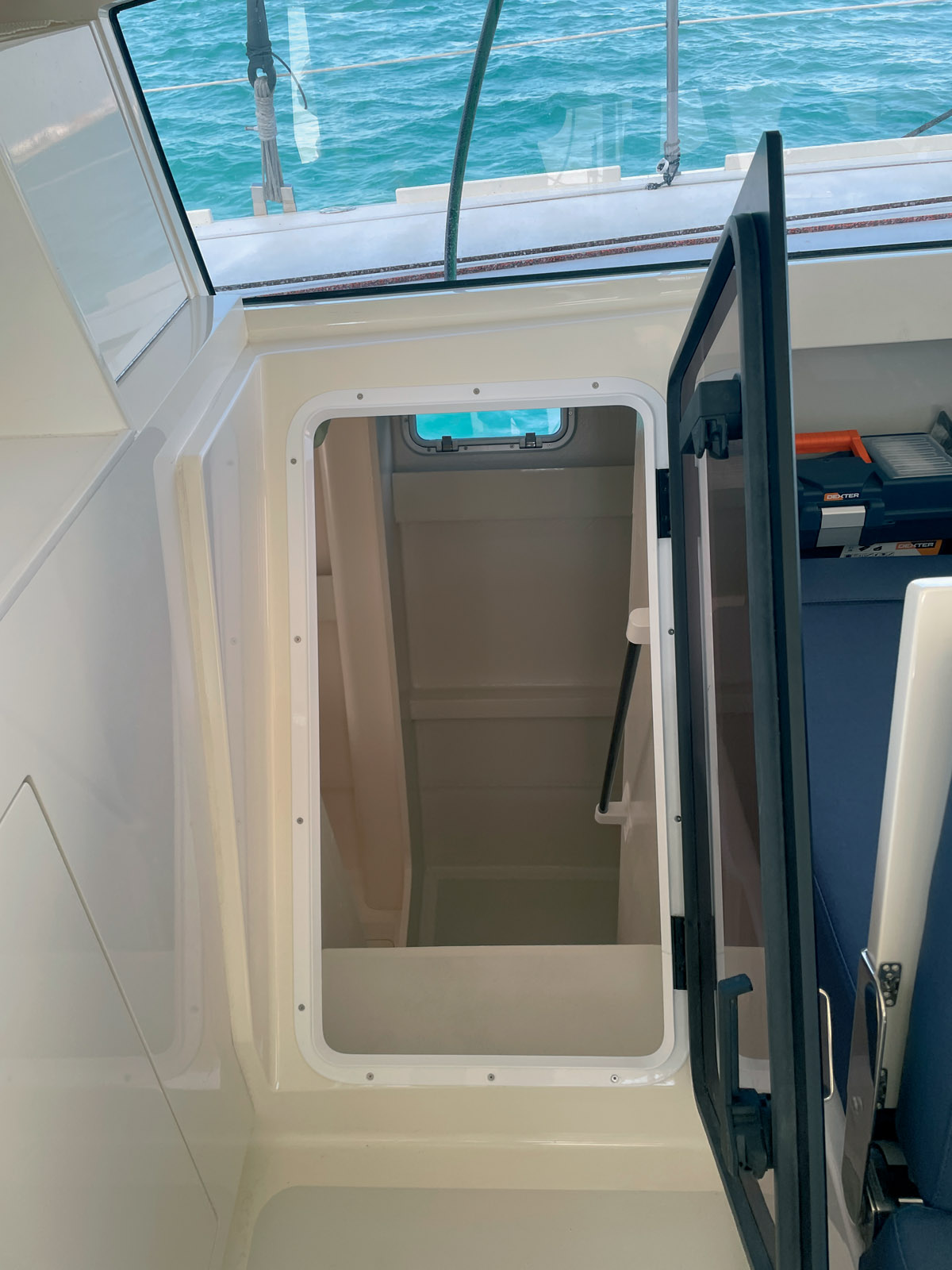
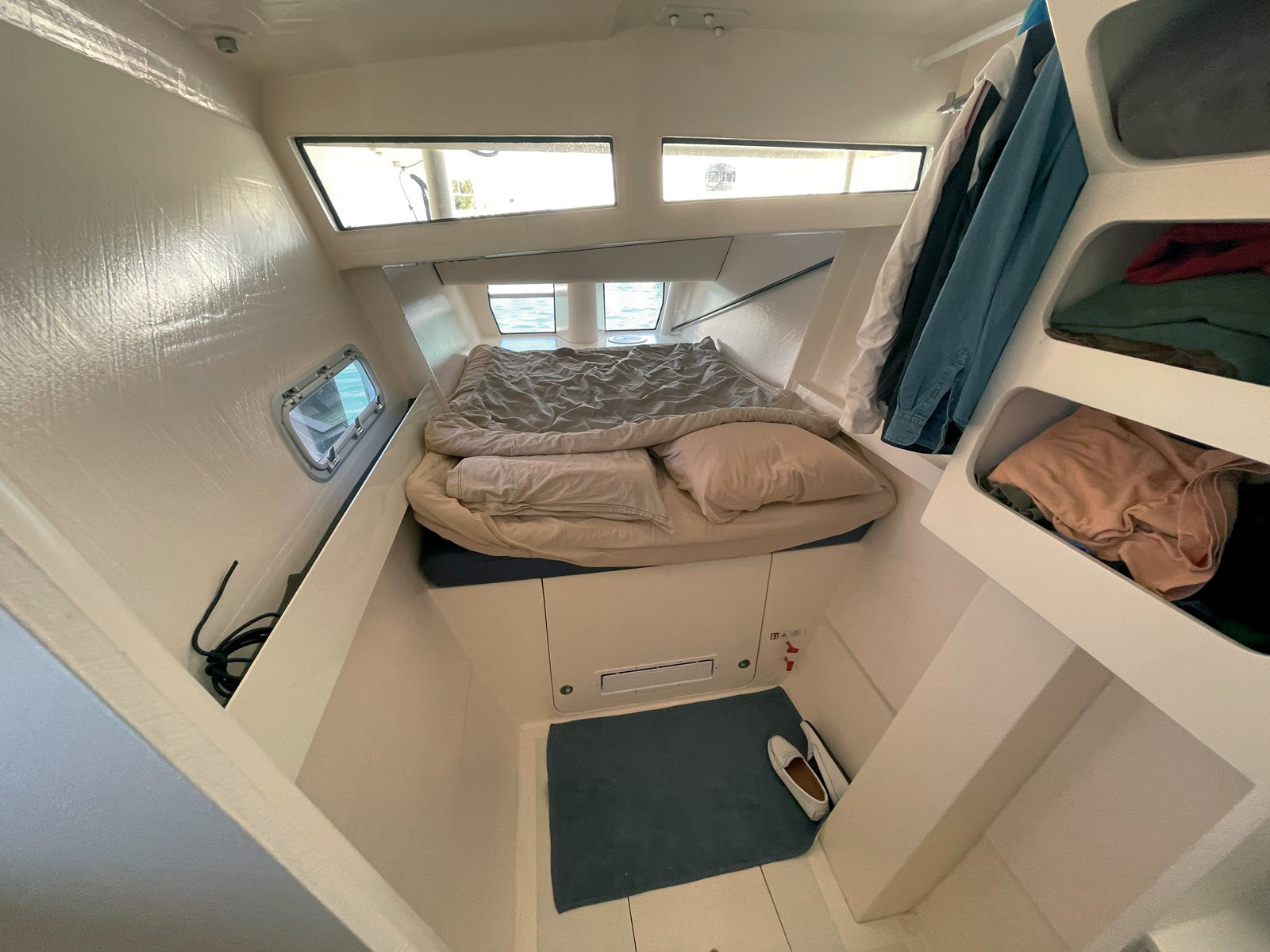
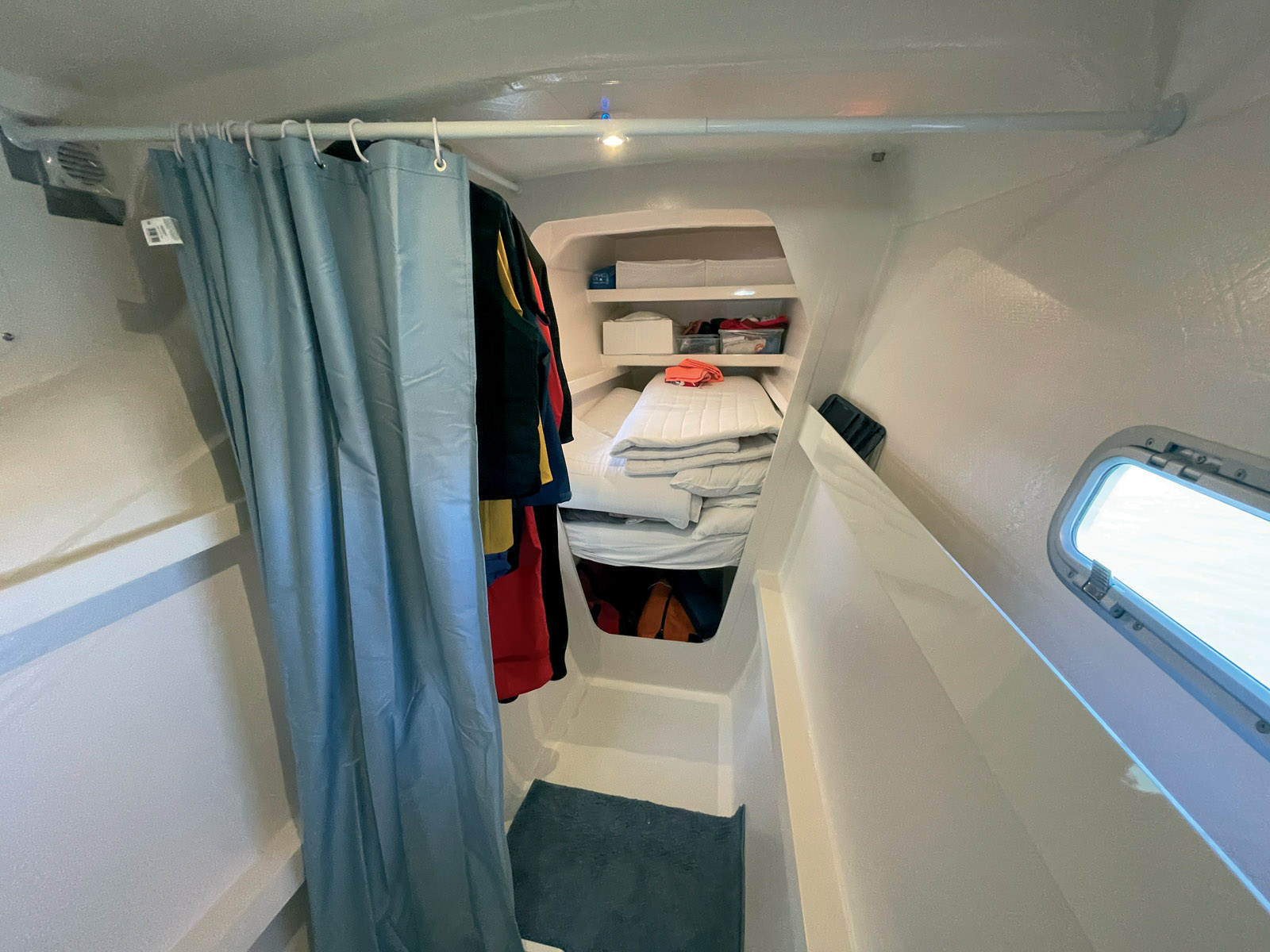
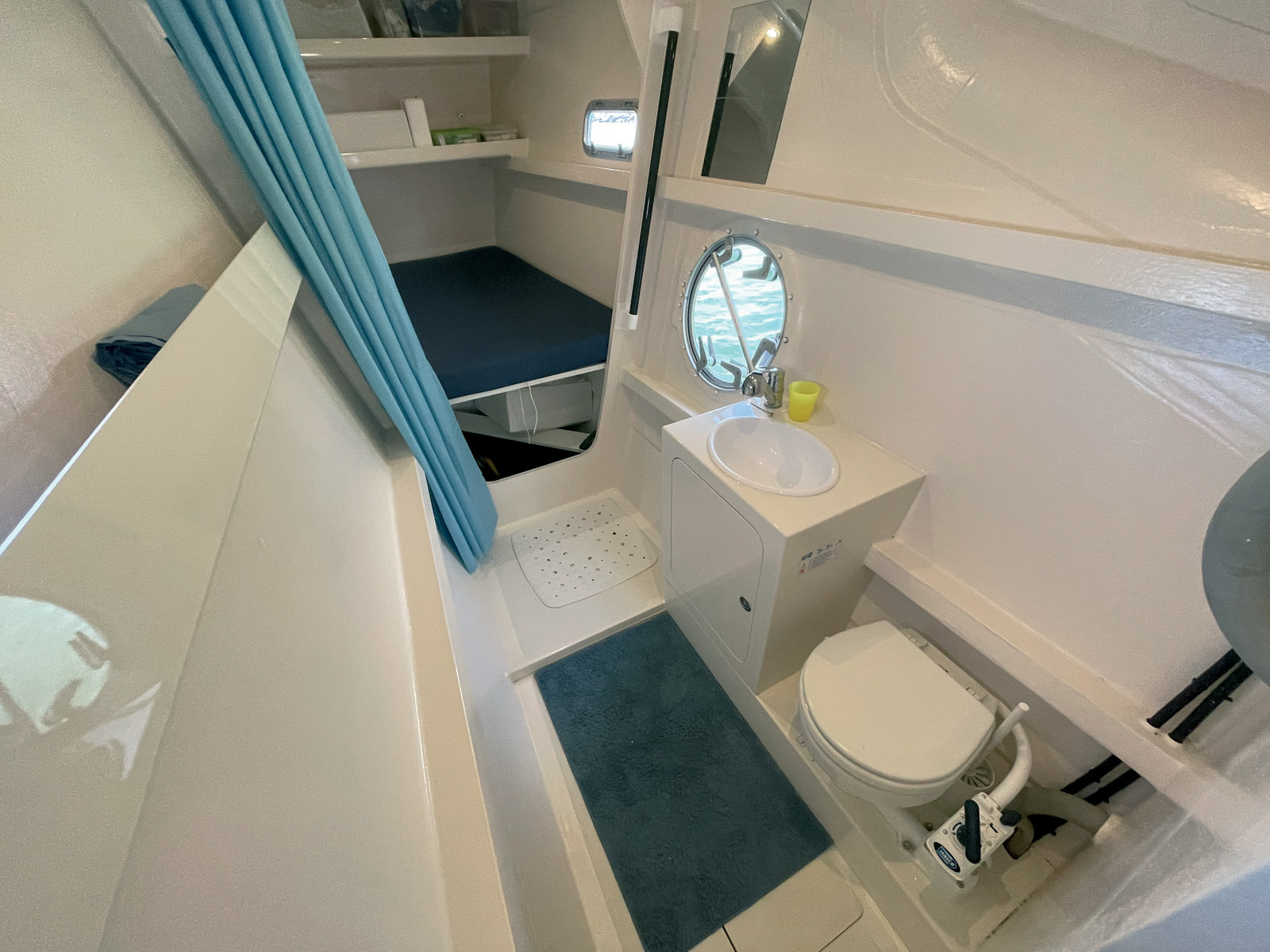
On board, the TRM 43 clearly prioritizes functionality over showmanship. The spacious and well-protected cockpit features a bimini top with deliberately modest dimensions that preserves excellent visibility of the rig while providing effective protection from the sun. The saloon is organized around the needs of sailing. On the port side, a comfortable lounger faces the chart table and instruments - an ideal spot for keeping watch without leaving the interior. The galley and dinette, designed for four to six people, offer a beautiful view of the wake. The skipper’s berth, located at the foot of the portside companionway and facing forward, is undoubtedly one of the catamaran’s most original design features. It allows the skipper to rest while maintaining constant awareness of the catamaran’s progress - a significant advantage during long solo passages, where going down into the hulls often means losing all sense of what’s happening outside. For safety, the companionways can be closed off with watertight doors. On the other hand, their low height means you have to be careful to avoid bumping your head... The four double cabins (two aft and two forward) also prioritize space and natural light. The choice of curtains rather than solid partitions contributes to this sense of spaciousness while providing the necessary privacy on board. The heads are distributed among a spacious, particularly bright bathroom on the port side, a second bathroom on the starboard side, and a large separate shower, which is convenient for rinsing off your oilskins. The absence of headlining and built-in furniture may seem surprising at first glance, but it highlights the quality of the sandwich panels and contributes to the overall impression of lightness. The result is understated, modern, and perfectly in line with the philosophy of this multihull.
Maneuvers Designed for a Short-handed Crew
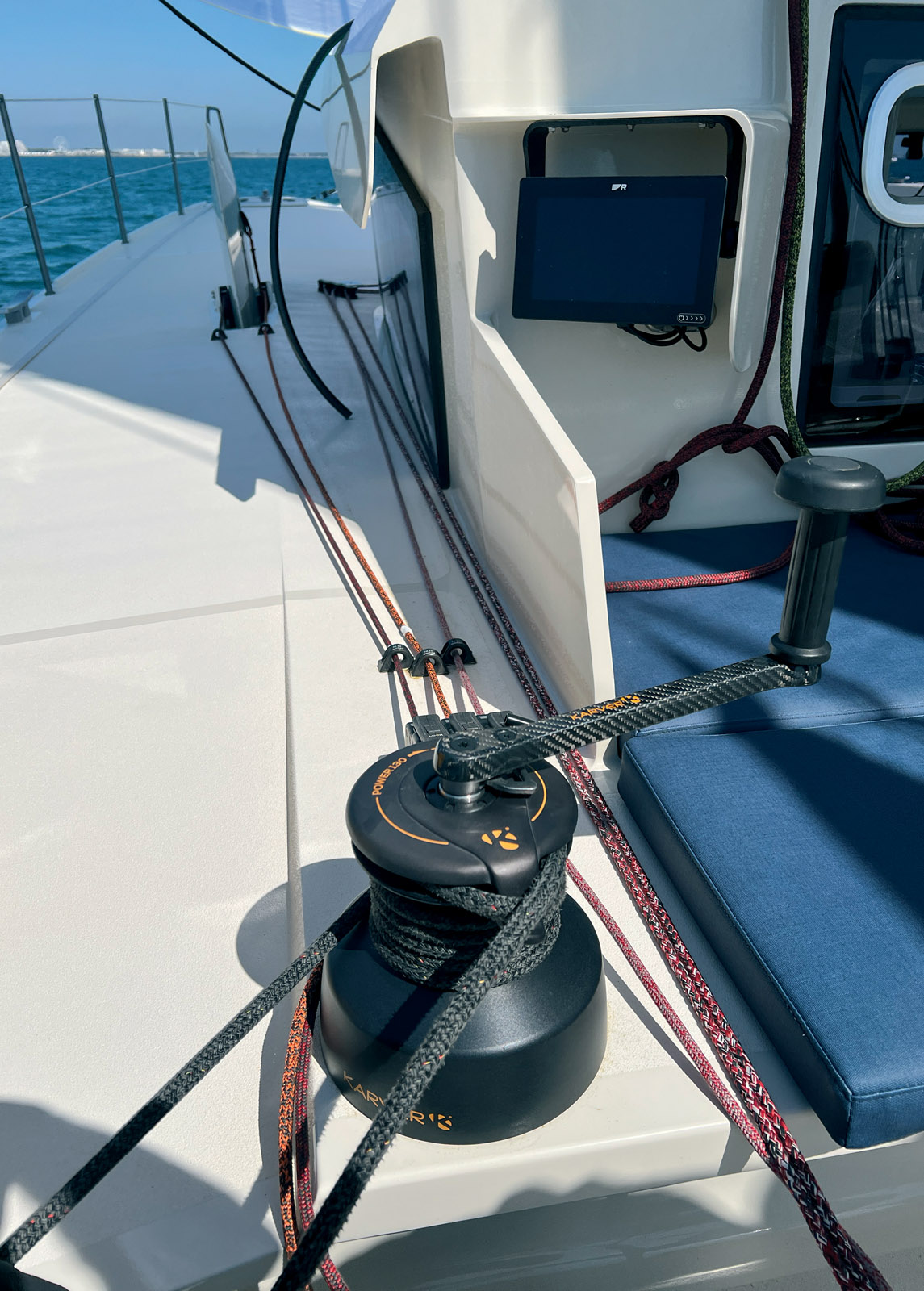
You could be forgiven for seeing the deck plan as somewhat daunting at first glance. The deck hardware is particularly extensive, and the various headsails each have their own specific configuration. Yet behind this apparent complexity lies a simple logic: prioritizing the right sail at the right time rather than making frequent sail changes while under way. The skipper prepares the sail plan based on expected conditions and keeps only the sails that are actually needed in place. Tacking requires a bit more preparation than on a standard production catamaran: the solent, in particular, must be furled before each maneuver. But this inconvenience is more than offset by the overall ease of use once the optimal sail plan is established. The electric winch installed on the mast facilitates even the most demanding maneuvers. A second electric winch in the cockpit might appeal to some owners, but the boat’s modular design allows everyone to tailor their equipment to their sailing projects.
At Sea: A Perfectly Refined System
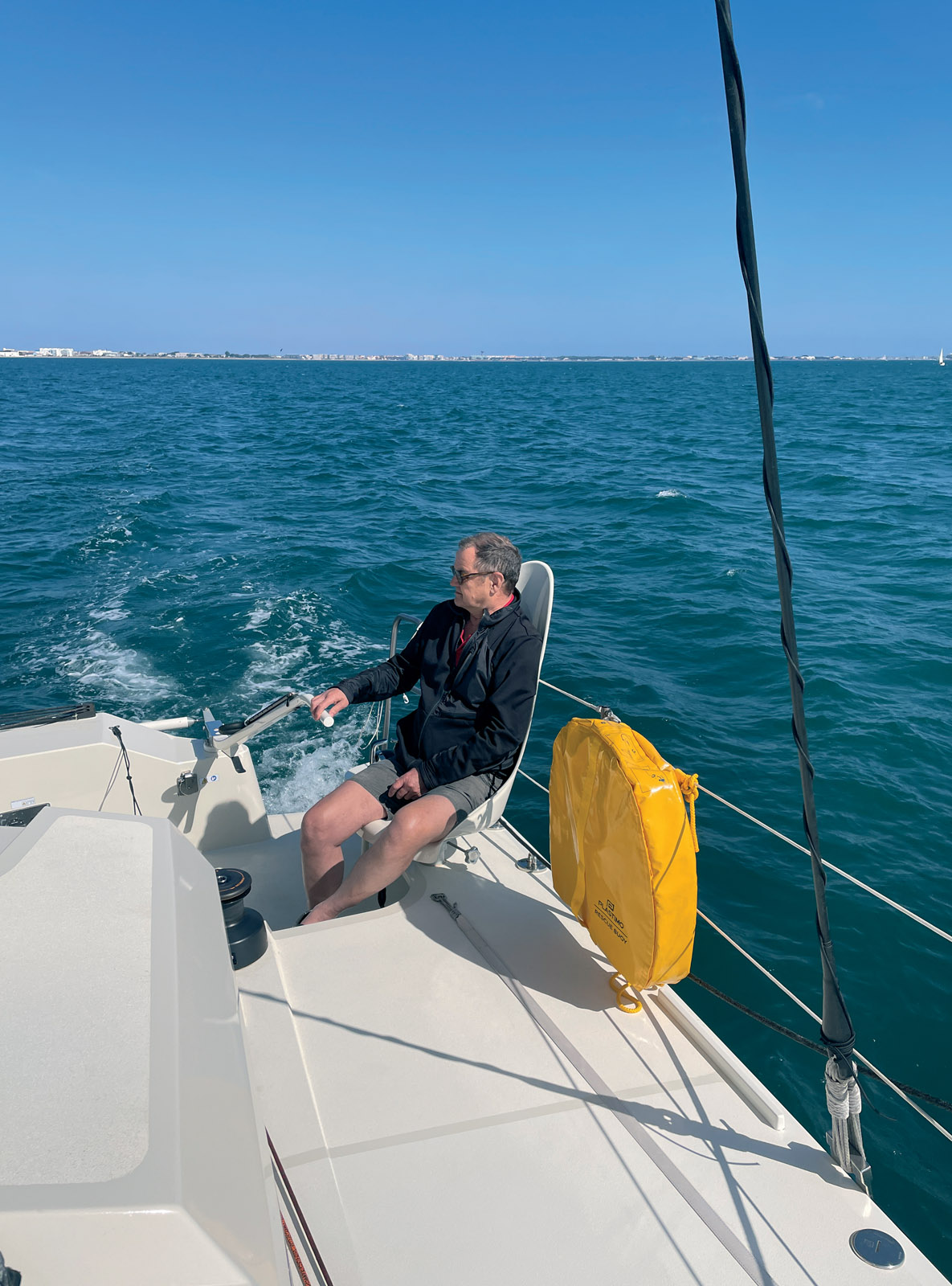
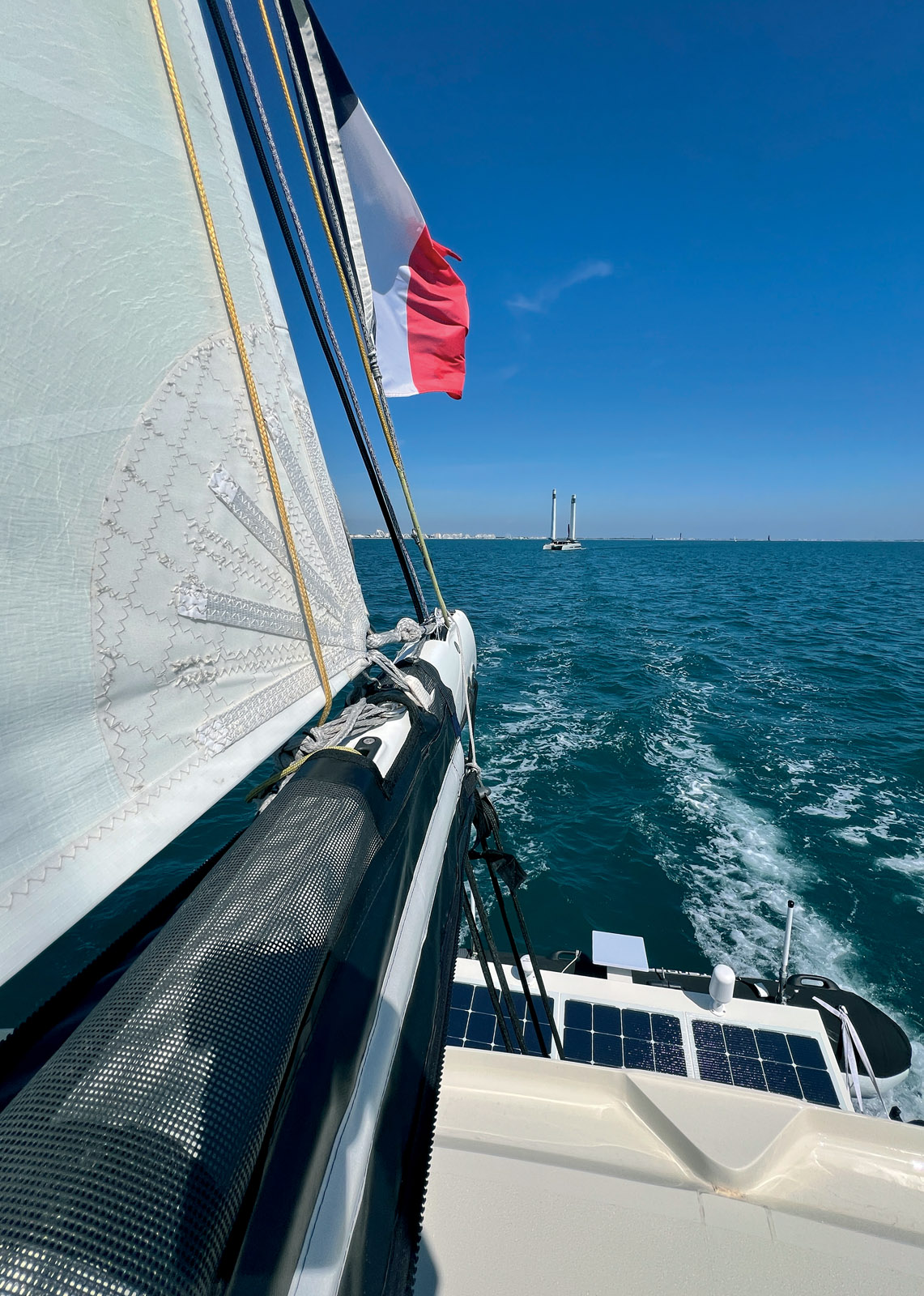
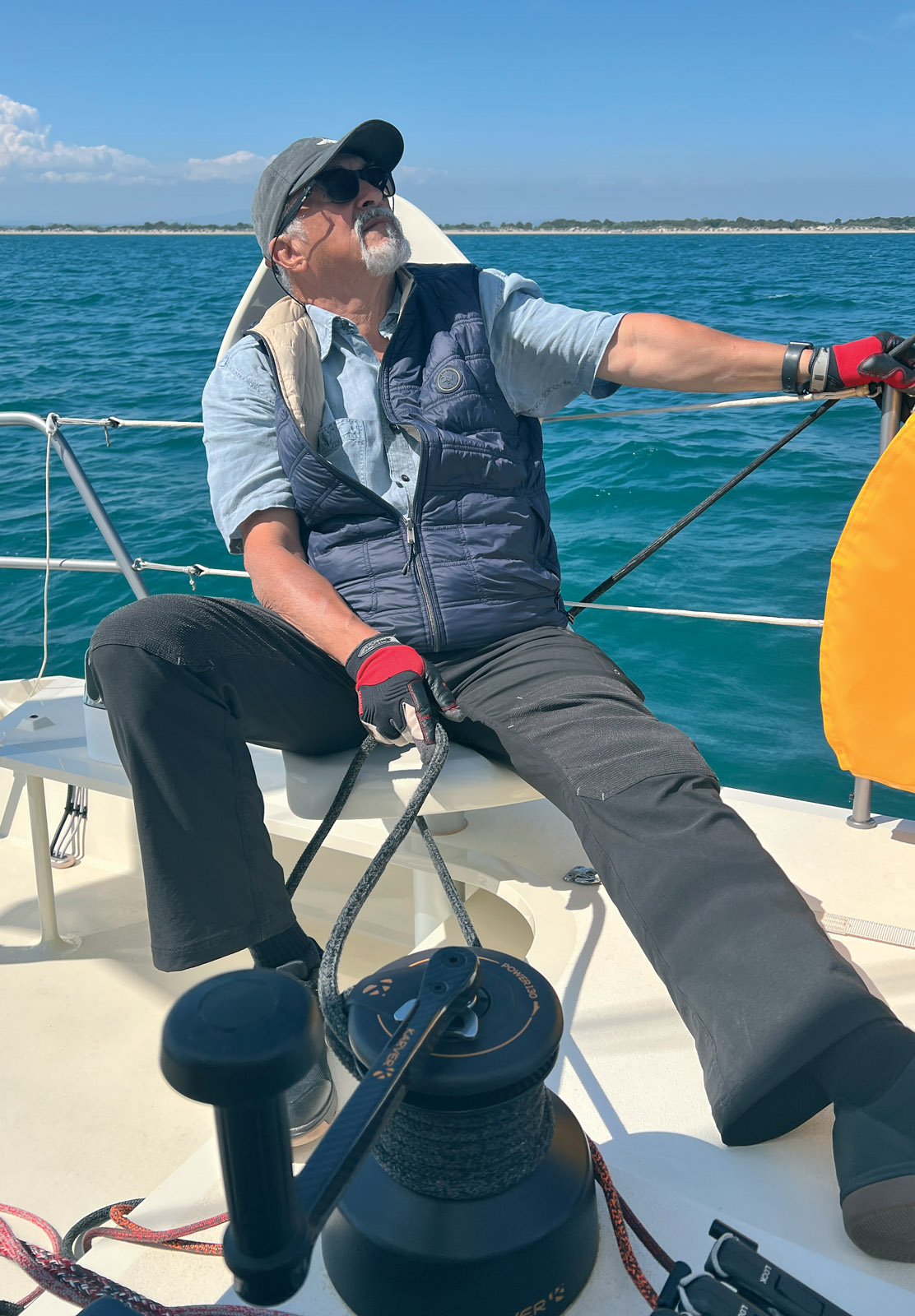
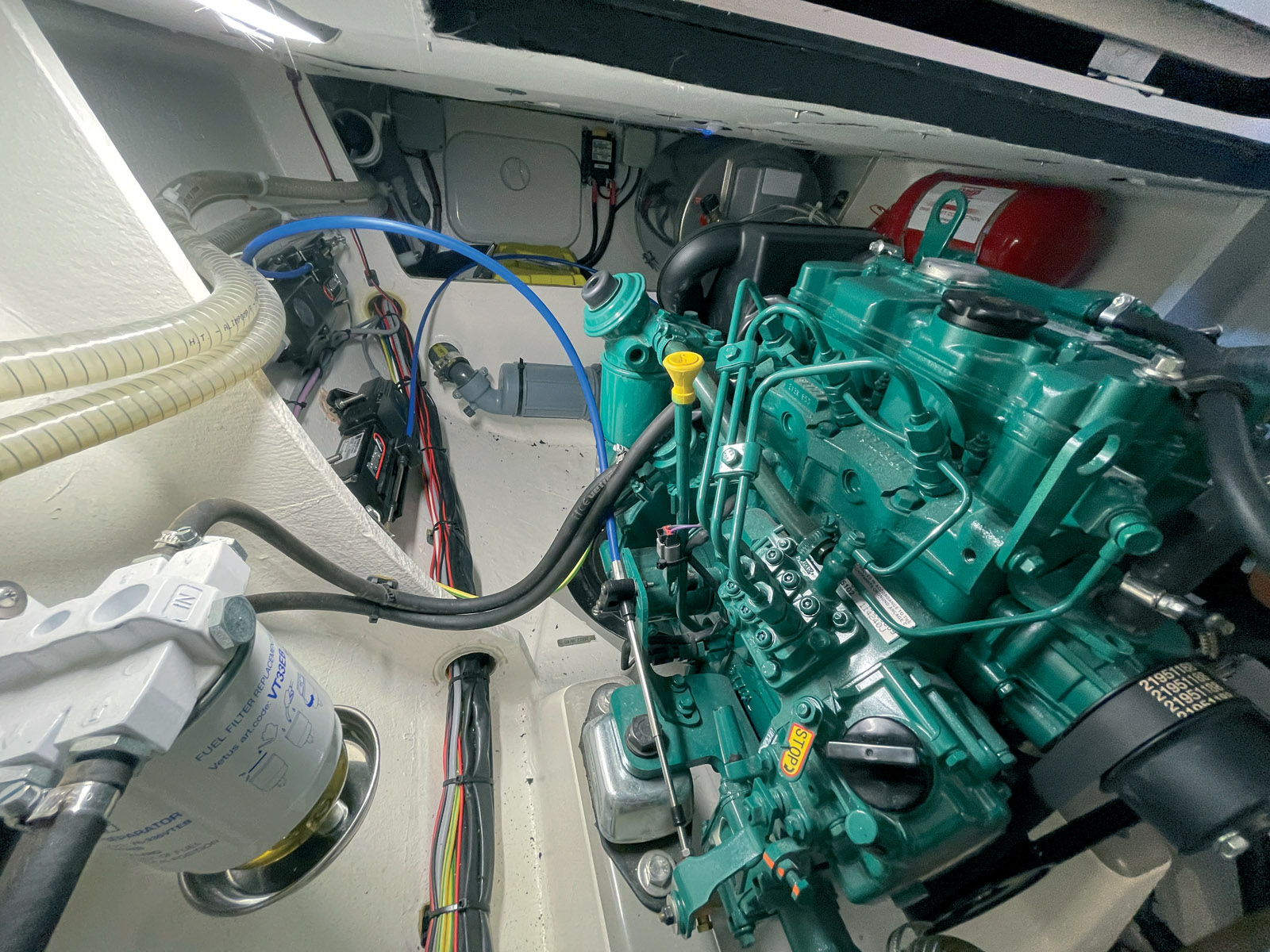
The twin 30-HP Volvo Pentas with saildrive transmission are particularly quiet and ensure precise maneuvering in ports and marinas. Their power is more than sufficient given the catamaran’s displacement. Once the mainsail is hoisted and the solent set, the TRM 43 immediately reveals its character. Seated in the swivel helm chair developed by Trimarine, the skipper enjoys a particularly natural position. The tiller is directly connected to the two rudders via a simple adjustable link and it instantly transmits the hulls’ responses. As soon as we get going, in winds of about ten knots, the catamaran accelerates effortlessly. On the log, the speed climbs steadily while the helm remains surprisingly light. Above all, feedback is remarkably precise: no unwanted vibrations, excellent directional stability, and a perfect sense of the boat’s contact with the water allow for very precise handling. With only one centerboard lowered to minimize the wetted surface area, the balance remains impeccable. The wake is clean, the responses are progressive, and the catamaran immediately inspires confidence. Gybing presents no particular difficulty. During our test sail, we simply rolled up the solent during the turn before hoisting the gennaker. Thanks to particularly well-designed deck hardware, this type of configuration change is quick to execute. The boat picks up speed immediately, and the TRM 43 easily maintains a speed of around 9 knots in 11- to 12-knot winds, with peaks of 9.3 knots when the breeze picks up slightly. More than the numbers, it is ultimately the quality of the sailing experience that makes the biggest impression. The catamaran seems to glide through the water naturally, with no apparent effort, giving a constant sense of having a significant reserve of power. This character is more reminiscent of certain high-end blue water multihulls than of current mass-produced models.
Conclusion
The TRM 43 is not a catamaran intended to appeal to the masses. Designed from the experience of a sailor who has crossed the oceans solo, it prioritizes, above all, seakeeping qualities, ease of use when short-handed, and efficiency under sail. Built without any real commercial compromises, it stands out for its top-tier composite construction, a particularly well-engineered rig, and a helm station that delivers sensations rarely found on a cruising multihull. Its architecture prioritizes visibility, ergonomics, and comfort under way as opposed to maximizing living space. Demanding in its design yet remarkably cohesive, the TRM 43 will appeal notably to experienced owners seeking a multihull capable of serious passage-making, whether solo or with a small crew.
A Word from the Architect
A Word from the Owner
A Word from the Builder
Very favorable power-to-weight ratio
Design perfectly suited for single- or two-handed sailing
High-end equipment that extends the budget
Lack of headroom in the companionways
Technical Specifications
Architects: Barreau/Neuman
Construction: glass/carbon/epoxy sandwich on a Corecell core, infusion
Length overall: 42’10” (13.05 m)
Waterline length: 42’9” (13.04 m)
Beam: 26’2” (7.98 m)
Draft: 3’3”/8’2” (1/2.5 m)
Bridgedeck clearance: 2’9” (0.85 m)
Light displacement: 12,345 lbs (5.6 t)
Fully laden displacement: 16,000 lbs (7.26 t)
Mast length: 53’8” (16.35 m)
Air draft: 61’6” (18.75 m)
Mainsail: 577 sq ft (53.6 m²)
Solent: 437 sq ft (40.6 m²)
J2: 212 sq ft (19.7 m²)
Storm jib: 83 sq ft (7.7 m²)
Gennaker: 1,292 sq ft (120 m²)
Powertrain: 2 x 30 HP Volvo Penta with saildrives
Berths: 6 to 8
CE Category: A
www.trimarine-composites.com