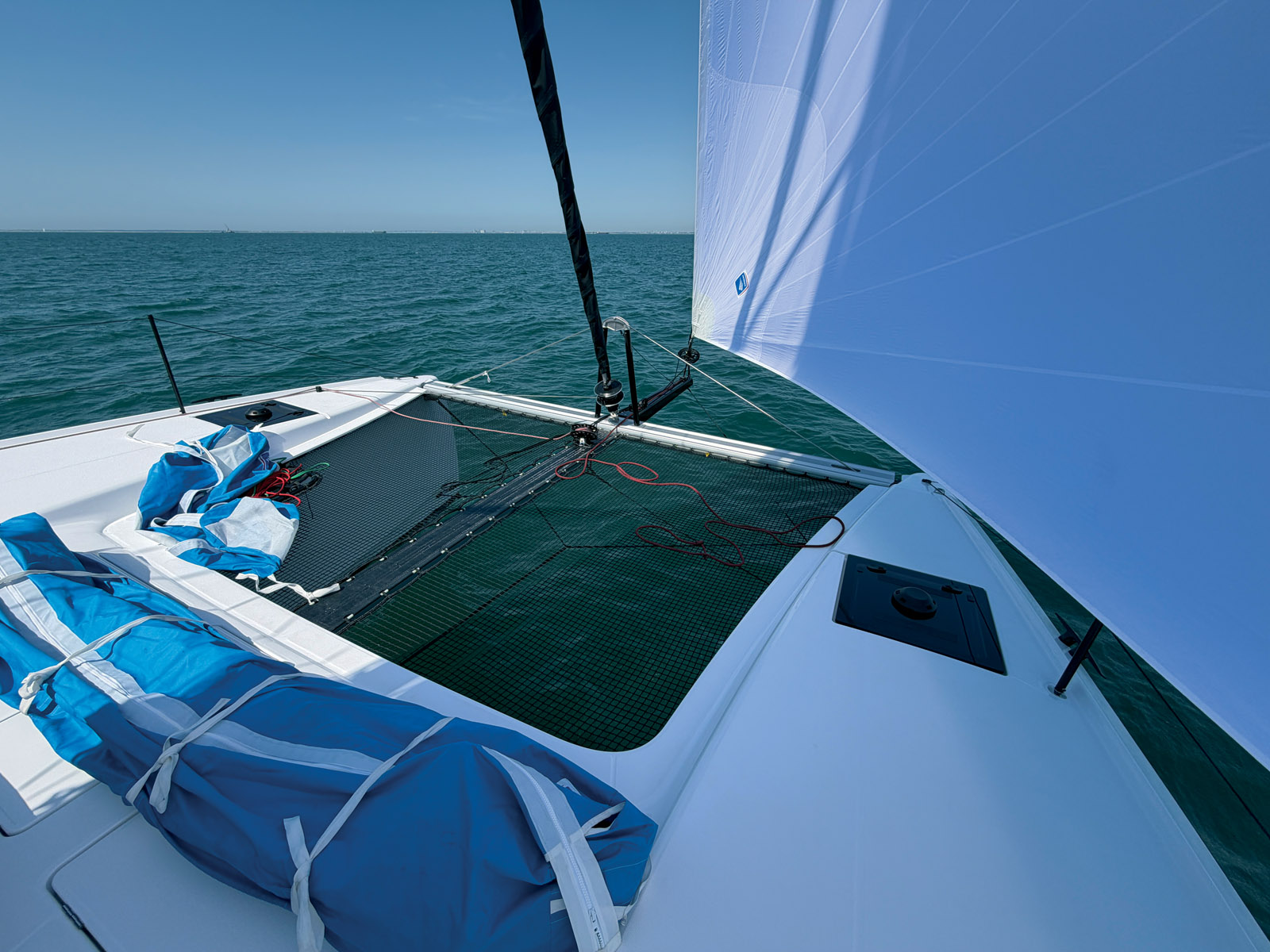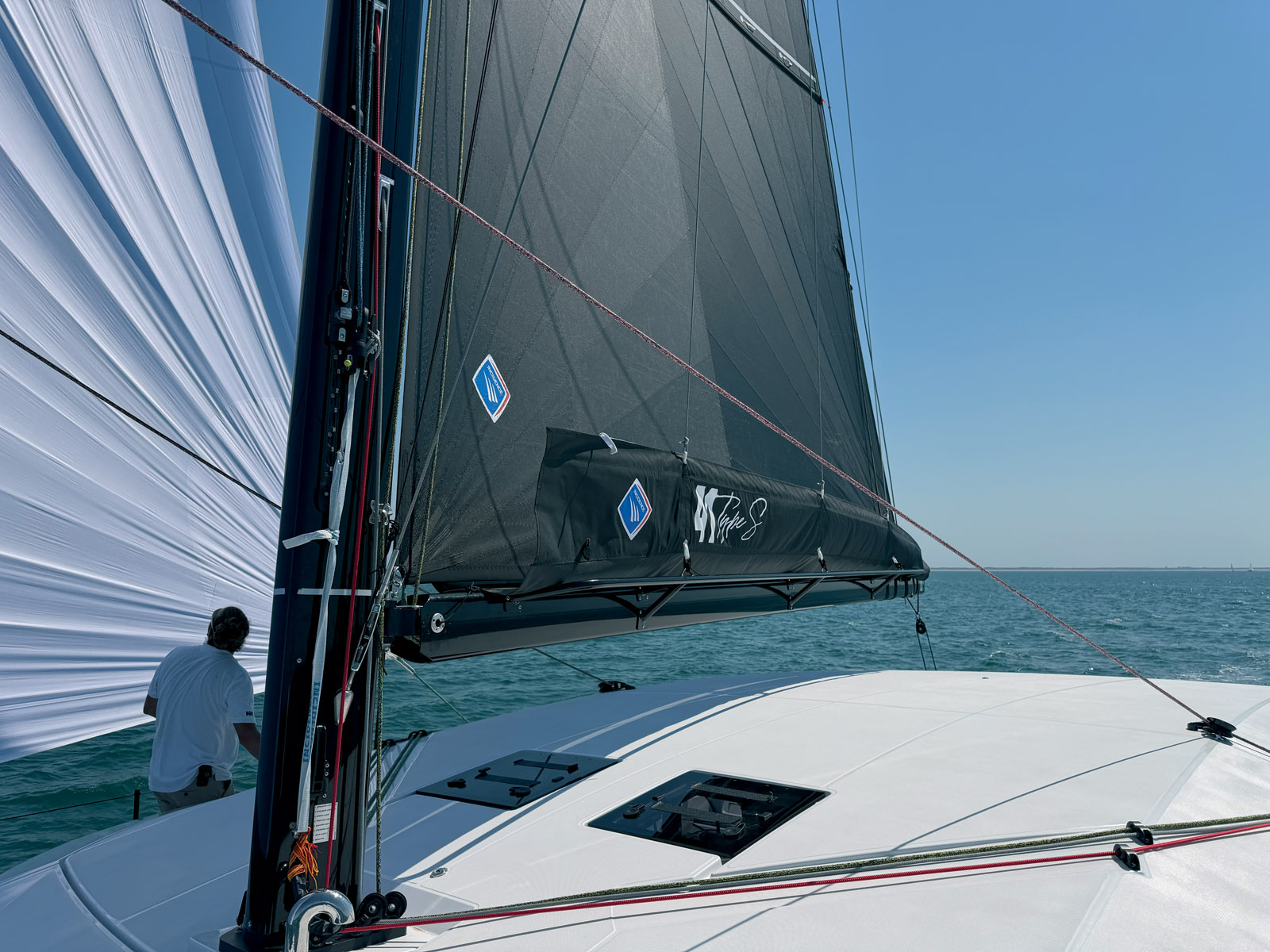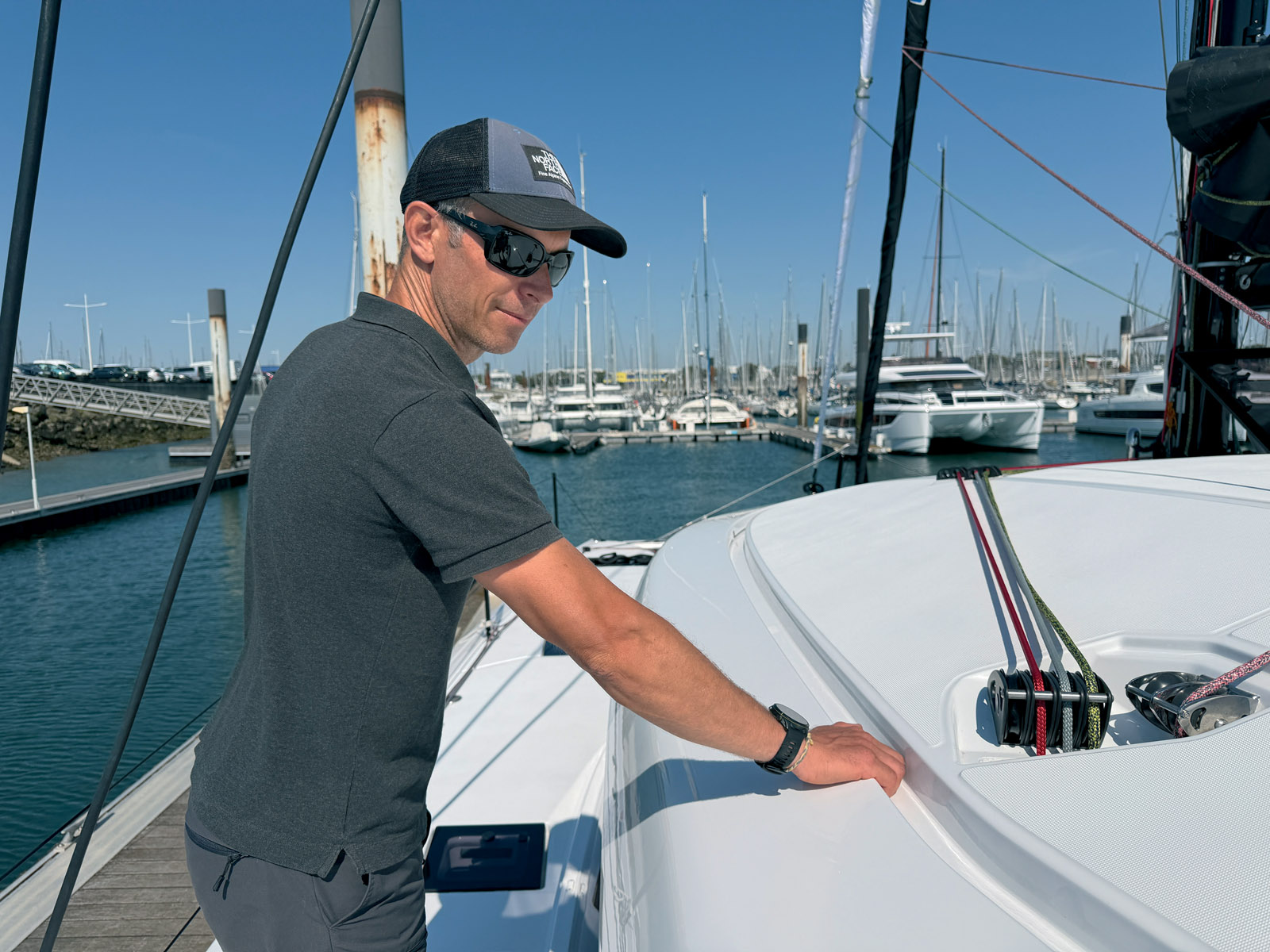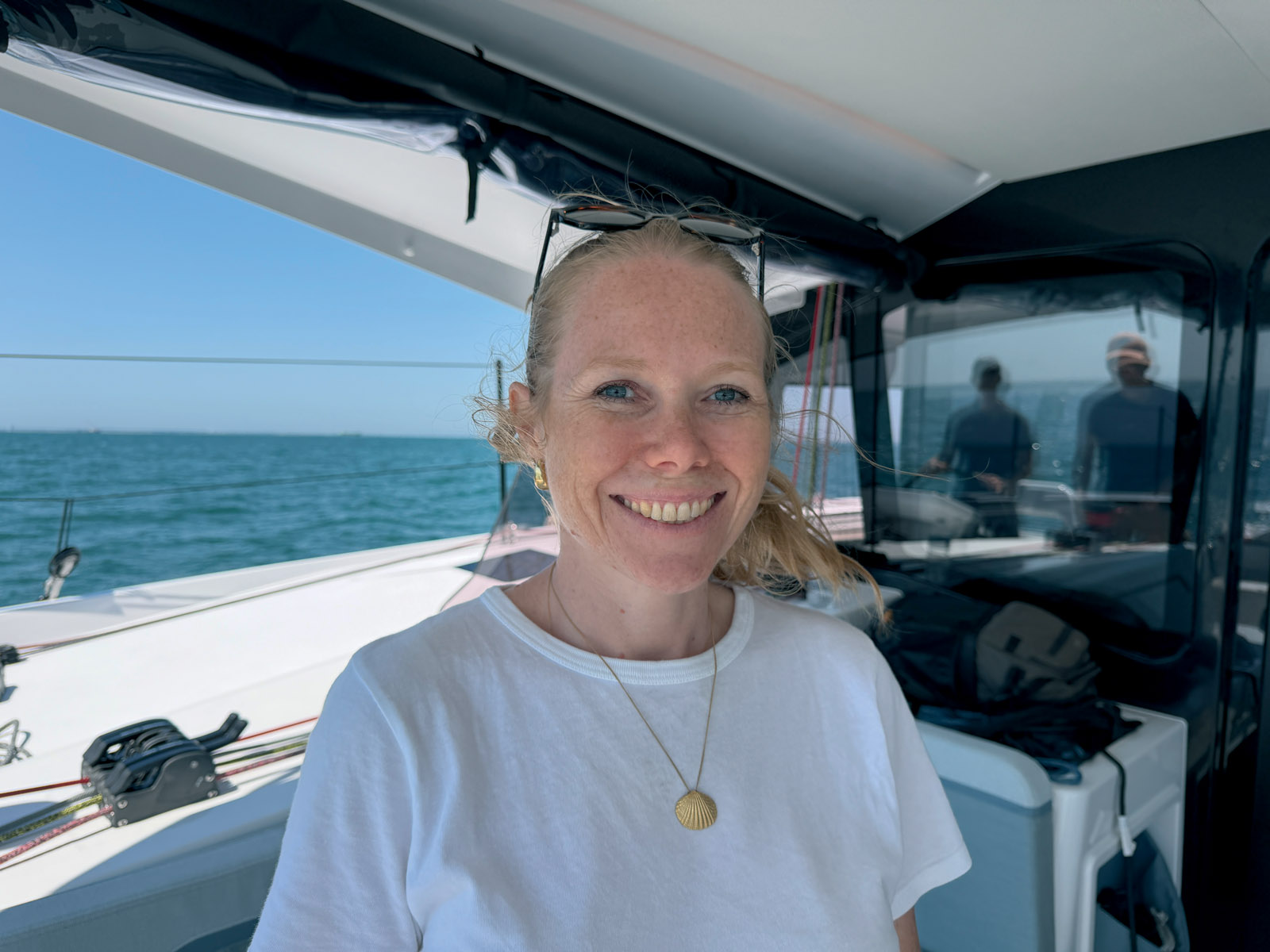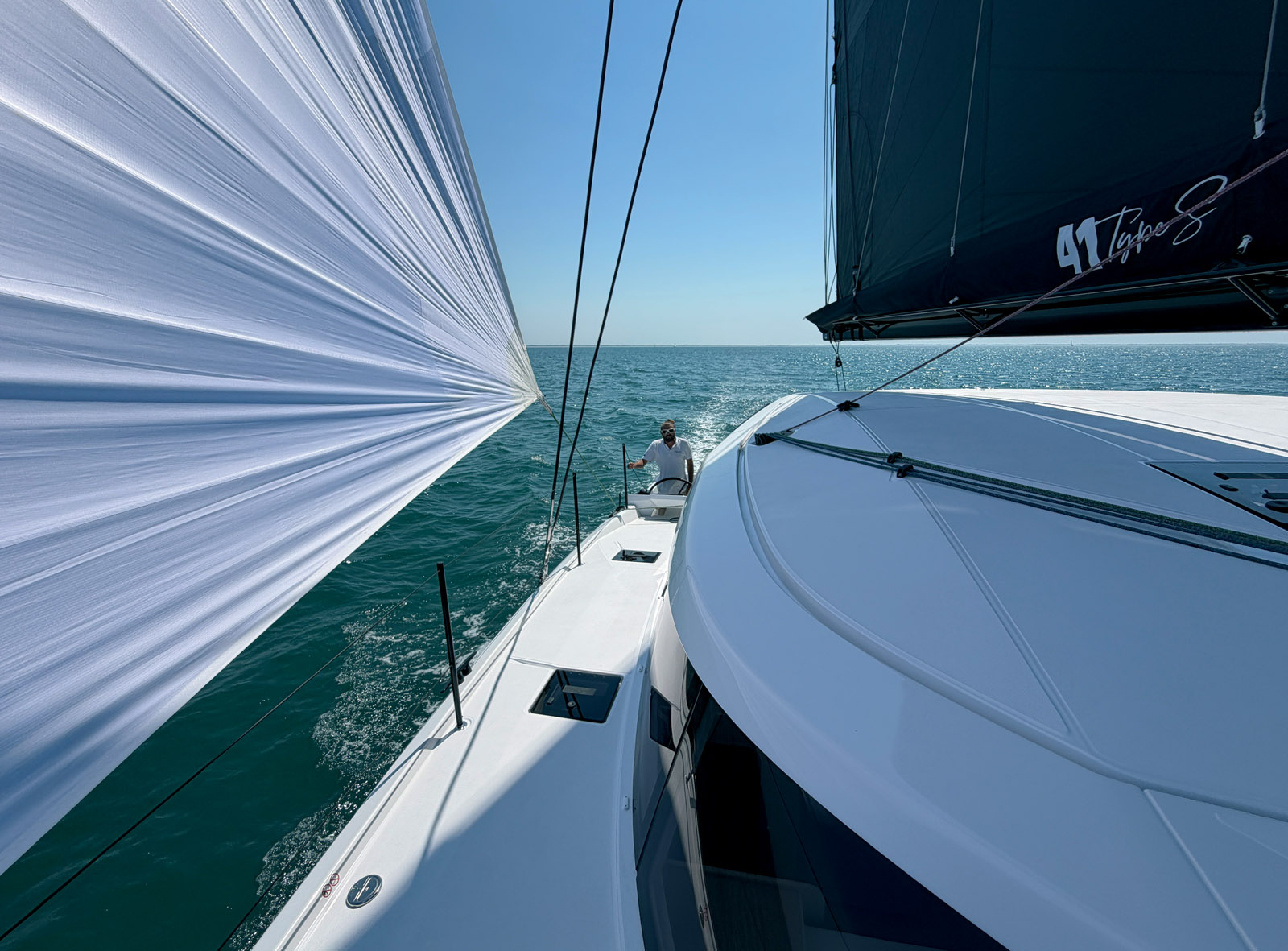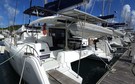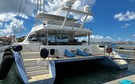
Just a few weeks after its launch in Rochefort, on France’s Atlantic coast, we took the helm of the very first Nautitech 41 Type S. Once again entrusted to the Marc Lombard Yacht Design Group, this new 41-footer does more than simply replace the 40 Open. It offers its own unique interpretation of the Nautitech DNA, based on a simple idea: to provide a more exhilarating sailing experience while simplifying life for the owners of today… and those of ten years from now.

Infos pratiques
- Le chantier : Nautitech 41 Type S
- La fiche technique
-
 Découvrez notre vidéo exclusive
- Financez votre Nautitech 41 Type S
- Assuez votre Nautitech 41 Type S
- Articles autour du Nautitech 41 Type S
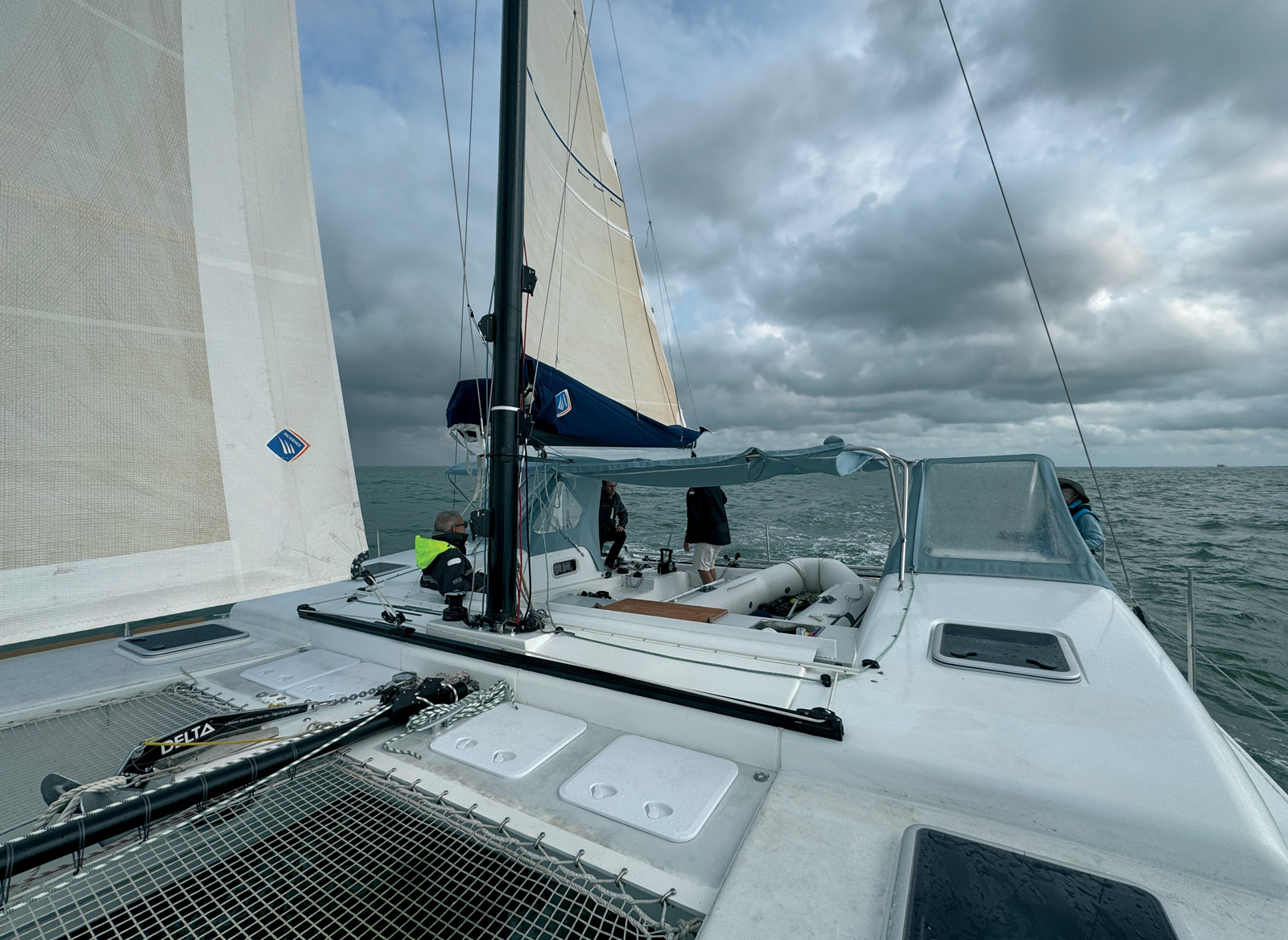
Conditions: Northwesterly wind 4 to 10 knots, calm to slight sea state
The “S”: A Philosophy
The first impression is almost disorienting. While the 41 Type S takes the same place in the lineup as the 40 Open, it actually bears very little resemblance to it. In reality, this new model is much closer to the Nautitech 44 and 48, from which it draws its spirit and many architectural solutions. This third joint project between Nautitech and Marc Lombard Yacht Design Group marks the culmination of a collaboration that is now perfectly honed. “I believe this is the most successful project we’ve ever completed in terms of the concept and specifications: in terms of performance, elegance, design details, and finish, we’ve nailed it…,” Eric Levet, co-manager of the renowned naval architecture firm, tells us a few minutes before our departure. His confidence is shared by colleague Henri-Paul Shipman (known to everyone as HP), the project’s lead designer: “This is our third development with Nautitech… we’re in top form!” And this maturity is clearly evident. Hull #1 already displays a remarkable level of finish along with true overall coherence. The design is a perfect illustration of this - the lines of the coachroof and bimini appear exceptionally sleek, almost ethereal. Yet the secret lies not in reducing the overall volume but in the subtle way the various elements come together. “We played with the interactions of the different sections to achieve a visually sleeker look,” HP explains to me. The result is particularly successful and contributes greatly to the catamaran’s overall elegance.
But the “S” isn’t just about the silhouette. At Nautitech, it means, above all, Simple.
Simple in its definition: few options, a deliberately streamlined lineup, and a single interior layout.
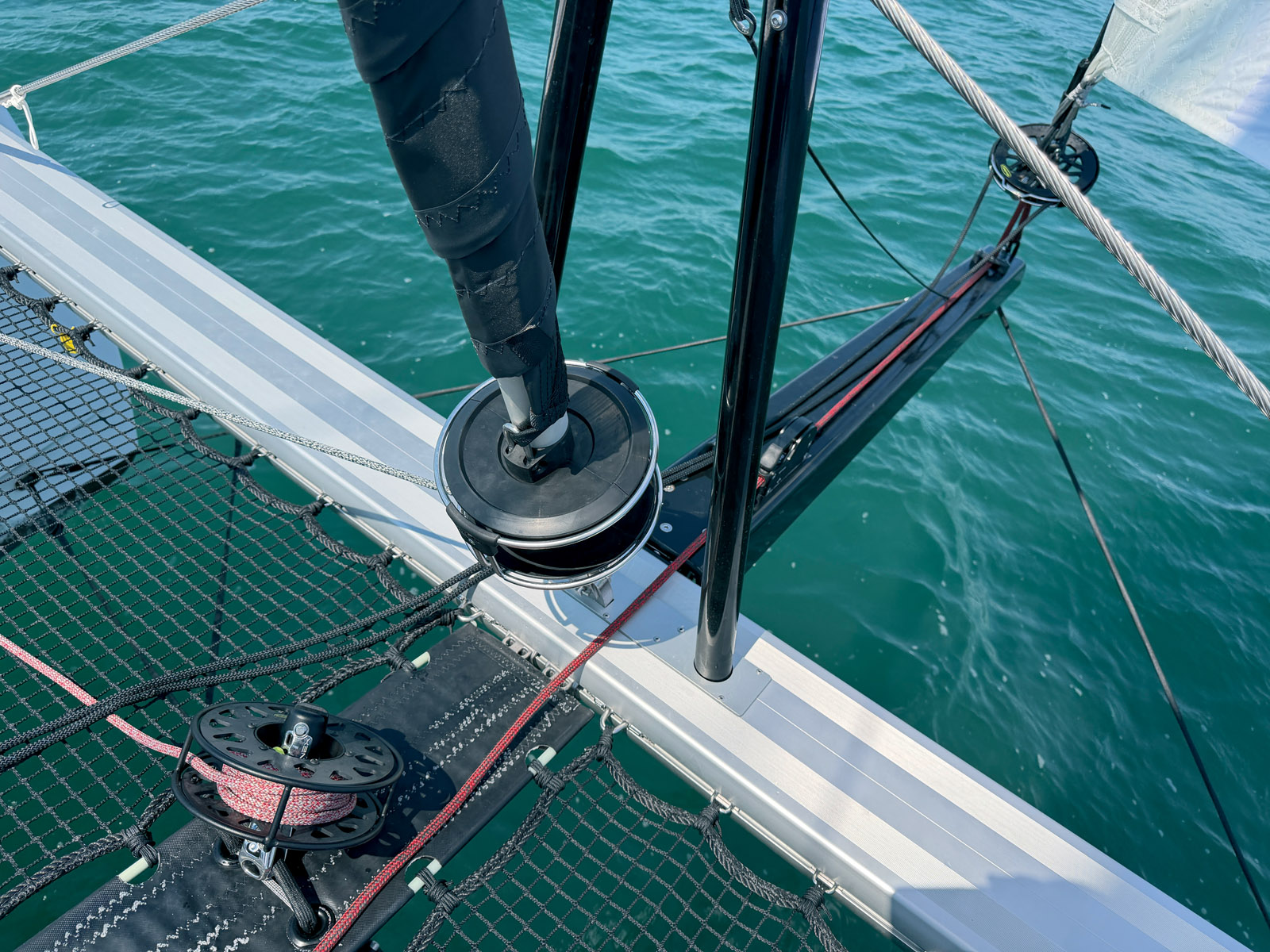
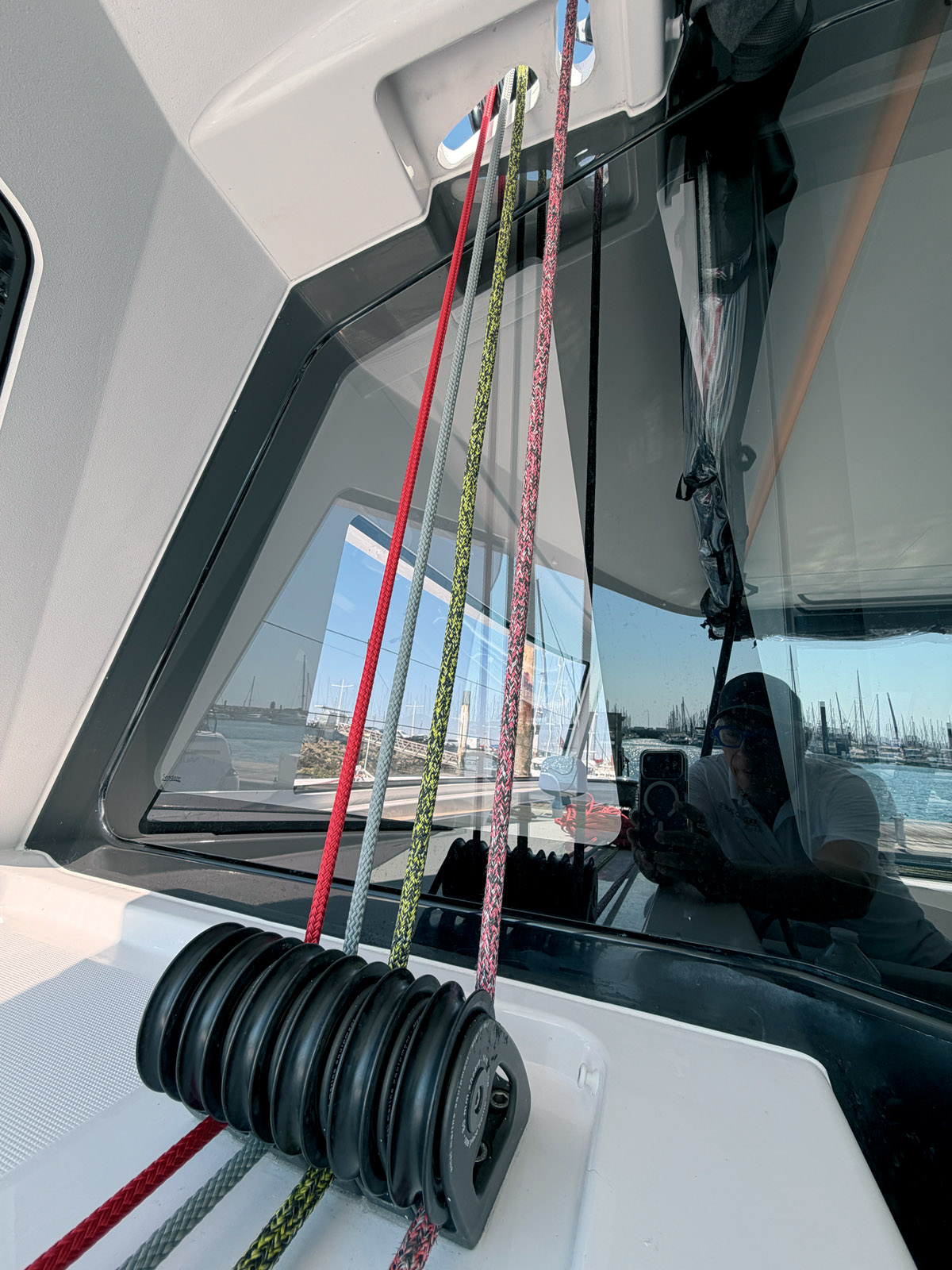
Simple in its use: a streamlined deck layout, sailing maneuvers designed for a short-handed crew, and exceptionally fluid movement on board.
Finally, it is simple in its ability to adapt thanks to the ReShape concept, which is undoubtedly one of the most original ideas behind this new model. And if the word simple reminds you of Christophe Barreau’s “very simple” (“très simple“ in French) TS models, you’re on the right track - the TS42 (now known as the ORC 42) has disappeared from the catalogs but remains a great source of inspiration, of which Nautitech makes no secret.
Performance By Design
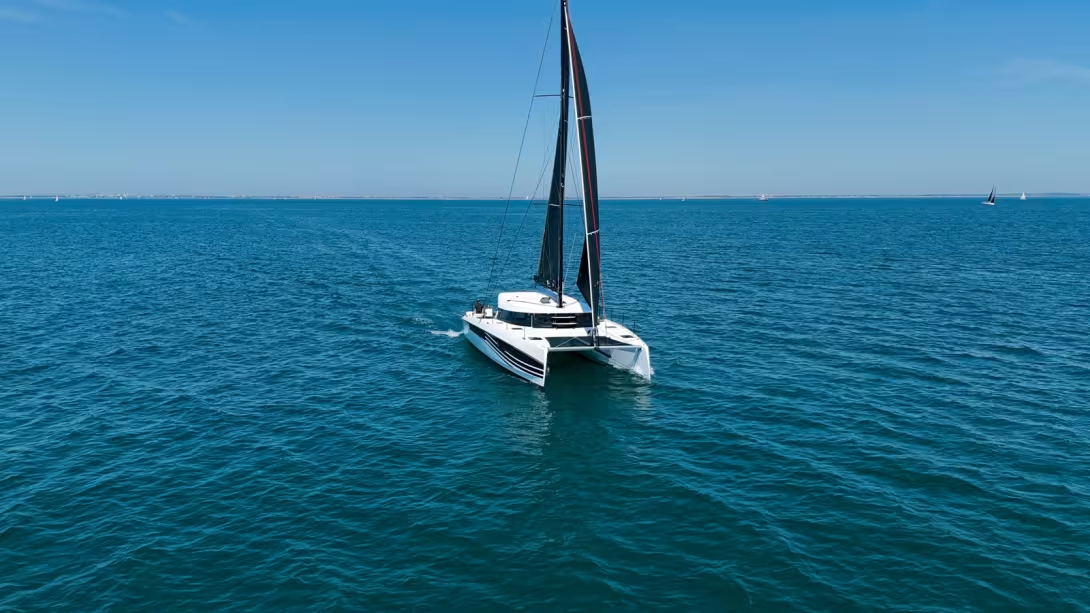
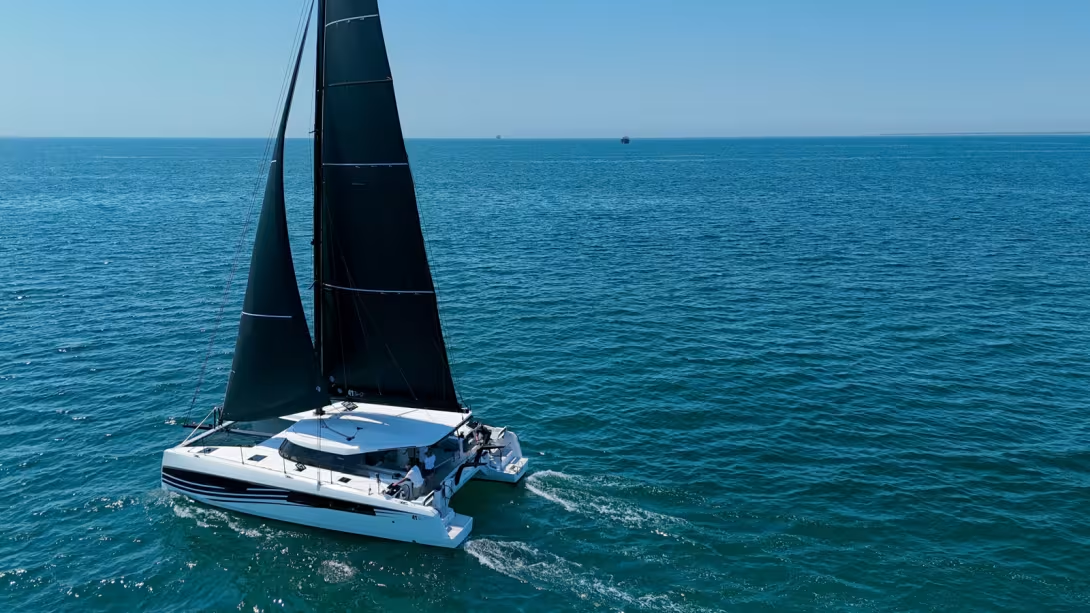
The evolutions introduced by this new model are numerous, sometimes subtle, but they all contribute to the same goal: increasing efficiency without complicating life on board. The hulls have been completely redesigned, with a slightly concave section aft that helps reduce drag. When speed exceeds 7 knots, the transom of the windward hull begins to lift noticeably clear of the wake. The bows remain sleek, the spaces are better distributed, and the return of an overlapping genoa confirms the commitment to prioritizing performance in light airs. The deck has also undergone significant weight-reduction efforts. Combined with the new sail plan, these changes allow the Nautitech 41 Type S to achieve a remarkable sail-to-displacement ratio of 12.45 m²/t, a figure that ranks it among the highest-performing cruising catamarans in its class. As a reminder, the TS42 mentioned earlier had a ratio of 13 m²/t - a not dissimilar figure. Another SA/D ratio to reflect on is that of the 40 Open, which was never higher than 10.7 m²/t… In fact, by the GPS, the numbers speak for themselves. During our test sail, with only 4 knots of wind, the 41 Type S was already making 4.3 knots just off the wind under mainsail and genoa. A few hours later, in about ten knots of wind (thanks to the thermal breeze!), it reached 7.5 knots on a beam reach under gennaker, without ever feeling like we were pushing it. As for the first month of sailing for this hull #1, it has already allowed the crew to record a top speed of 15.7 knots at 140° to the wind in about 20 knots of wind and a 3-foot (one-meter) chop. This figure perfectly illustrates the boat’s potential. But reducing the 41 Type S to a few numbers would be missing the point. What stands out above all is the ease with which these performance figures are achieved. Nothing feels demanding. Acceleration is smooth and progressive; the multihull remains balanced; and the helm retains remarkable responsiveness, particularly so when tacking. True to the Nautitech philo- sophy, the enjoyment comes more from the sensations experienced while steering upwind, helming from one of the hulls than from the absolute pursuit of that last tenth of a knot.
An Interior Designed to Last
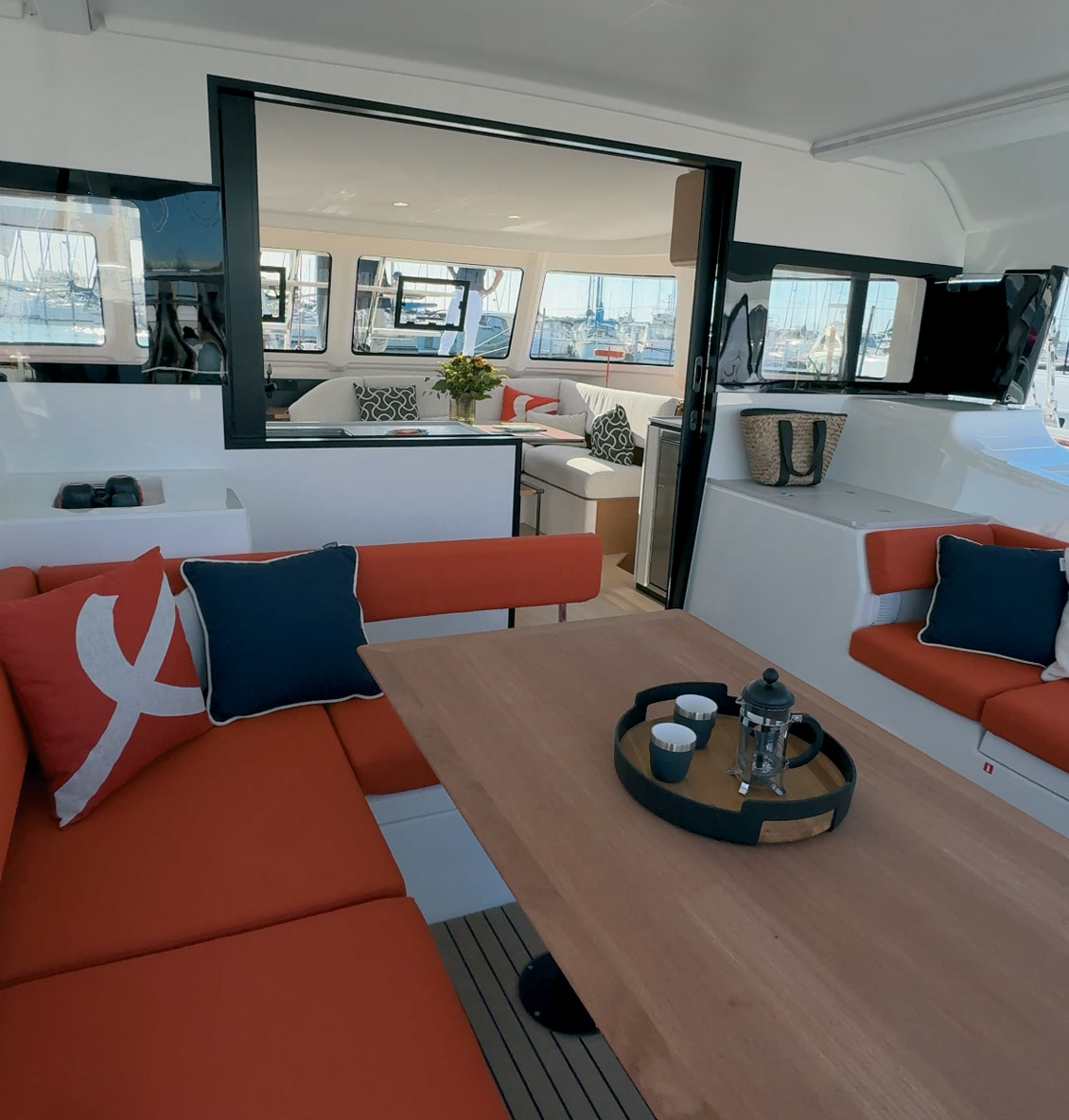
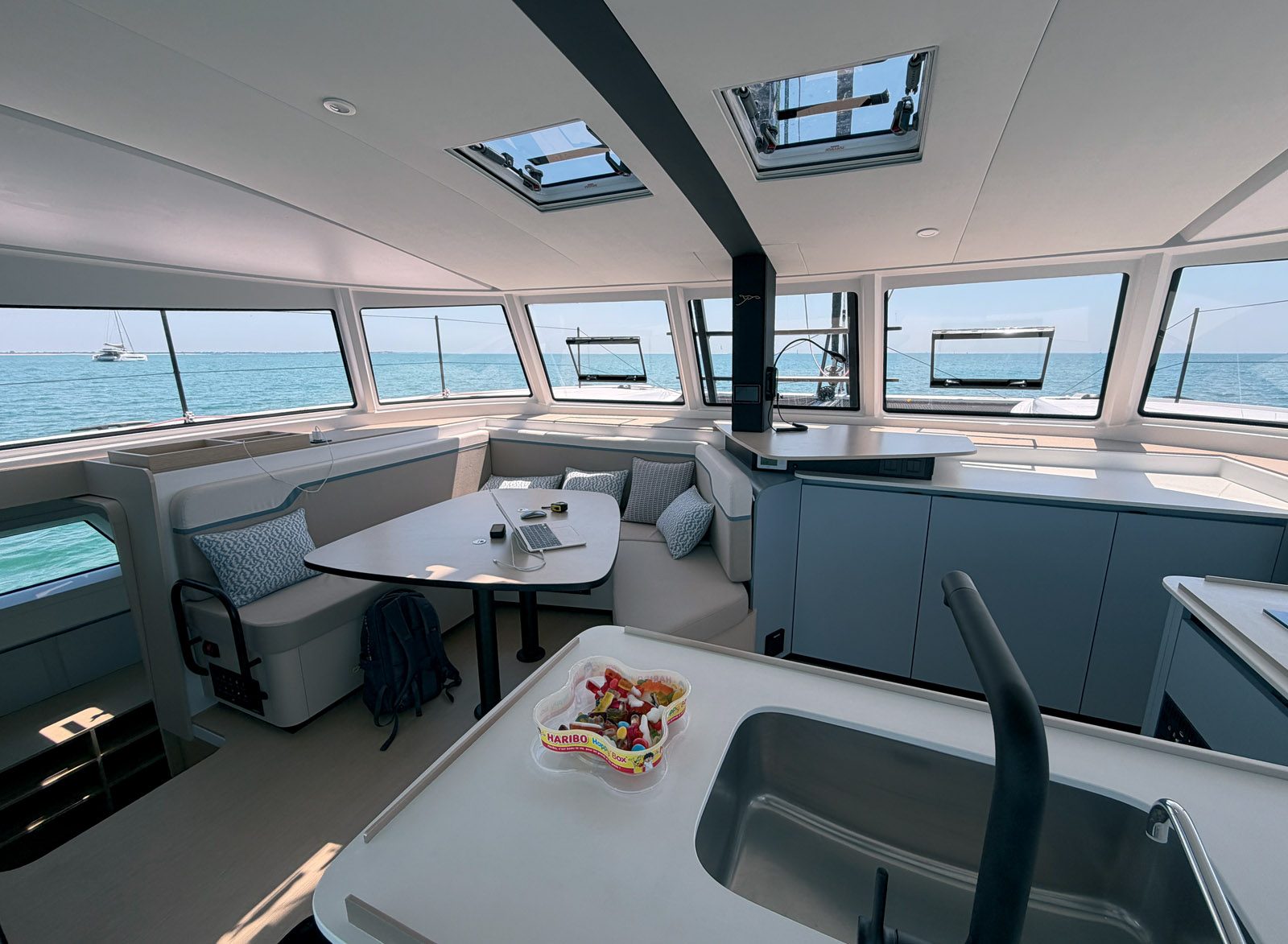
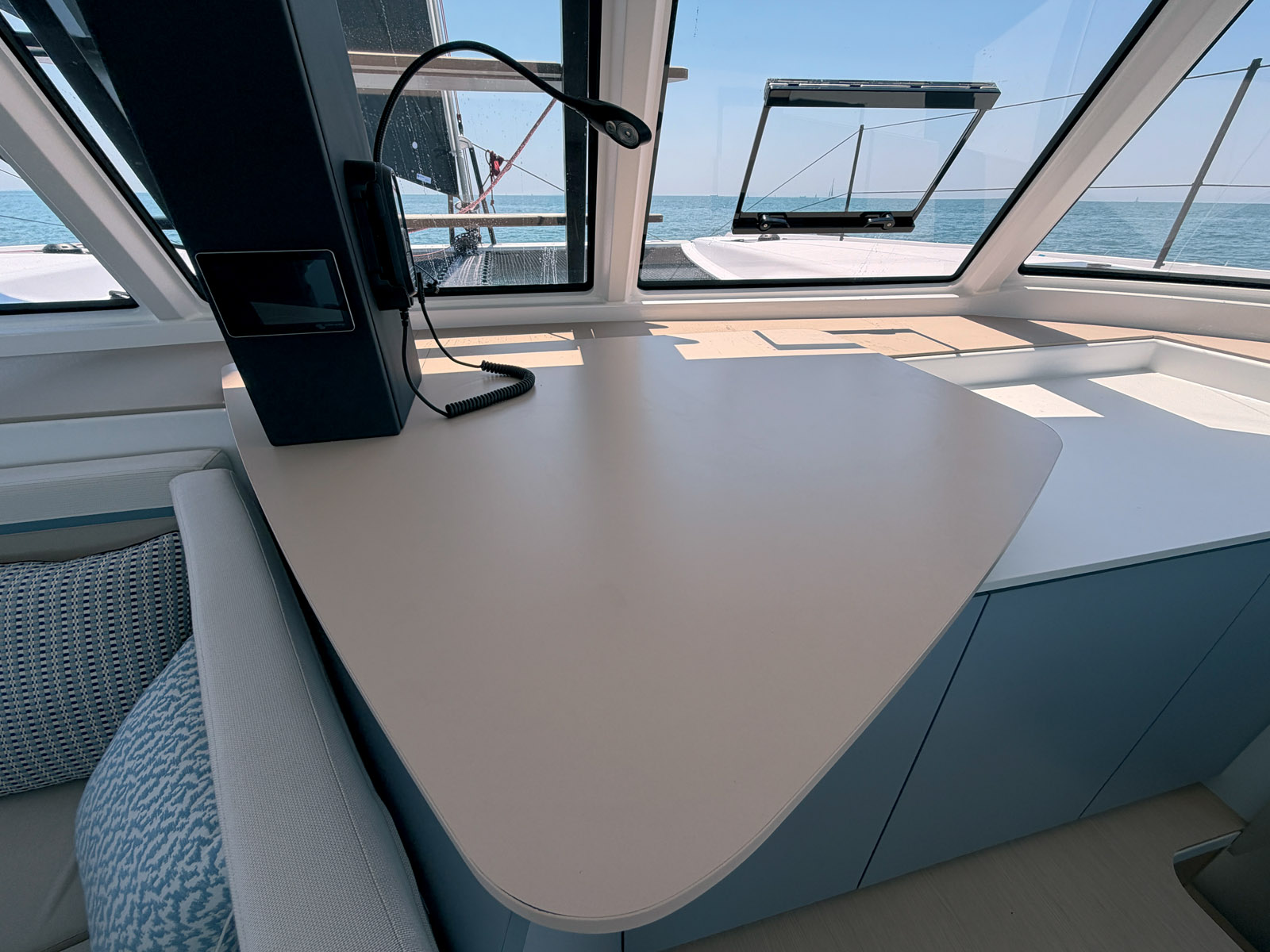
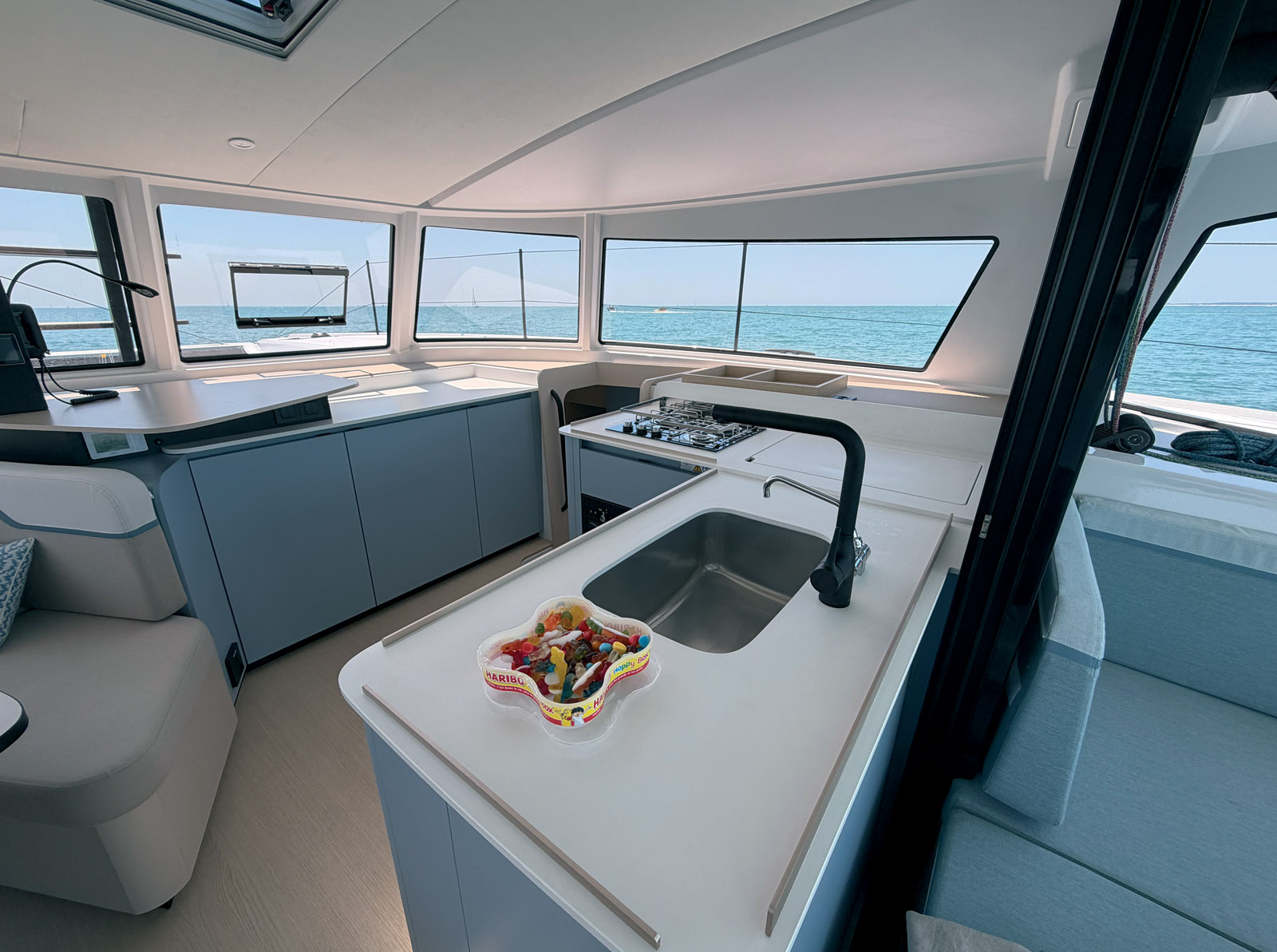
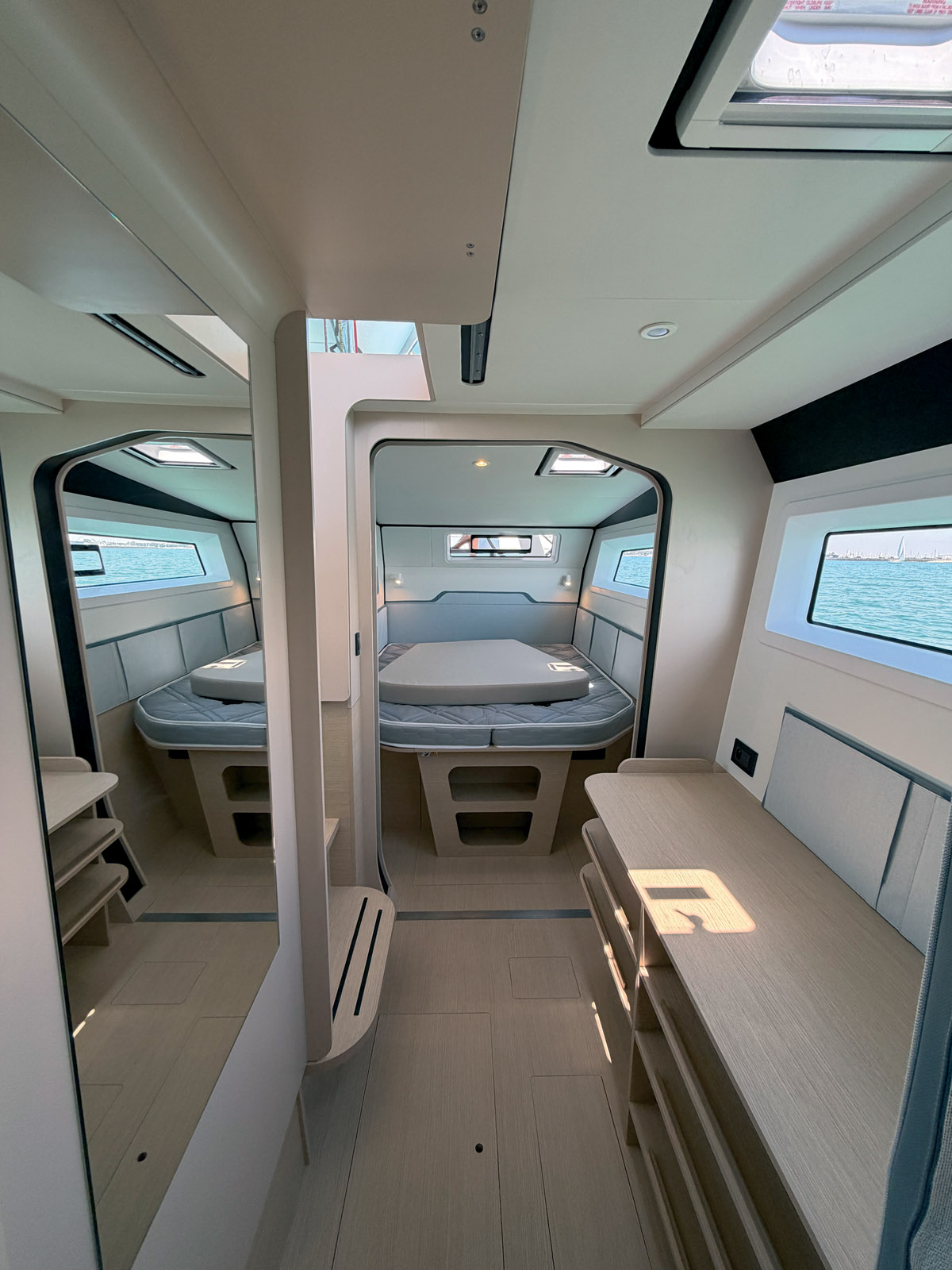
On board, the shift in philosophy is just as evident. The 41 Type S breaks with the cozy atmosphere of the previous 40 Open models. Gone are the Alpi panels and ubiquitous woodwork: in their place is a more contemporary interior, with clean lines and modern materials. A choice championed by Maya Gautier, director of sales and marketing: “This helps not only to lighten the catamaran but also to simplify its construction and maintenance,” she explained to me. The saloon prioritizes space and light. The aft windows, now full-width - extending all the way to the coachroof pillars - offer a far-reaching view of the outdoors while improving visibility from both helm stations. With a headroom of 6’10” (2.10 m), the space feels surprisingly spacious for a multihull of this size.
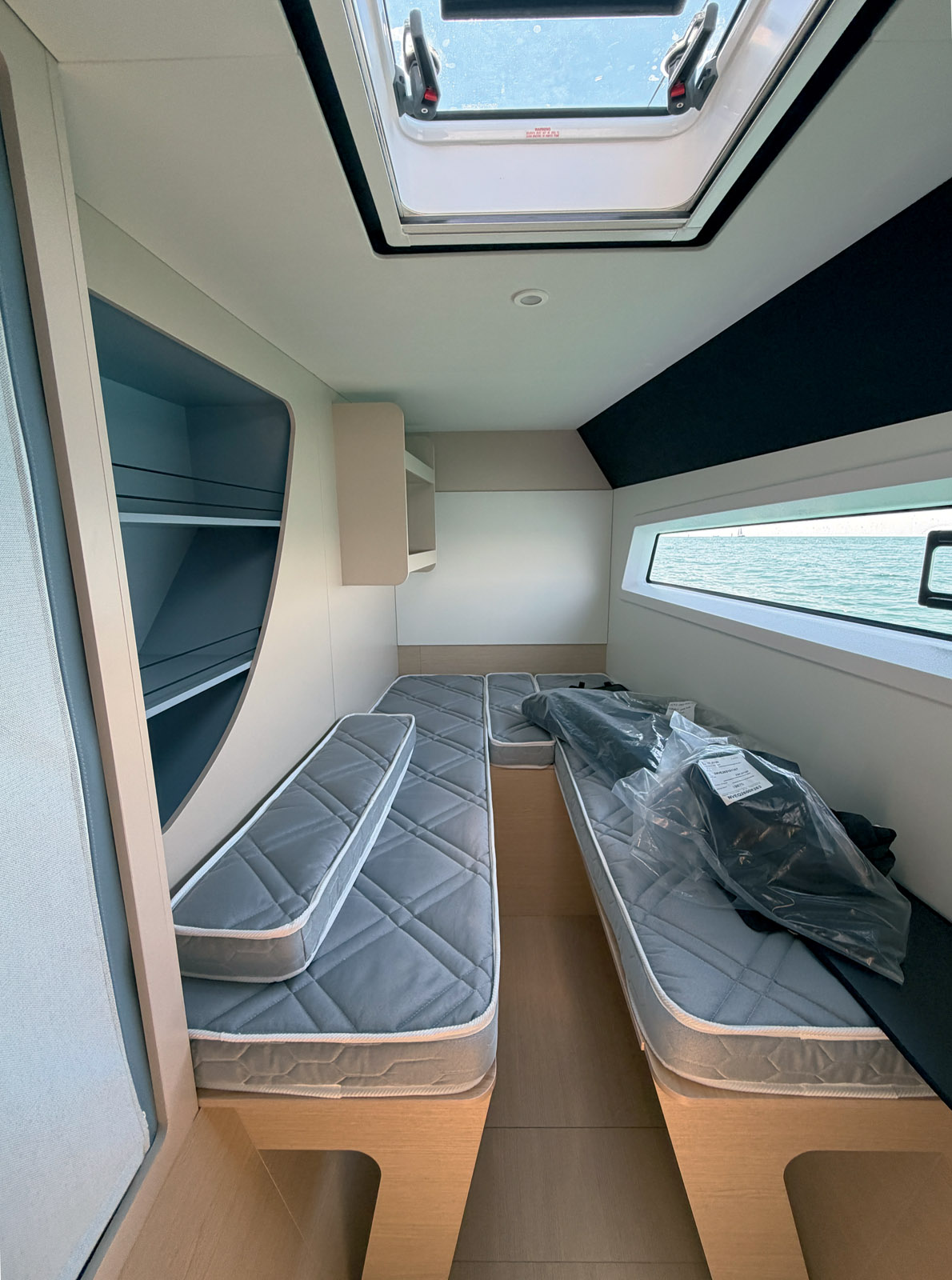
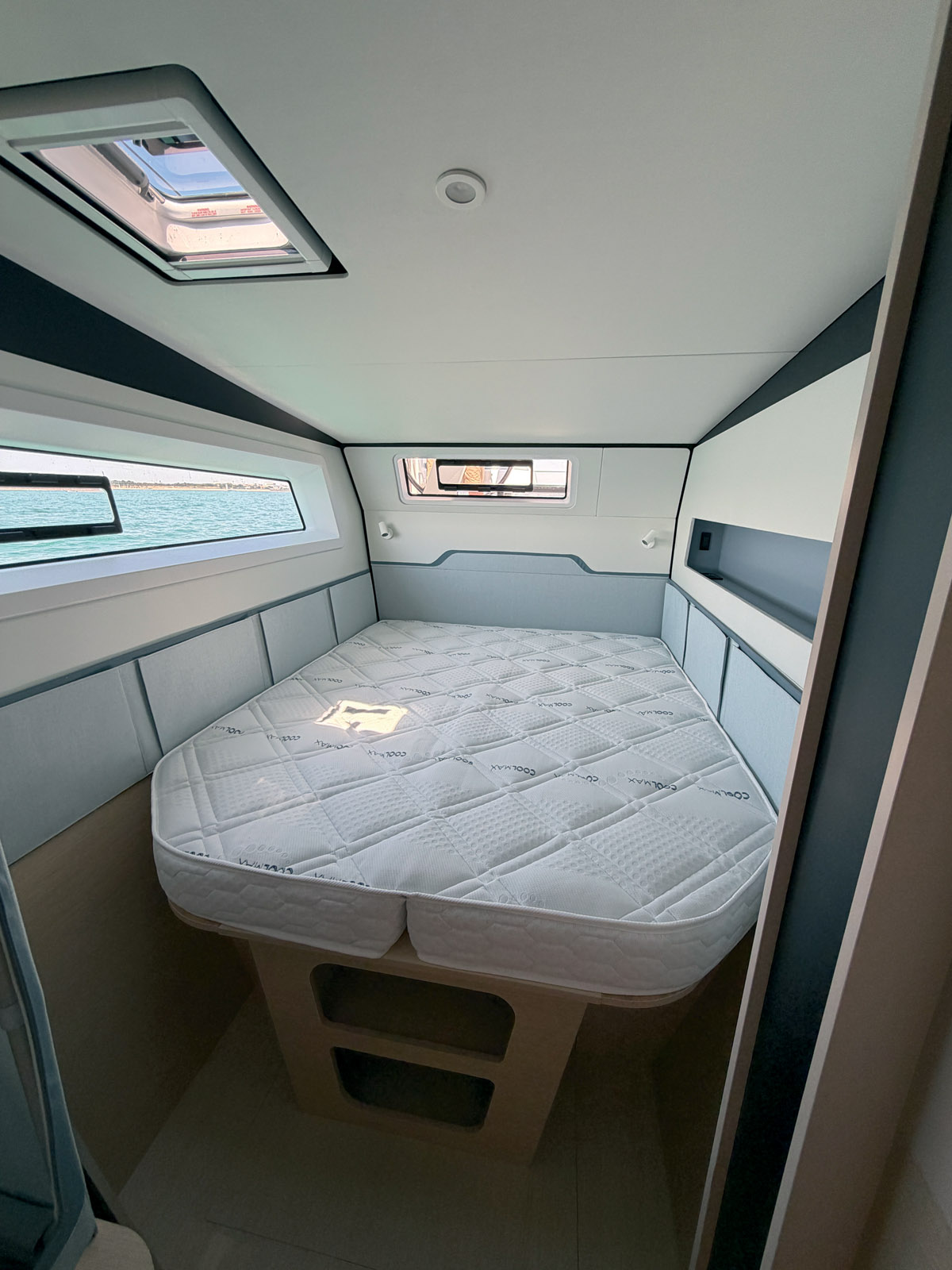
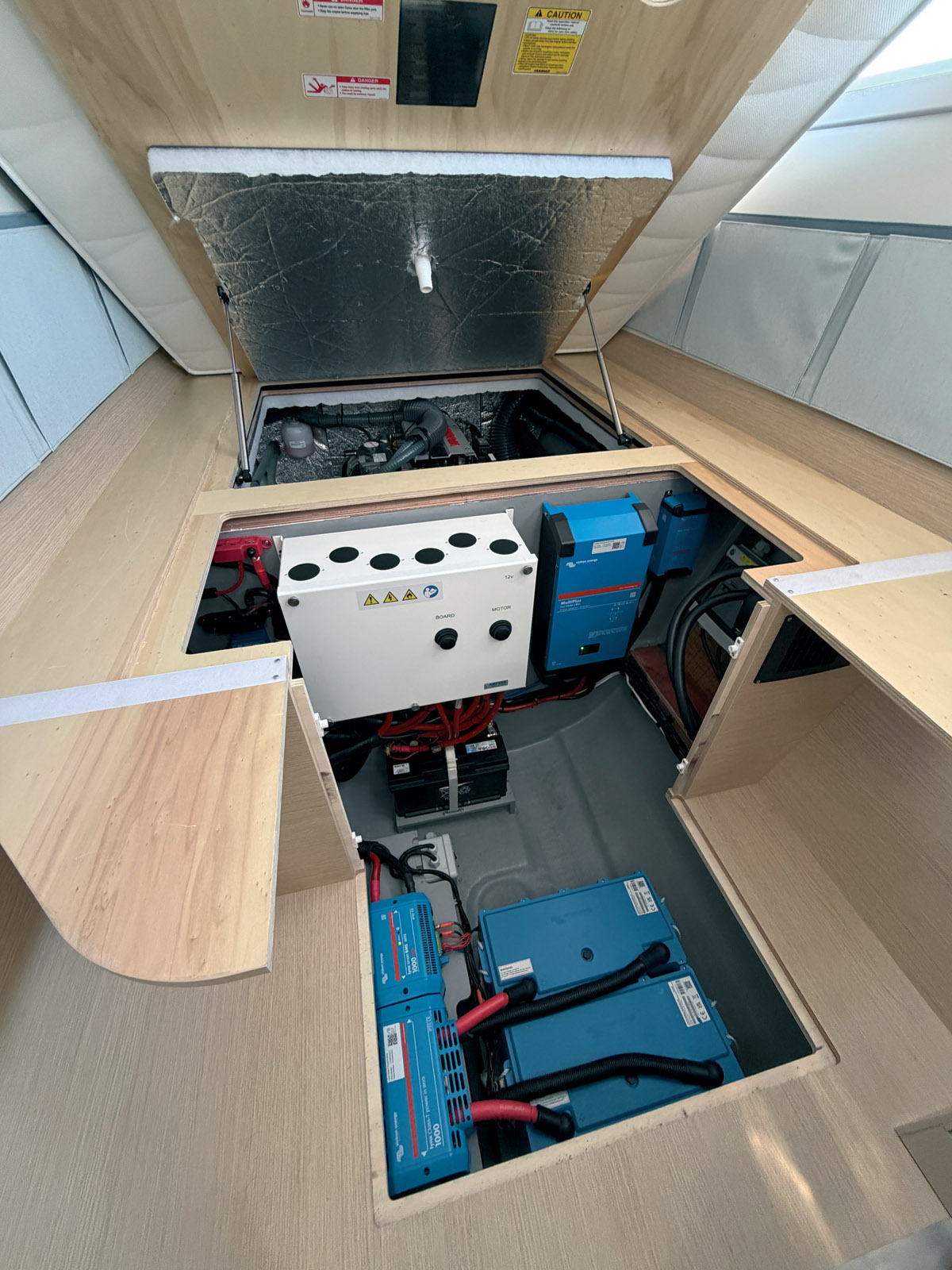
The same design philosophy is evident in the cockpit. The two tables, identical in their rounded design and mounted on elegant carbon-fiber legs, can each comfortably seat six. We did, however, note one small area for improvement: the outdoor table did still lack a bit of rigidity aboard this first example, though this is a detail the shipyard should easily be able to remedy ahead of the boat’s commercial launch. These ubiquitous rounded shapes are also worth highlighting. Beyond their aesthetic appeal, they effectively minimize sharp edges and make moving around more pleasant, whether at anchor or under way. Movement around the boat is particularly smooth. The side-decks are at least 27“ (70 cm) wide, make it easy getting to the foredeck. They drop down toward the stern relative to the deck line - much like those on the latest Sun Odyssey monohulls from Jeanneau (obviously also designed by Lombard) - to avoid creating too steep a drop between the cockpit and the deck. As for the big door into the nacelle (5’8”/ 1.7 m wide and 6’2”/1.88 m high), it further reinforces the continuity between the cockpit and the saloon. For the hulls, the shipyard is focusing on a single layout and a limited number of configurations (only a 2/3-cabin version) to simplify the product lineup. The aft cabins feature full-size beds measuring 63 x 78” (1.6 x 1.98 m), with a headroom of 6’5” (1.95 m). Forward, the starboard cabin can be adapted as needed to serve as an office, guest cabin, Smart Room, or storage space, and can easily be restored to its original configuration at a time when the boat is to be resold. This innovative approach allows the catamaran to adapt to the different stages of its owner’s life without compromising its resale value. The Nautitech 41 Type S thus introduces a concept that the shipyard has dubbed “ReShape.” Behind this name lies an idea that is ultimately quite simple: to design a catamaran capable of evolving over the years, rather than permanently fixing its architecture the moment it leaves the factory. This philosophy is evident throughout the vessel. The spaces are intentionally modular, the main equipment remains easily accessible, and certain areas have been designed to incorporate the technologies of the future. Batteries, energy systems electronics, and new comfort features can be upgraded more easily, without having to dismantle a large part of the catamaran. This makes for easier maintenance: note the well-organized technical compartments and the unobstructed access to the catamaran’s main components. The desire to centralize weight led the designers to move the engines forward under the aft berths. This configuration was seen in the late 1990s on the Lagoon 410 and had drawn complaints from charter operators at the time… but today, the 41 Type S is clearly aimed at a clientele of owners, who will undoubtedly prefer to work in the sheltered confines of the hulls rather than outdoors.
Conclusion
With the 41 Type S, Nautitech turns the page on the Open concept, which featured a single table shared by the saloon and the cockpit; it ushers in a simpler, more adaptable, and significantly higher-perfomance catamaran. At the same time, it goes much further in the pursuit of performance and establishes a new, streamlined, and efficient style. The 41 Type S also introduces the ReShape philosophy, designed to anticipate the various uses it is likely to undergo depending on the owner’s plans and lifestyle. This modularity is accompanied by a much broader focus on ease of use and the catamaran’s longevity. To top it all off, this new model is offered at a very attractive price. And this may, in fact, be its greatest asset. The success of the initial private sea trials, with eight orders placed in just two days, suggests that the shipyard is on the right course.
Figures from Multihulls World
15.7 kts The maximum speed recorded by the shipyard during the first month of sea trials
4.3 kts The speed achieved in just 4 kts of true wind
27” (70 cm) Minimum width of the side-decks
6’10” (2.1 m) Maximum headroom in the nacelle
€ 453,000 The base price ex-tax
Truly innovative ReShape concept
Attractive price
Deliberately limited range of options and interior styles, which may not suit all preferences
No 4-cabin version and only one interior finish - a deliberate choice that may divide opinions
Technical Specifications
Architects: Marc Lombard Yacht Design Group
Interior Design: Christophe Chedal Anglay
Construction: Fiberglass/polyester sandwich hulls and deck, vacuum-infused. Fiberglass/polyester sandwich keels bonded to the hulls.
Length overall: 41’4” (12.6 m)
Waterline Length: (12.42 m)
Beam: 23’11” (7.3 m)
Draft: 4’9” (1.44 m)
Air draft: 66’1” (20.15 m)
Light displacement: 21,200 lbs (9.6 t)
Gaff-topped mainsail: 780 sq ft (72.5 m²)
Genoa: 506 sq ft (47 m²)
Upwind sail area: 1,286 sq ft (119.5 m²)
Gennaker: 1,249 sq ft (116 m²)
Powertrain: 2 × 30 hp Yanmar (40 hp option)
Water: 158 US gal (600 l)
Fuel: 105 US gal (400 l)
Cabins: 2/3
CE Certification: A8/B12/C16/D20
Base price: € 453,000 ex-tax
Price of the boat we tested: approximately € 550,000 ex-tax
www.nautitechcatamarans.com