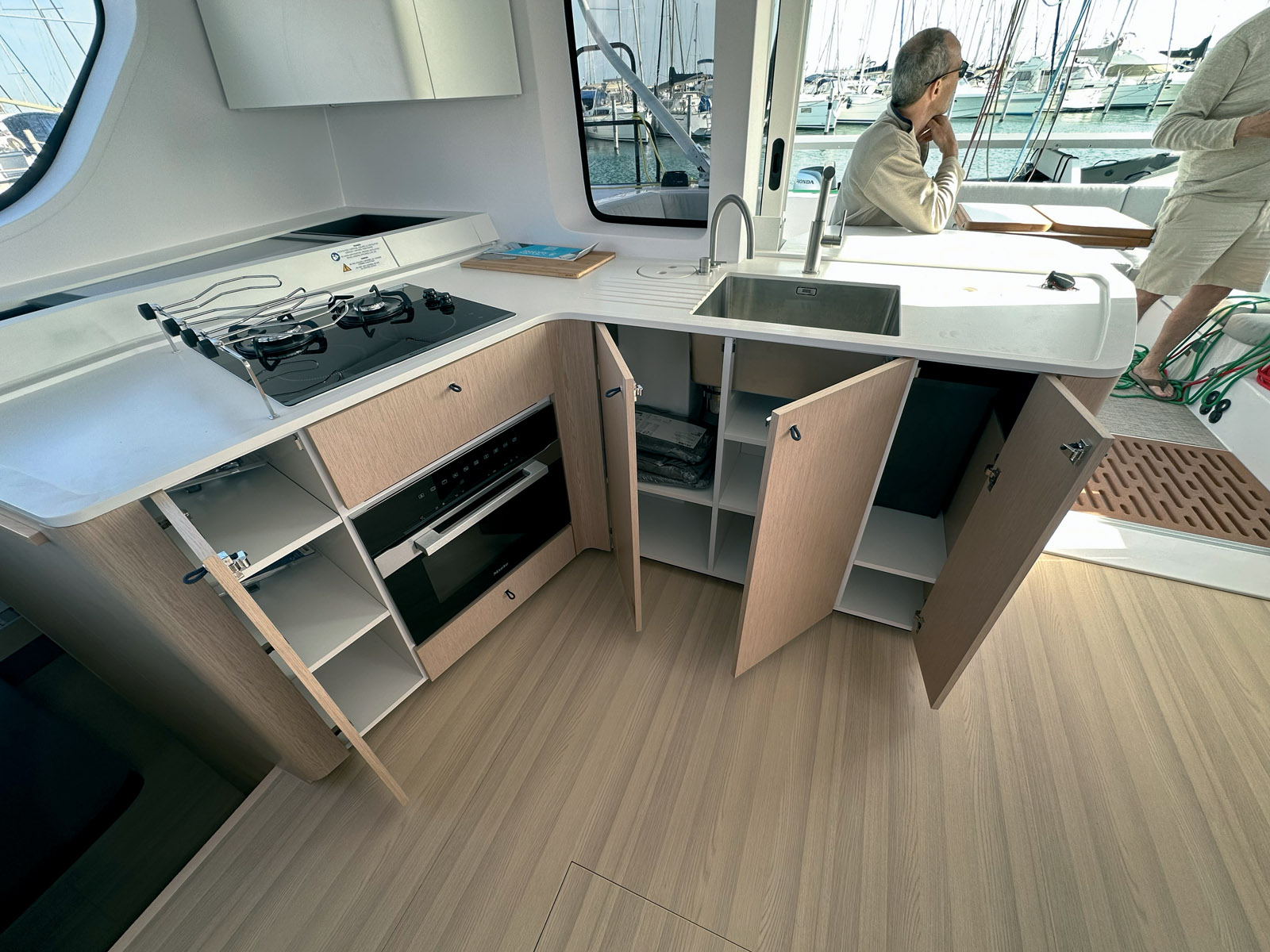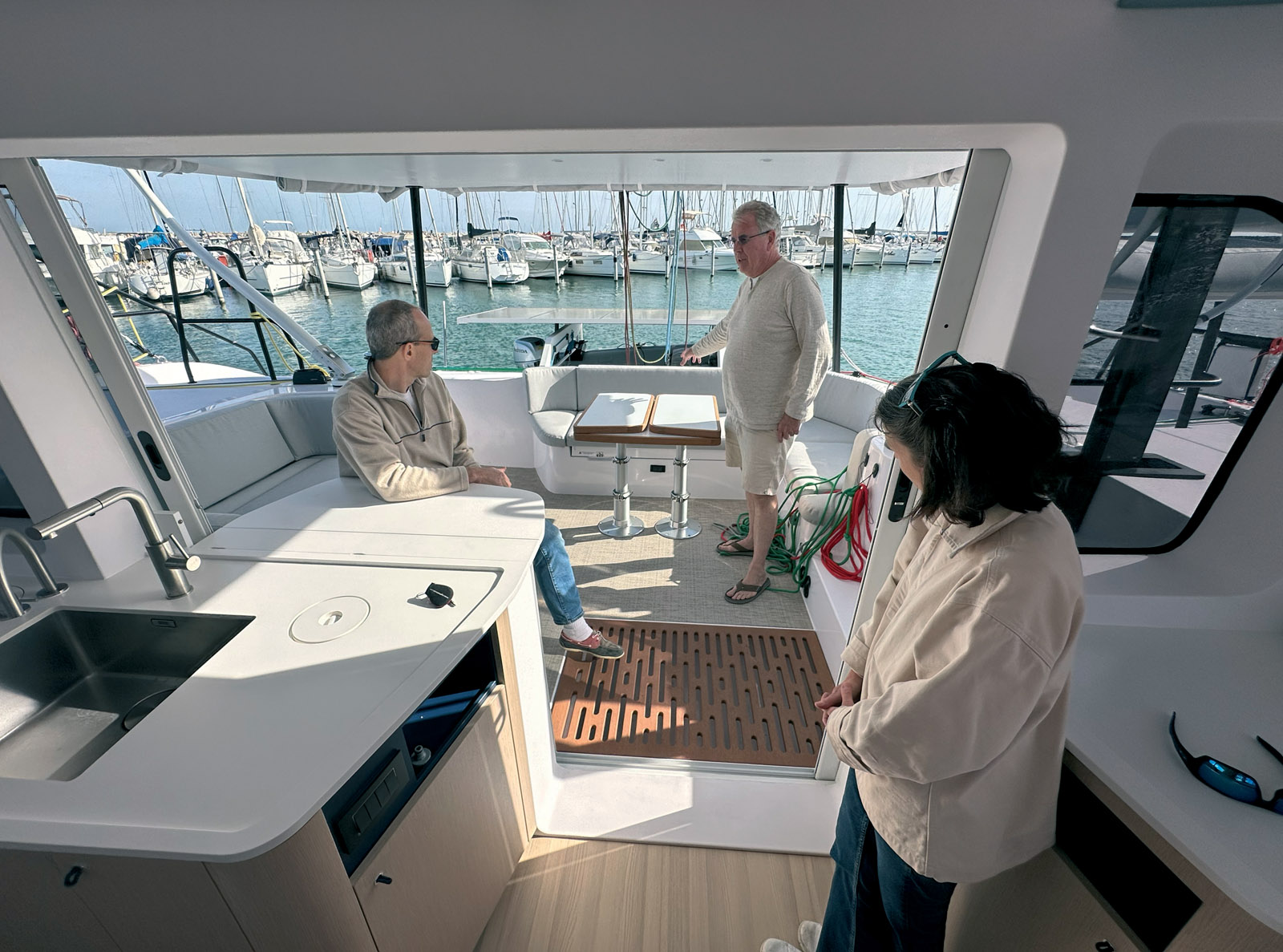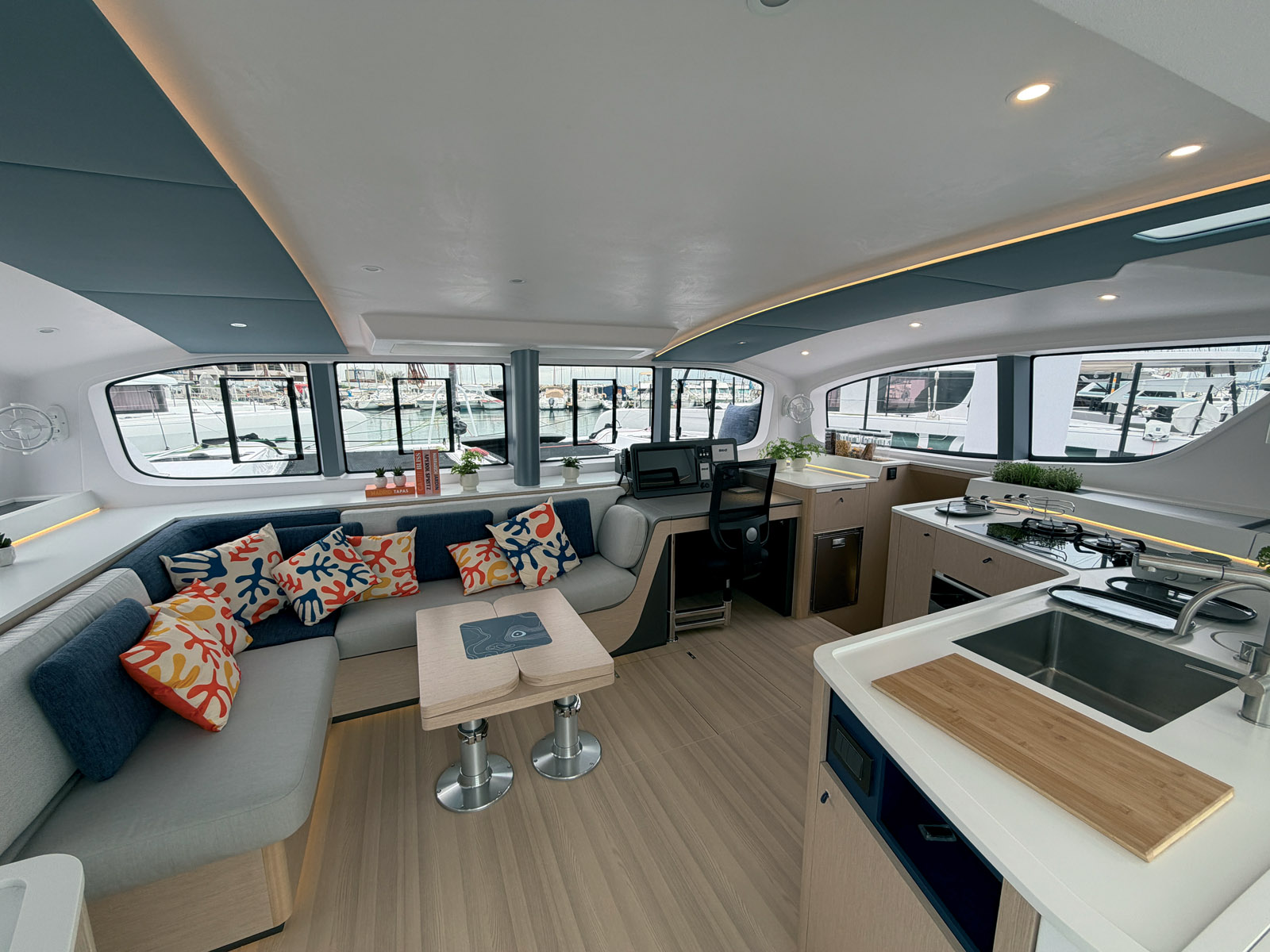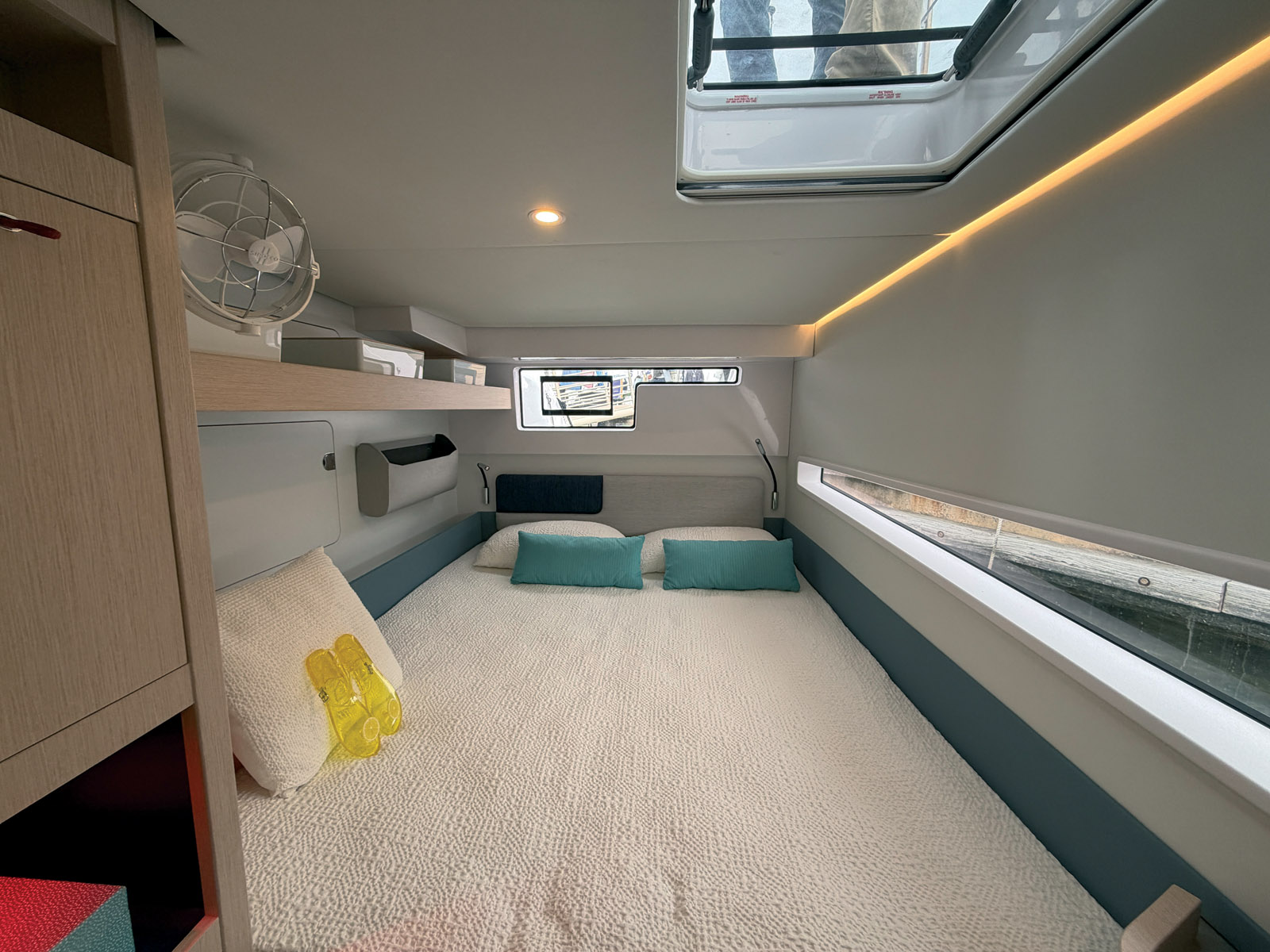
Just a few days after the Outremer 48 made its world premiere at the International Multihull Show in La Grande-Motte, we got the opportunity go for a test sail. As the successor (though not a replacement) for the iconic Outremer 45, this new model is more than just a stylistic evolution. It embodies fifteen years of experience accumulated by the shipyard and its community of owners, and the goal is clear: to maintain the performance that has long built the brand’s reputation while offering greater comfort, range, and ease of use for blue water voyaging.
Infos pratiques
- Le chantier : Outremer 48
- La fiche technique
-
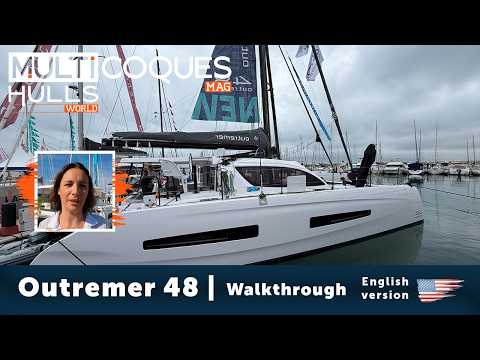 Découvrez notre vidéo exclusive
- Financez votre Outremer 48
- Assuez votre Outremer 48
- Articles autour du Outremer 48
Conditions: 15 to 18 knots of offshore wind, 3 to 5 feet of southeasterly swell
The Experience of Hundreds of Thousands of Nautical Miles
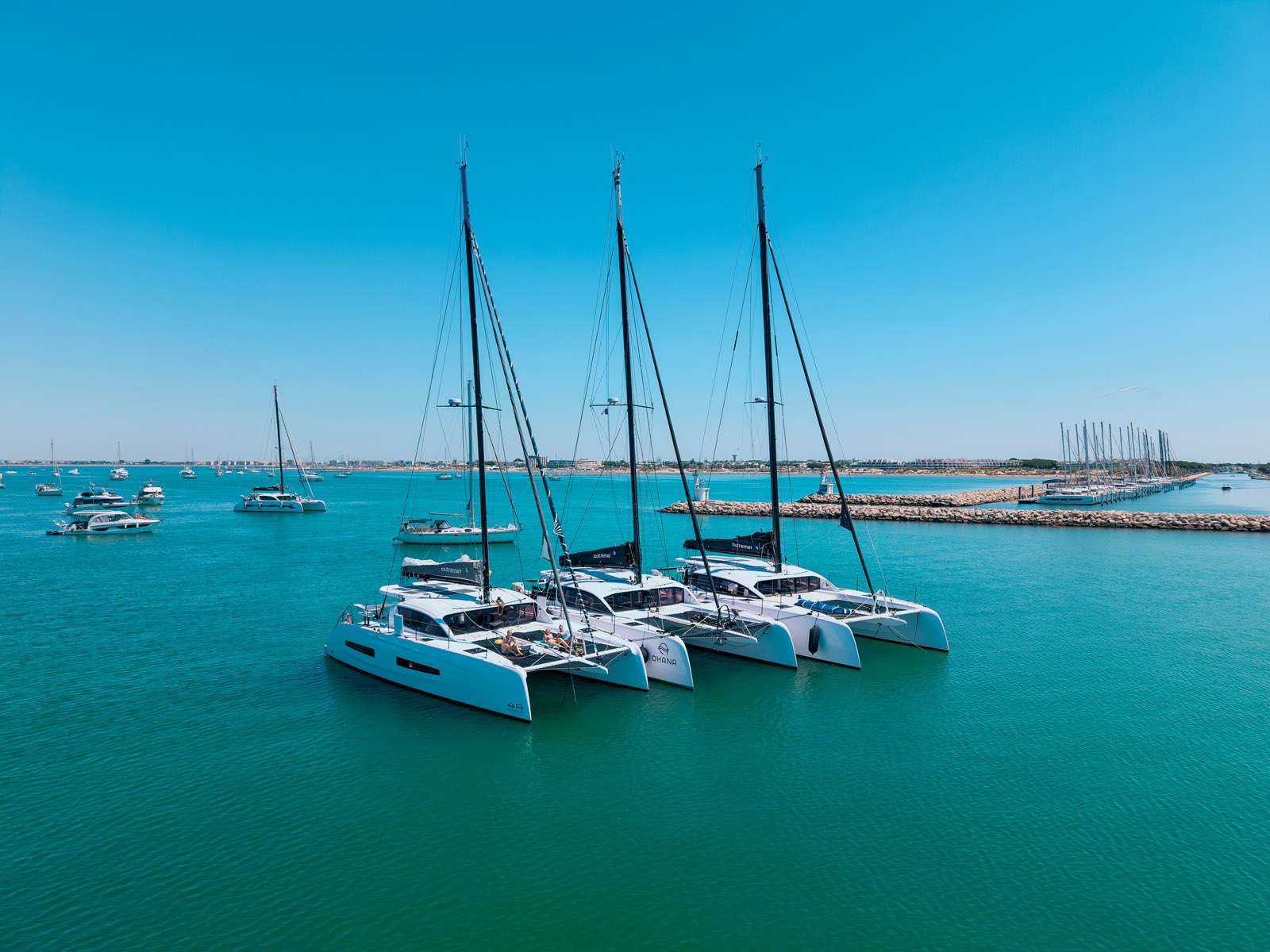
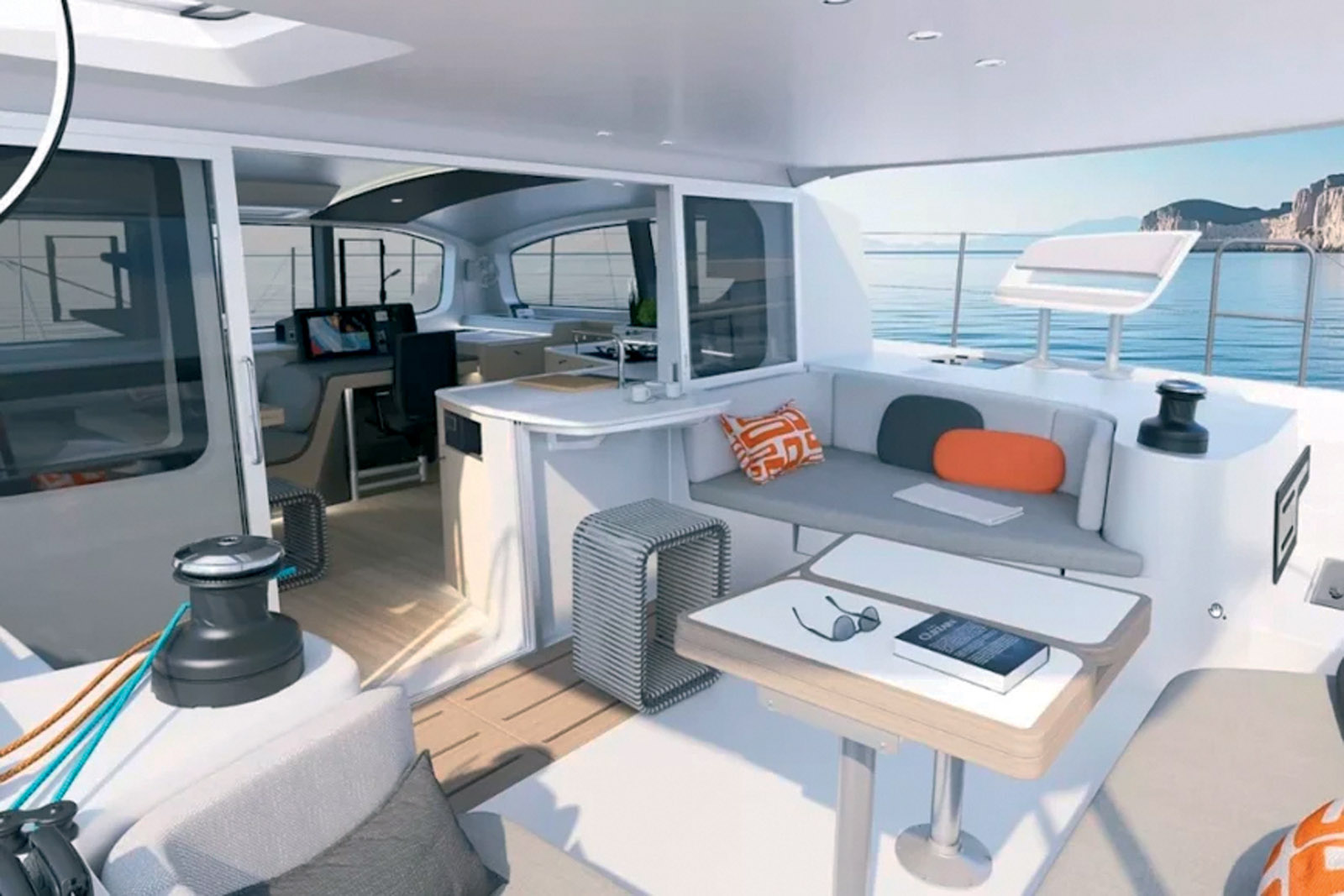
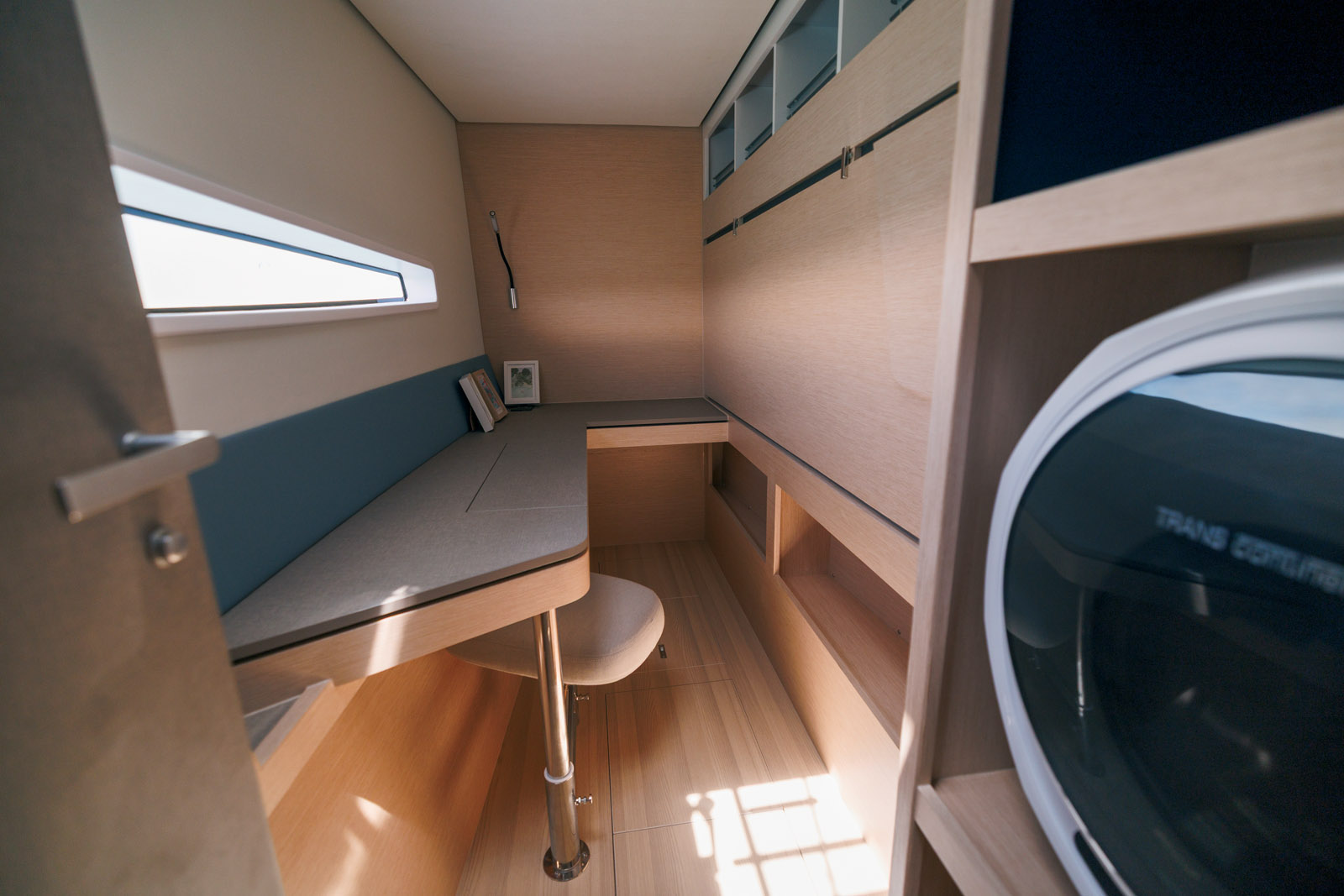
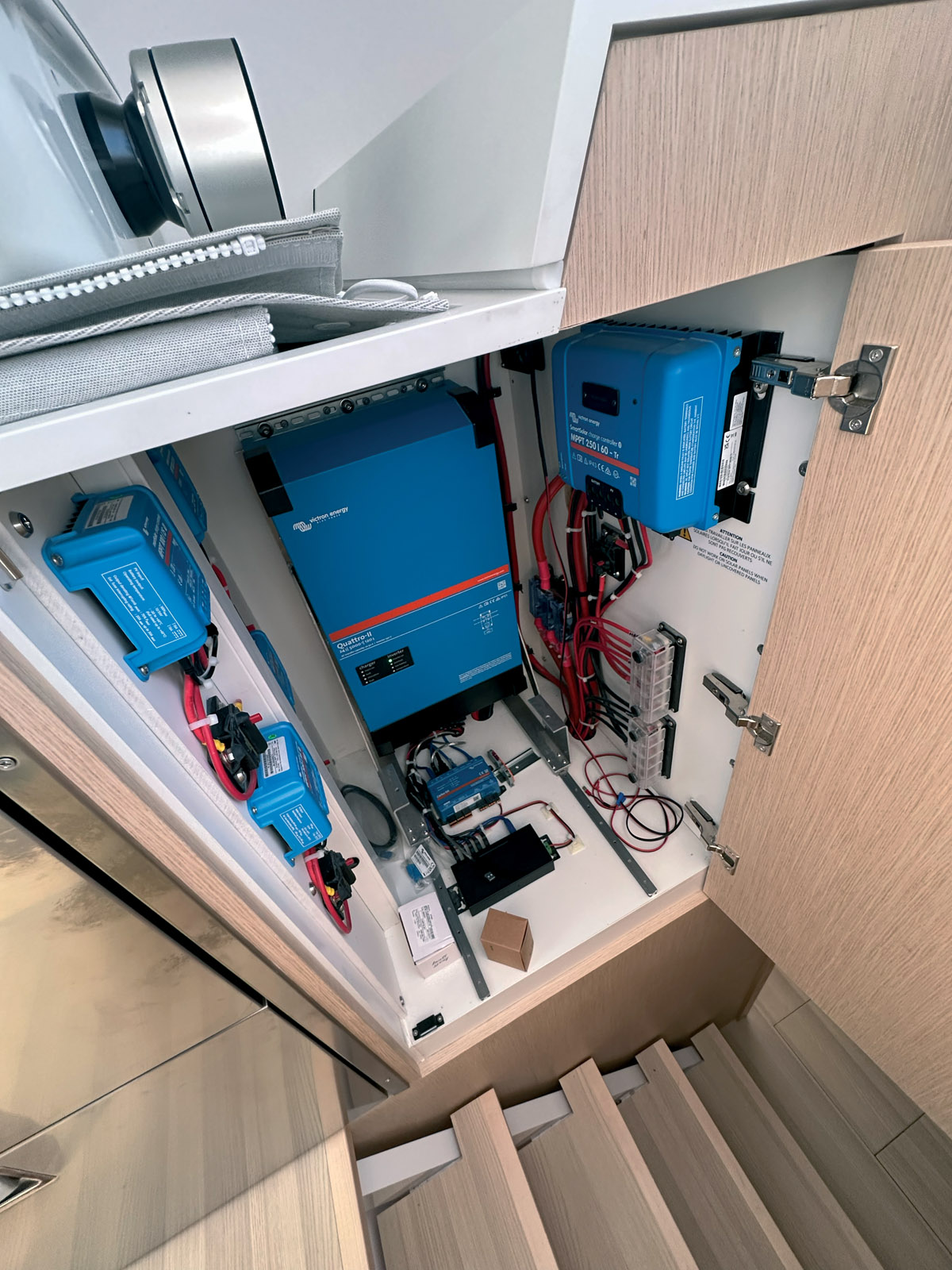
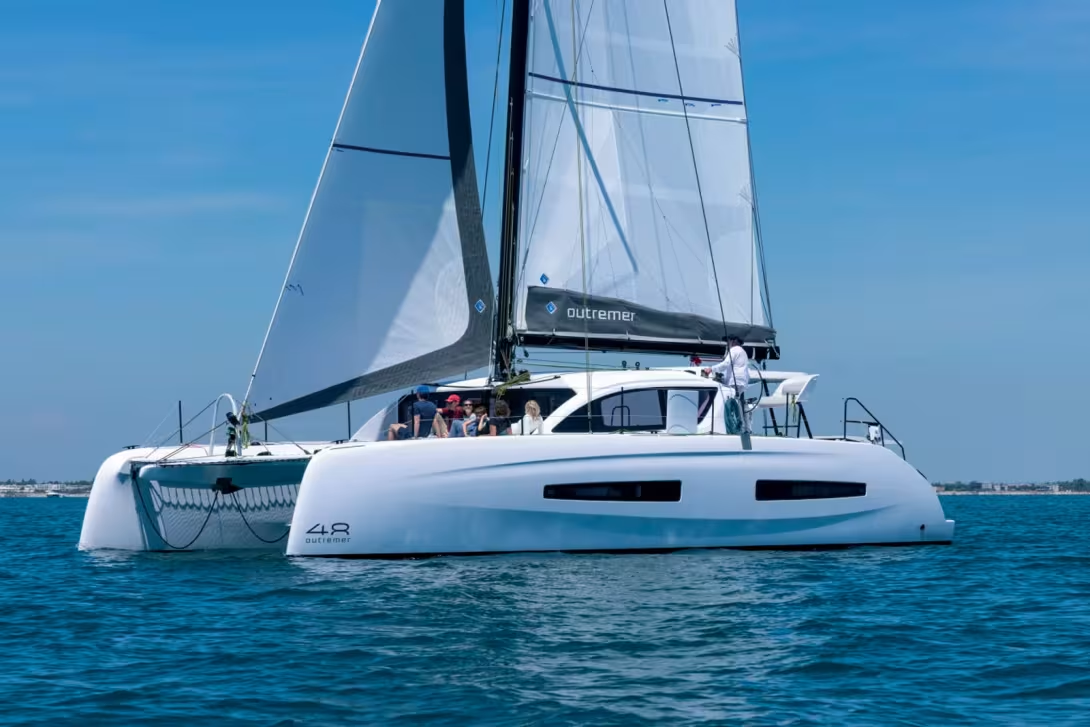
Ignoring the difference of a few centimeters here or there, the Outremer 48 retains the general proportions of the 45 but incorporates all the advancements introduced on the Outremer 55 and then the 52. This is by no means a trivial approach: for several years now, the shipyard has systematically relied on feedback from owners sailing all around the world. Across the entire Outremer fleet, hundreds of thousands of miles of sailing experience now feed into every new development. This close relationship with crews is one of the brand’s strengths. The shipyard supports its customers well beyond the delivery of their multihull and thus benefits from particularly rich feedback on life aboard, the challenges of long-haul cruising, and hearing about desired improvements. The Outremer 48 is a direct result of this collaborative approach. The specifications centered on three key areas: increasing self-sufficiency, improving ergonomics, and simpli- fying sailing maneuvers – though without sacrificing the performance that defines the yard’s DNA. To bring this project to fruition, Outremer naturally renewed its collaboration with the team that has been working on its models since the 5X: VPLP Design for naval architecture, Patrick Le Quément for exterior design, and Darnet Design for the interiors. Even at the dock, the newcomer exudes a strong personality. The lines remain instantly recognizable: sleek hulls, inverted bows, daggerboards, the aft-set coach-roof and a generous rig all combine to create an elegant silhouette where every design choice seems to address both performance requirements and the pursuit of a better quality of life under way. Our first visit aboard, during the International Multihull Show, already hinted at a significant leap in quality compared to the 45. Once out on the water, just a few tacks were enough to confirm this impression: without compromising its sporty character, the Outremer 48 takes a major step forward in terms of comfort and ease of use.
Performance, Without the Pressure
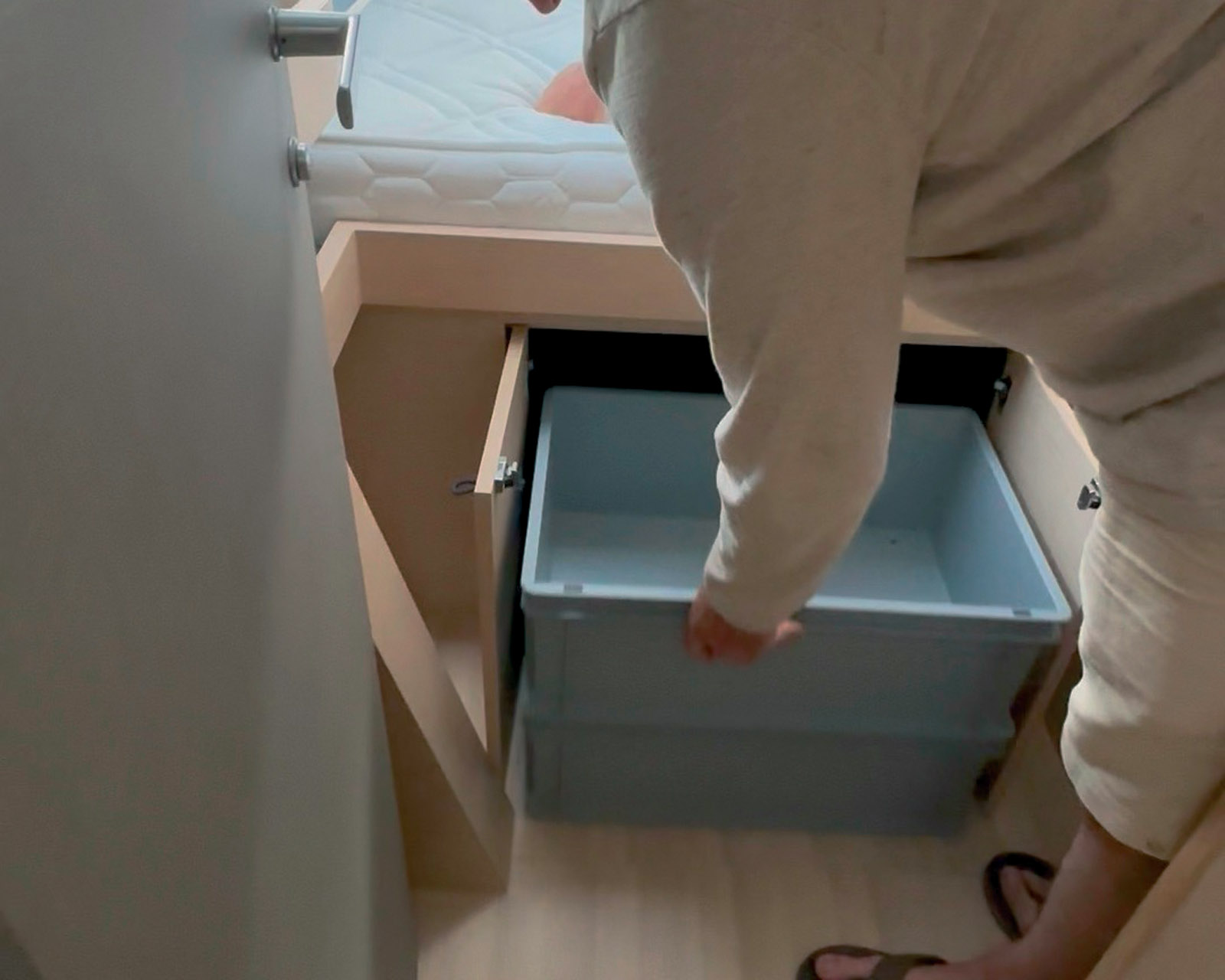
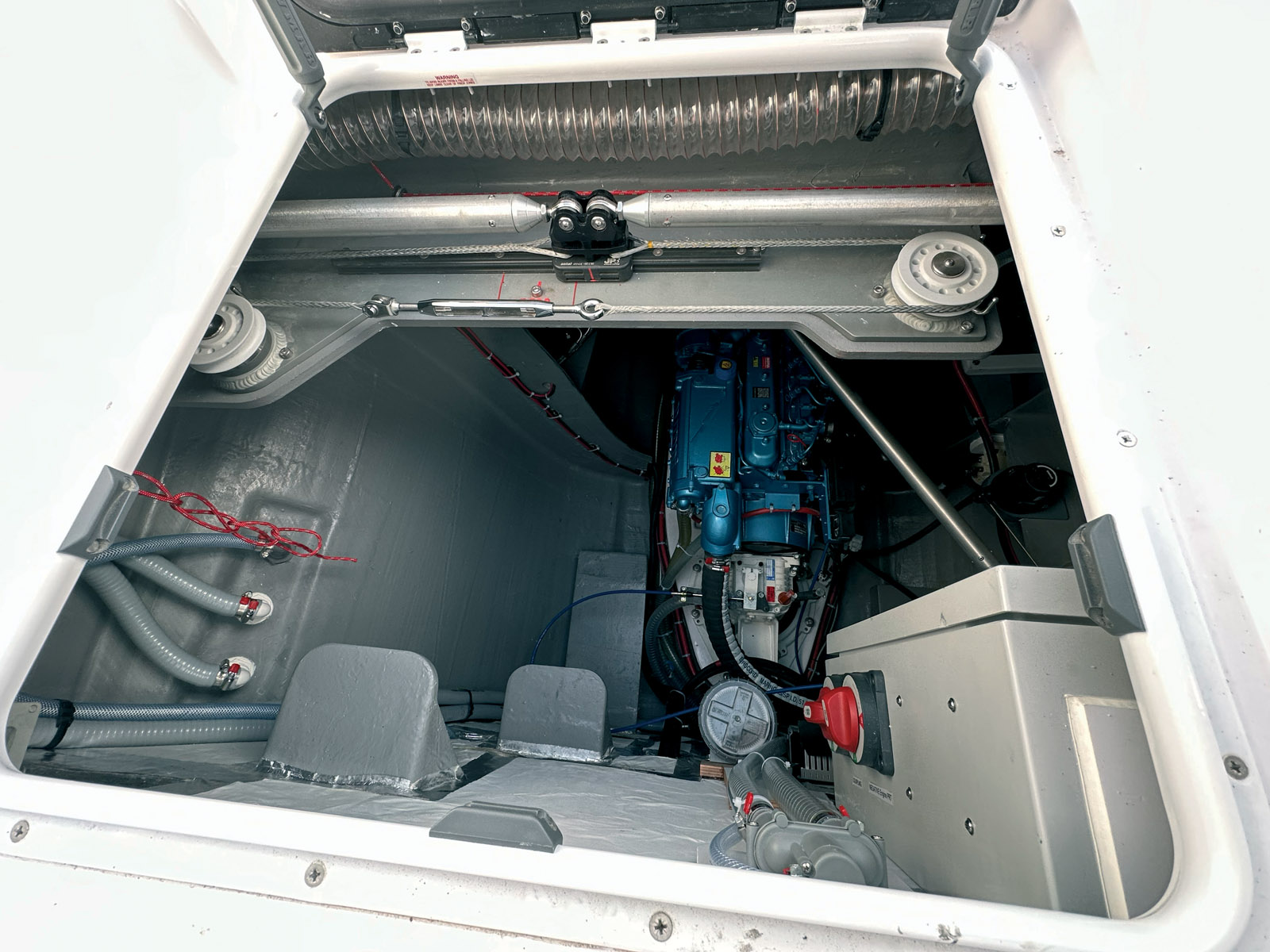
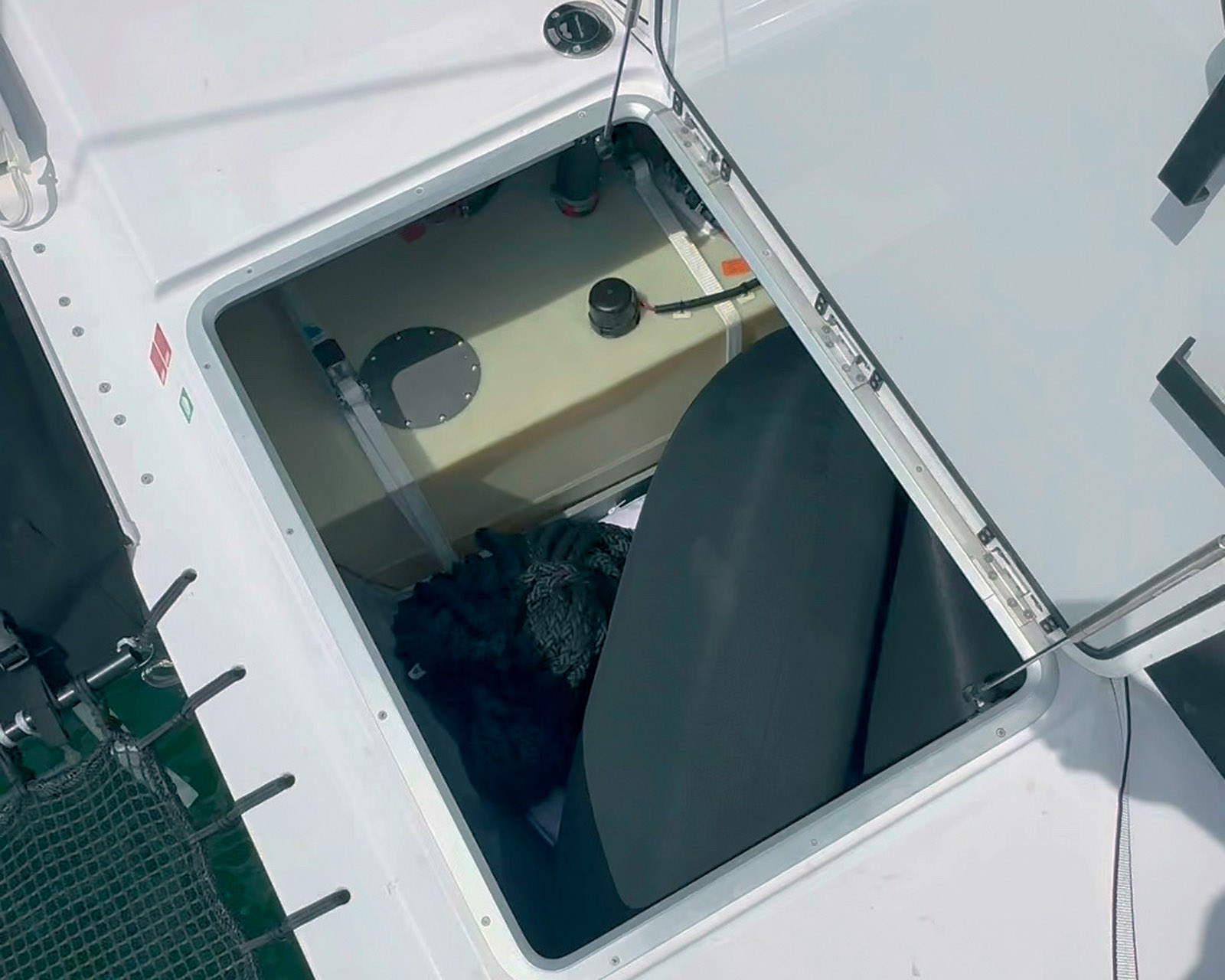
At Outremer, speed is integral to the brand’s DNA. But the philosophy has gradually evolved. Whereas previous generations some- times prioritized pure - even extreme - performance, the shipyard now seeks a high average speed, which is easier to maintain over the long term and less physically demanding for the crew. The goal is no longer to achieve spectacular top speeds at the cost of constant adjustments, but to enable a short-handed crew to sustain good averages over the long term in a relaxed environment. This evolution perfectly reflects the expectations of today’s blue water sailors. This shift in philosophy is directly reflected in the architectural choices. Sixteen inches (41 cm) wider than the Outremer 45, the new 48 also gains just short of 4,000 lbs (approximately 1.8 tons) in displacement to offer greater comfort and, above all, a load carrying capacity of up to 8,800 lbs (4 t), including 118 US gallon (450 liters) of fresh water and the same volume of fuel. This is a critical factor for a catamaran designed for ocean passagemaking. This increase in weight is largely offset by a larger sail area, which allows the 48 to achieve a remarkable sail-to-displacement ratio of 13.33 m²/t. This figure places it among the highest- performing cruising catamarans in its class.
The foam-core sandwich construction, built using infusion technology (a legacy of the industrial expertise developed at the factory in Lorient, Brittany), also helps maintain high performance, particularly in light airs. Matthieu Rougevin-Baville, Outremer’s sales director, even assured us that the catamaran is capable of sailing at speeds close to the wind speed in light airs. A claim that we’d have the opportunity to verify a few weeks later, during an owners’ gathering held in particularly light conditions. On paper and at the dock, everything looks to be in place to offer a catamaran capable of covering miles quickly without turning every voyage into a sporting demonstration. That’s precisely what we’ll put to the test once we cast off.
Under Sail: High- performance, but Never Demanding
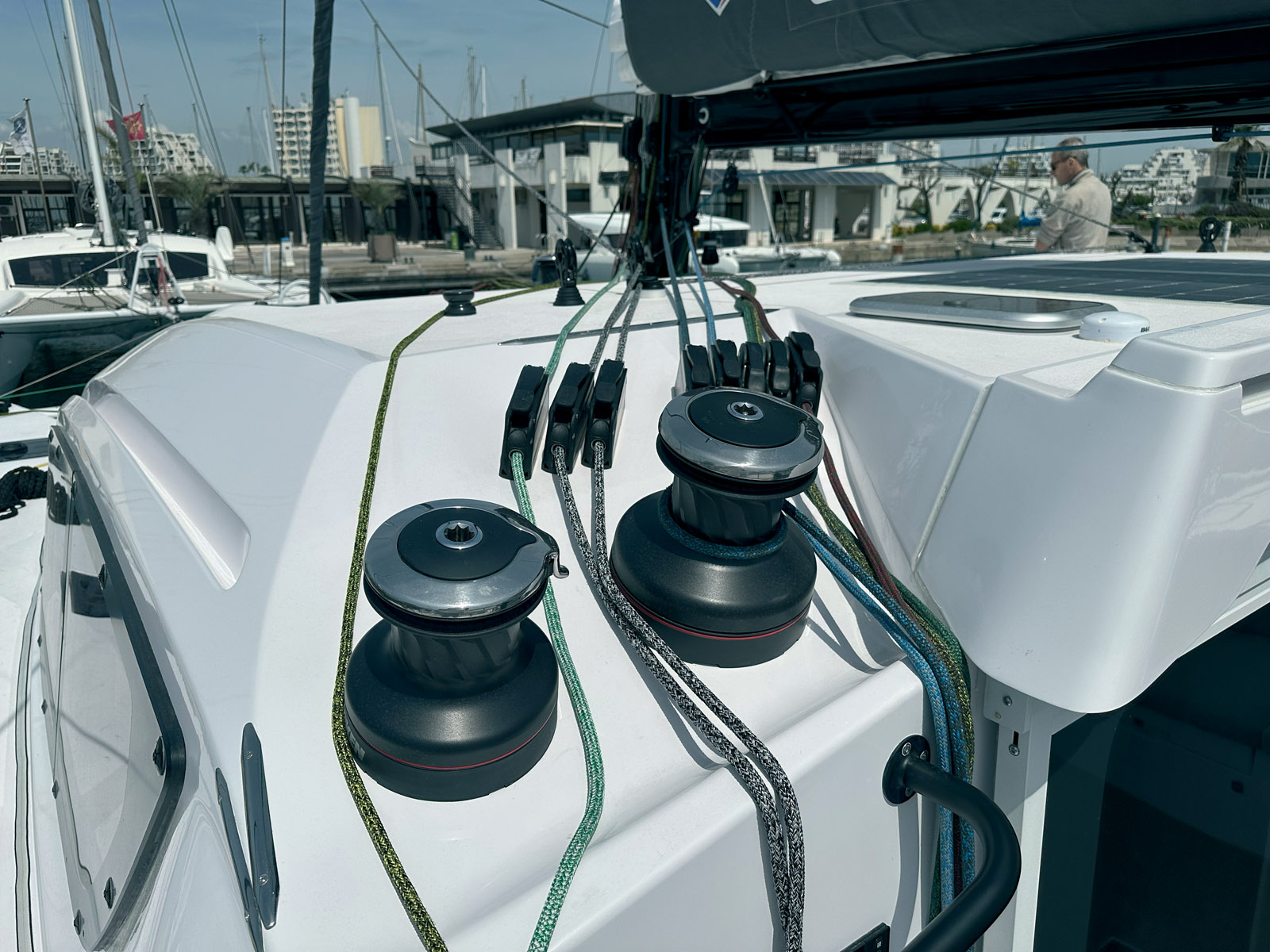
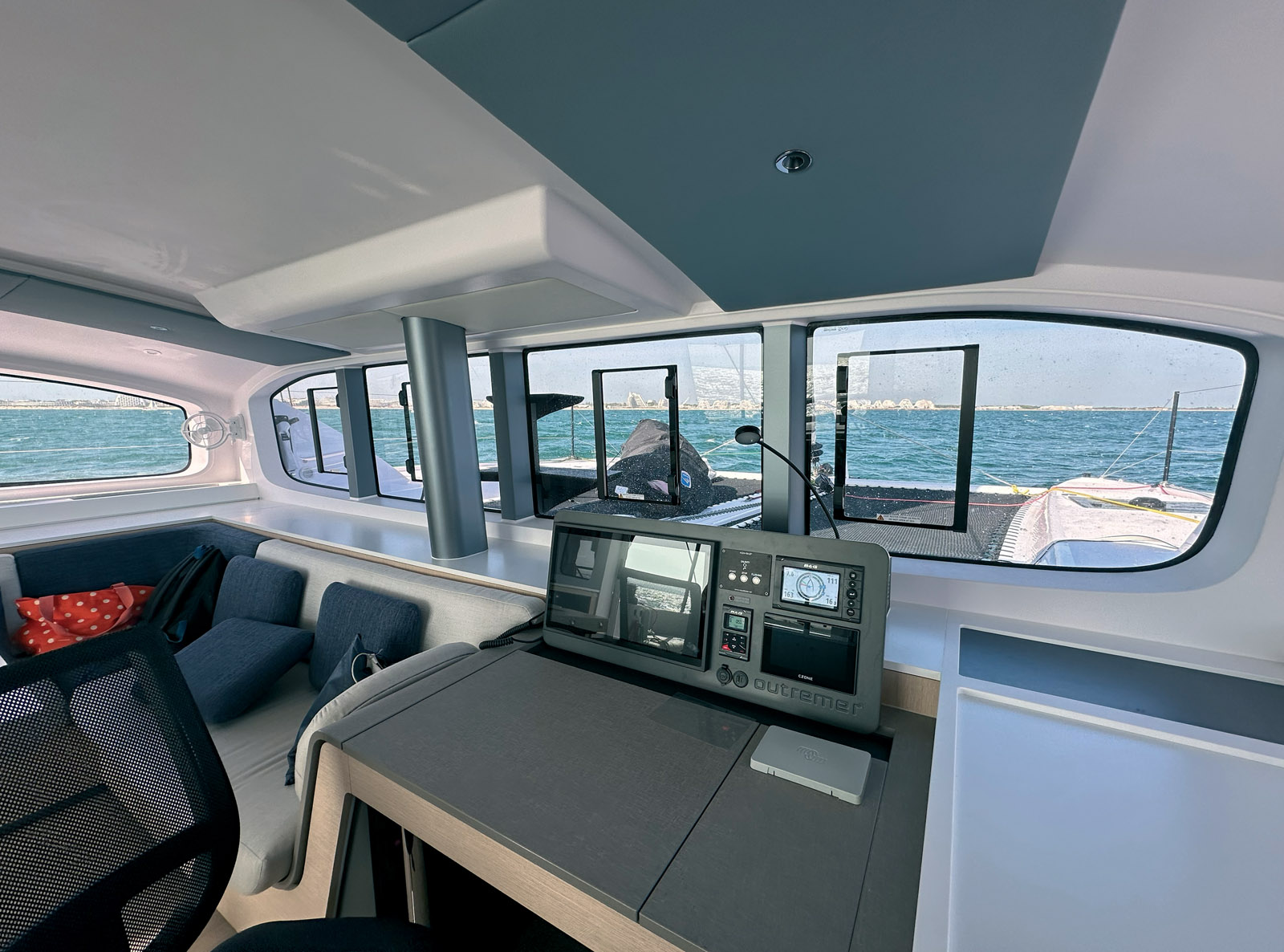
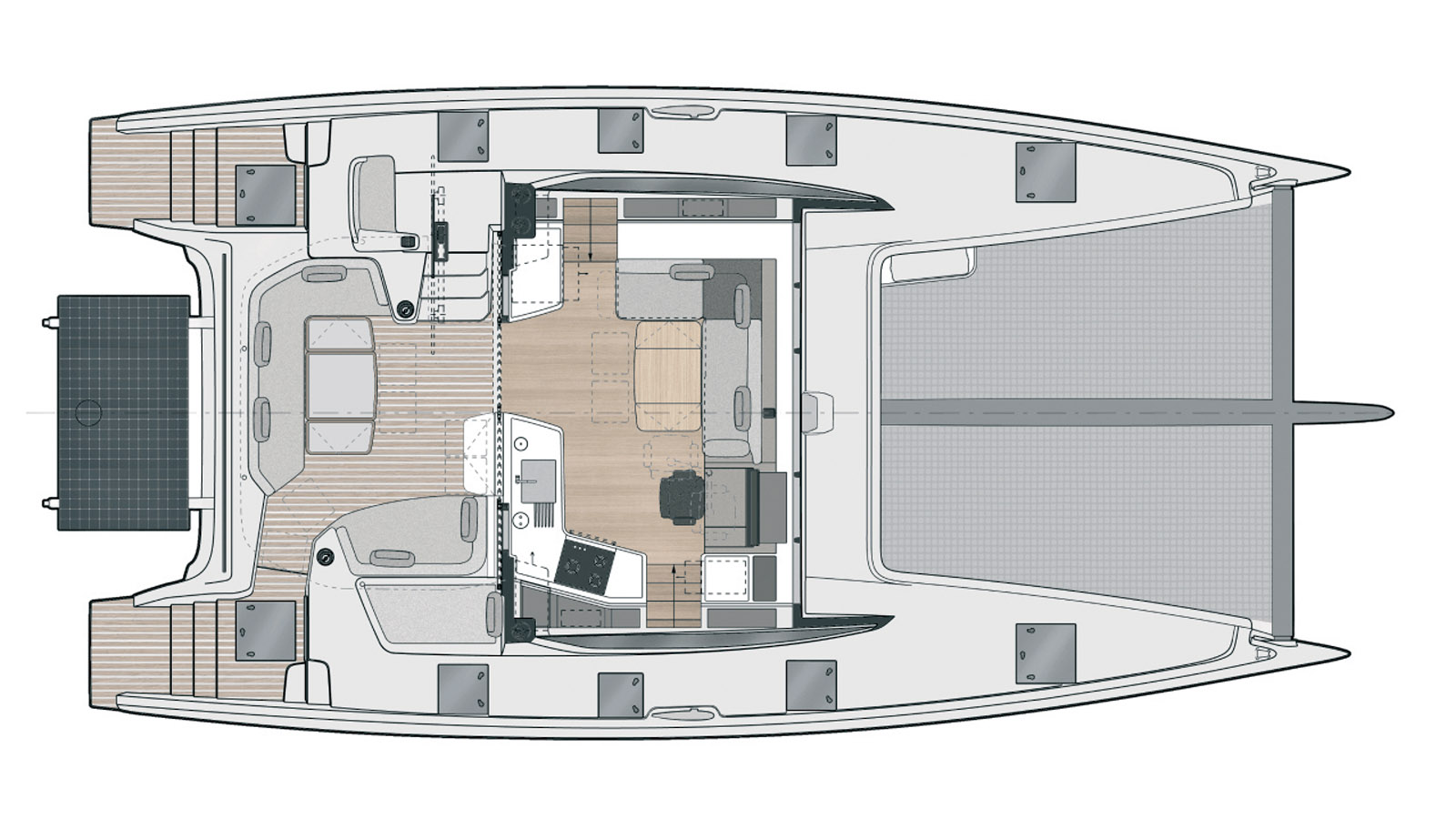
Coming out of the harbor, an onshore wind was blowing between 15 and 18 knots, while a 3 to 5-foot (1 to 1.5 m) southeasterly swell was building offshore. Ideal conditions for discovering the true character of the new Outremer 48. The two engines allowed us to leave the dock with ease. Thanks to the low windage of the topsides and the overall width of the platform, port maneuvers remain precise. Once clear of the channel, we settled the motors at 2,200 rpm, which was enough to propel the catamaran at about 6.5 kts before we prepared to hoist the mainsail. Access to the coachroof is via two steps located at the foot of the mast. The boom, intentionally set low, makes it easier to open the lazy bag and take in reefs. Beyond the aerodynamic benefits, this layout significantly improves safety during maneuvers by limiting the need to work at height. The mainsail is hoisted using the electric winch, whose foot-operated control keeps your hands free to coil the halyards or maintain course. Once the genoa was unfurled (our test boat was also equipped with a self-tacking staysail) the 48 accelerated rapidly. With the sheets trimmed, the 48 was picking up speed with disconcerting ease. Nothing spectacular: just that quintessential Outremer feeling of watching the log read climb steadily without the catamaran ever seeming to strain. The sleek bows, daggerboards, and generous sail plan allow for efficient upwind sailing while maintaining a particularly light helm. There’s no doubt about it: the Outremer 48 ranks among the highest-performing cruising multihulls in its class. Management of the daggerboards plays a key role in this efficiency. While both boards remained down during our test, Outremer provides its community with a guide detailing recommended configurations based on sailing direction and wind strength. This approach is true to the spirit of the shipyard, which willingly shares the feedback gathered from its owners. Below decks, the contrast is striking. Even as the log well exceeds 8 knots, no unwanted creaking disturbs the smooth progress. Sitting at the chart table, you’d almost forget the speed, so confident is the catamaran’s handling and so comfortable the ride. It is precisely this ease that best characterizes this new Outremer.
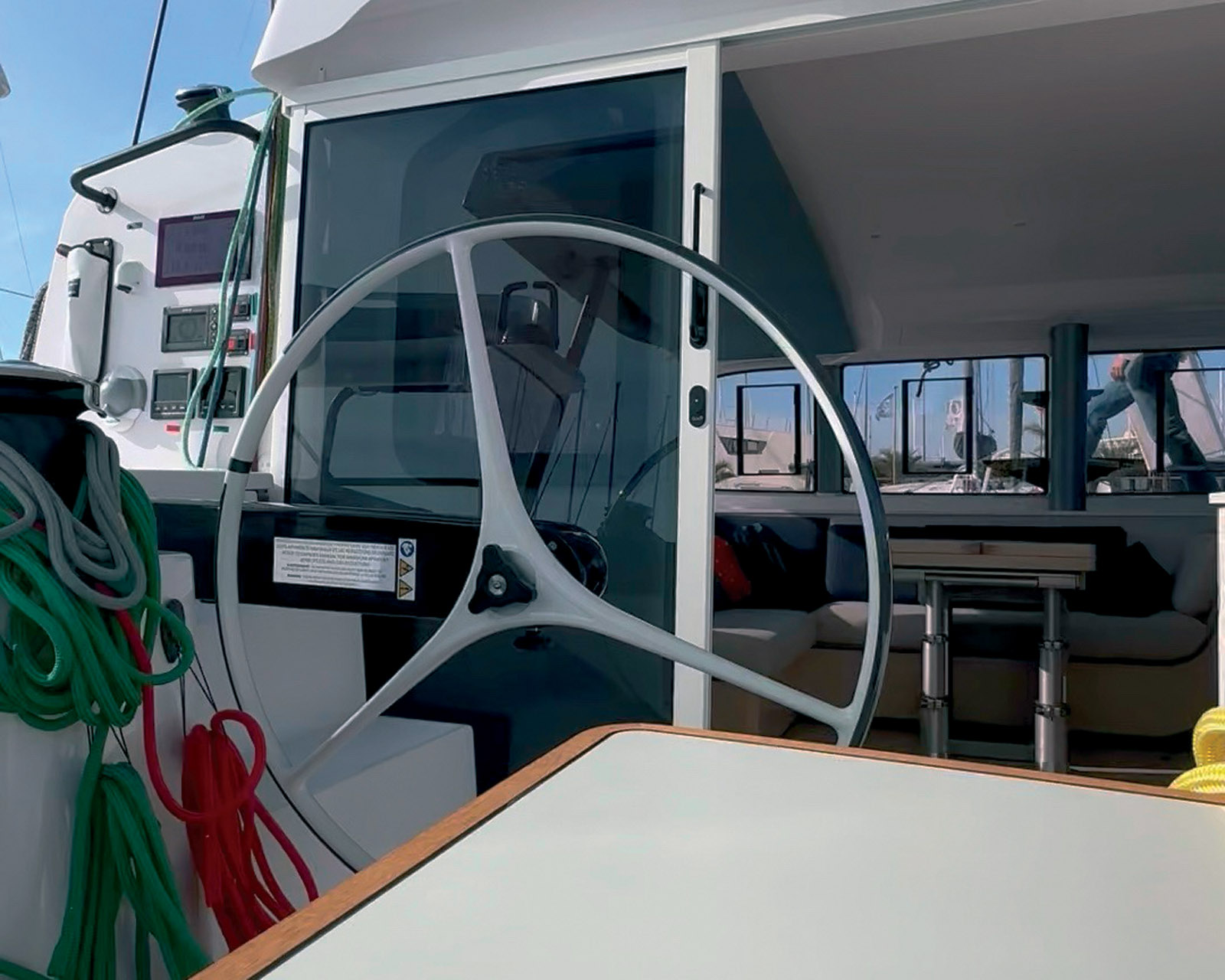
Tacking maneuvers confirm the improvements made to the deck layout. Thanks to the genoa sheet being routed to the console, maneuvers require very little moving around. The benefit is noticeable for a short-handed crew, and even more so when offshore sailing where every bit of energy saved counts.
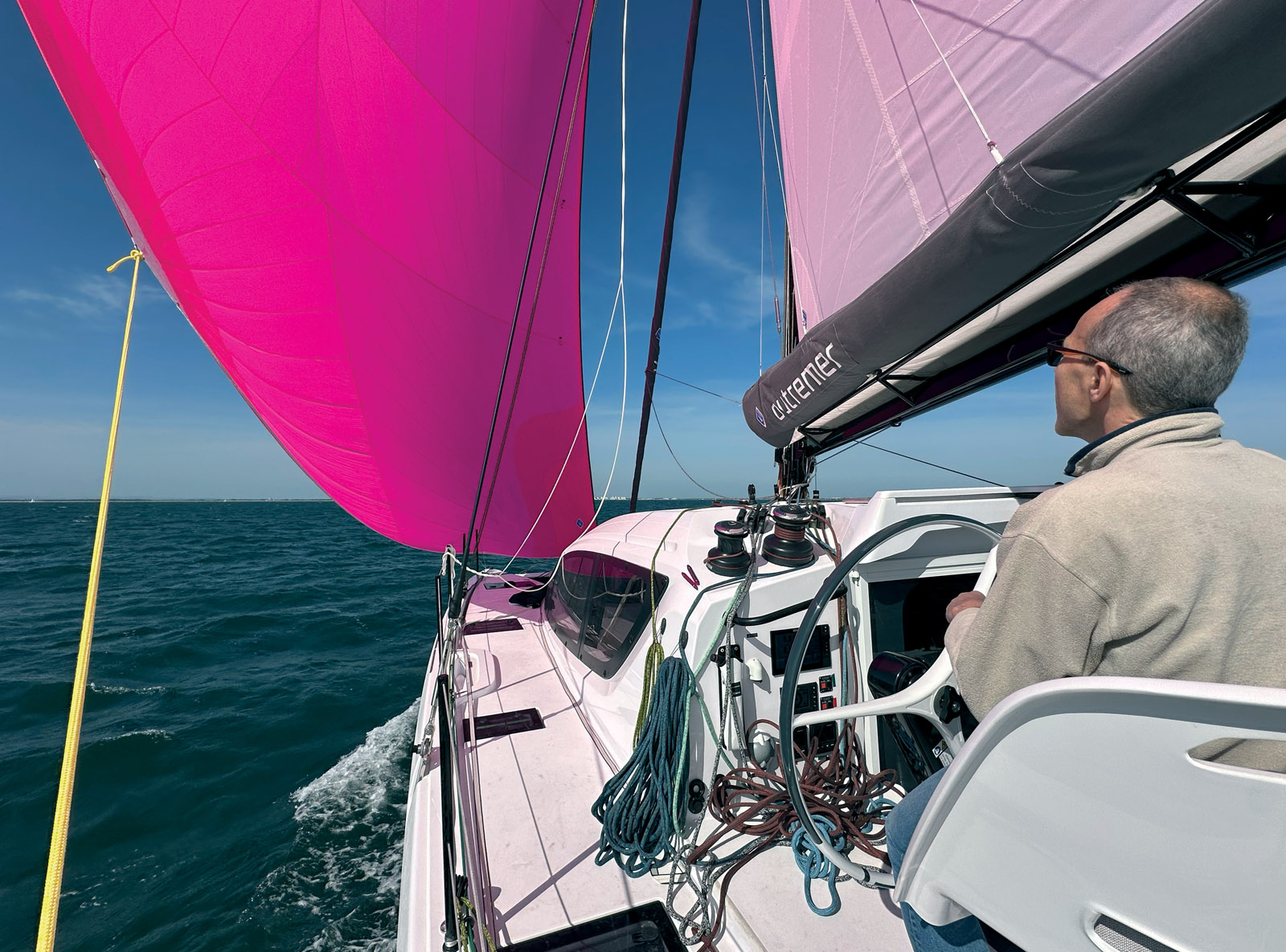
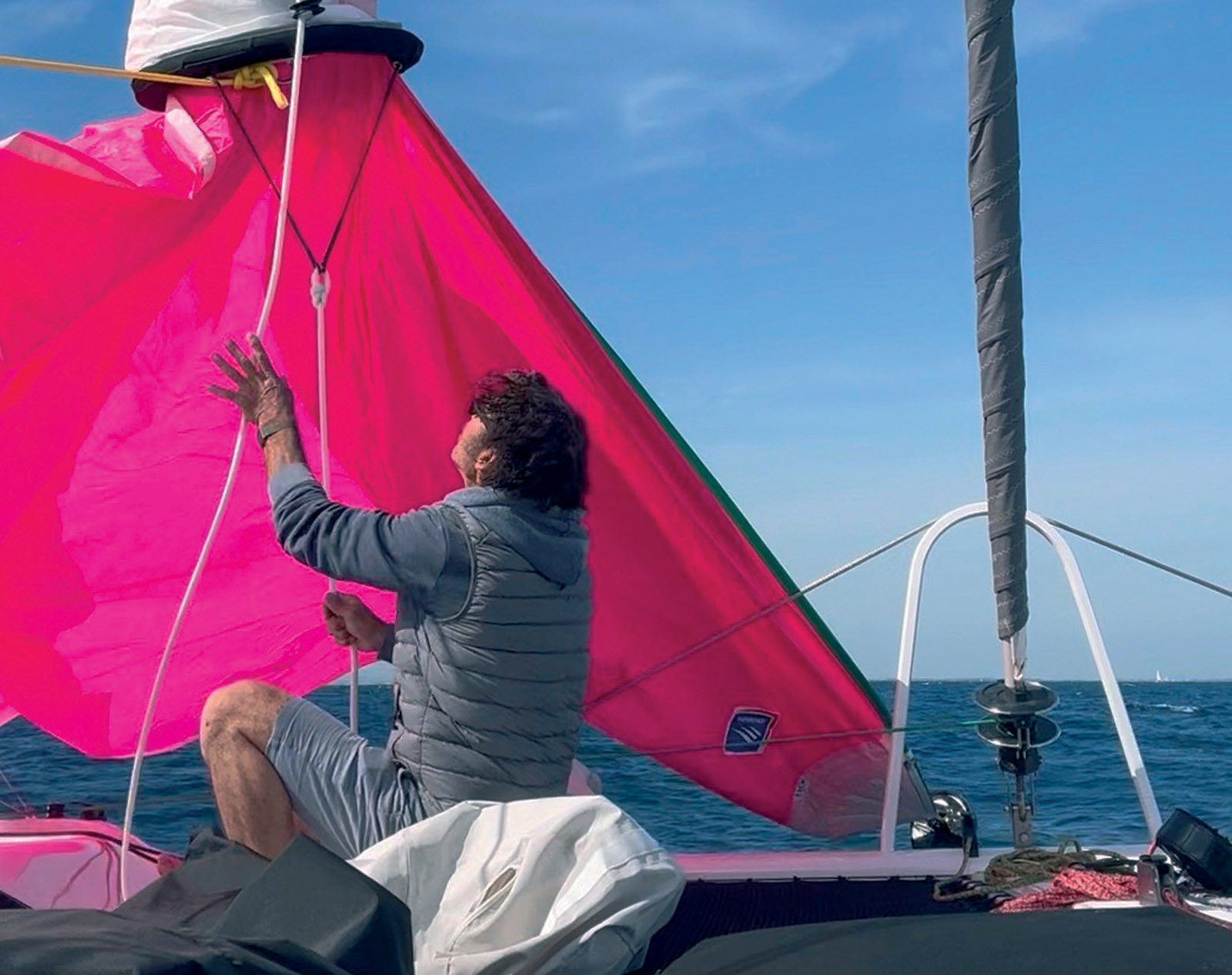
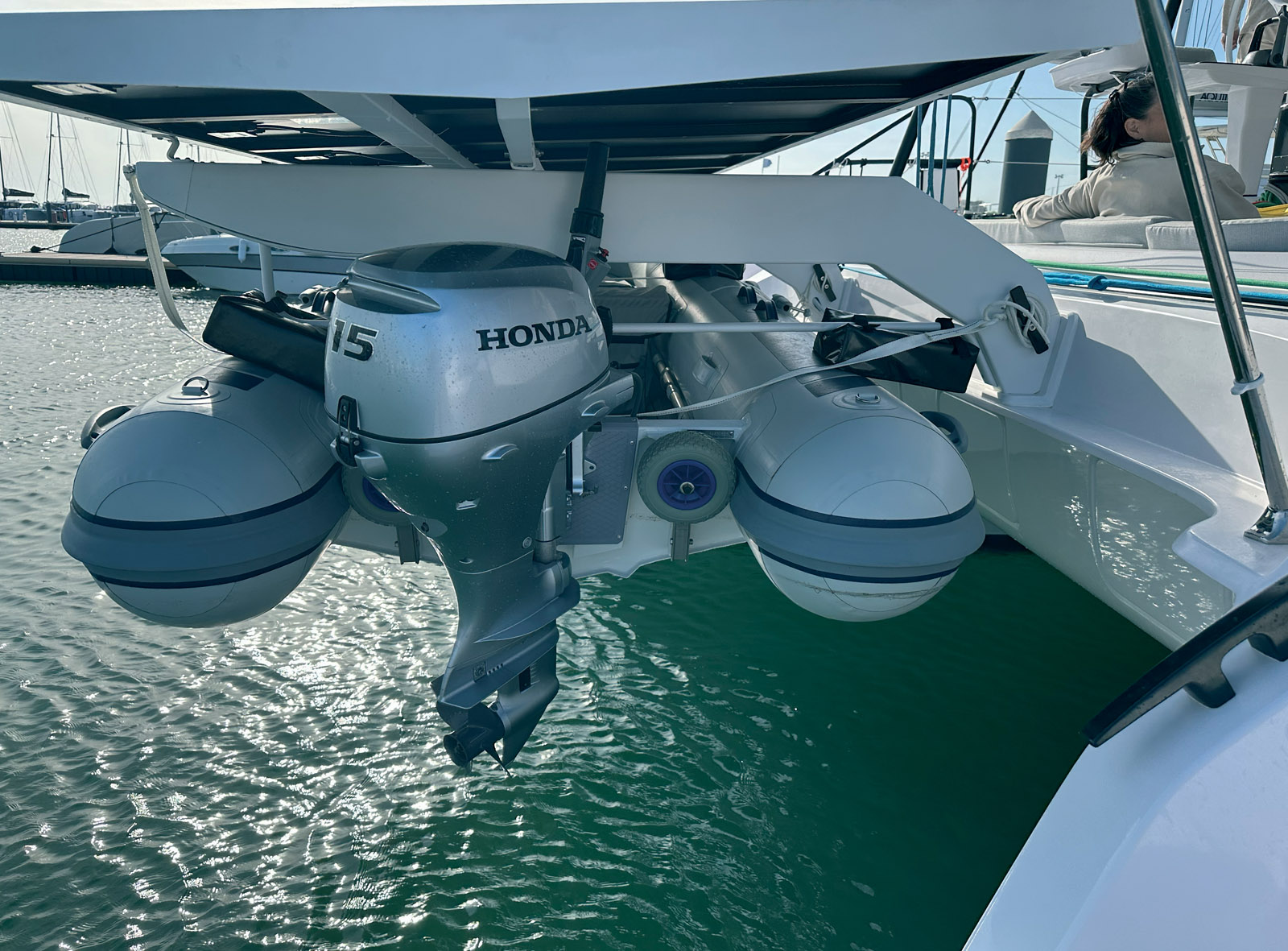
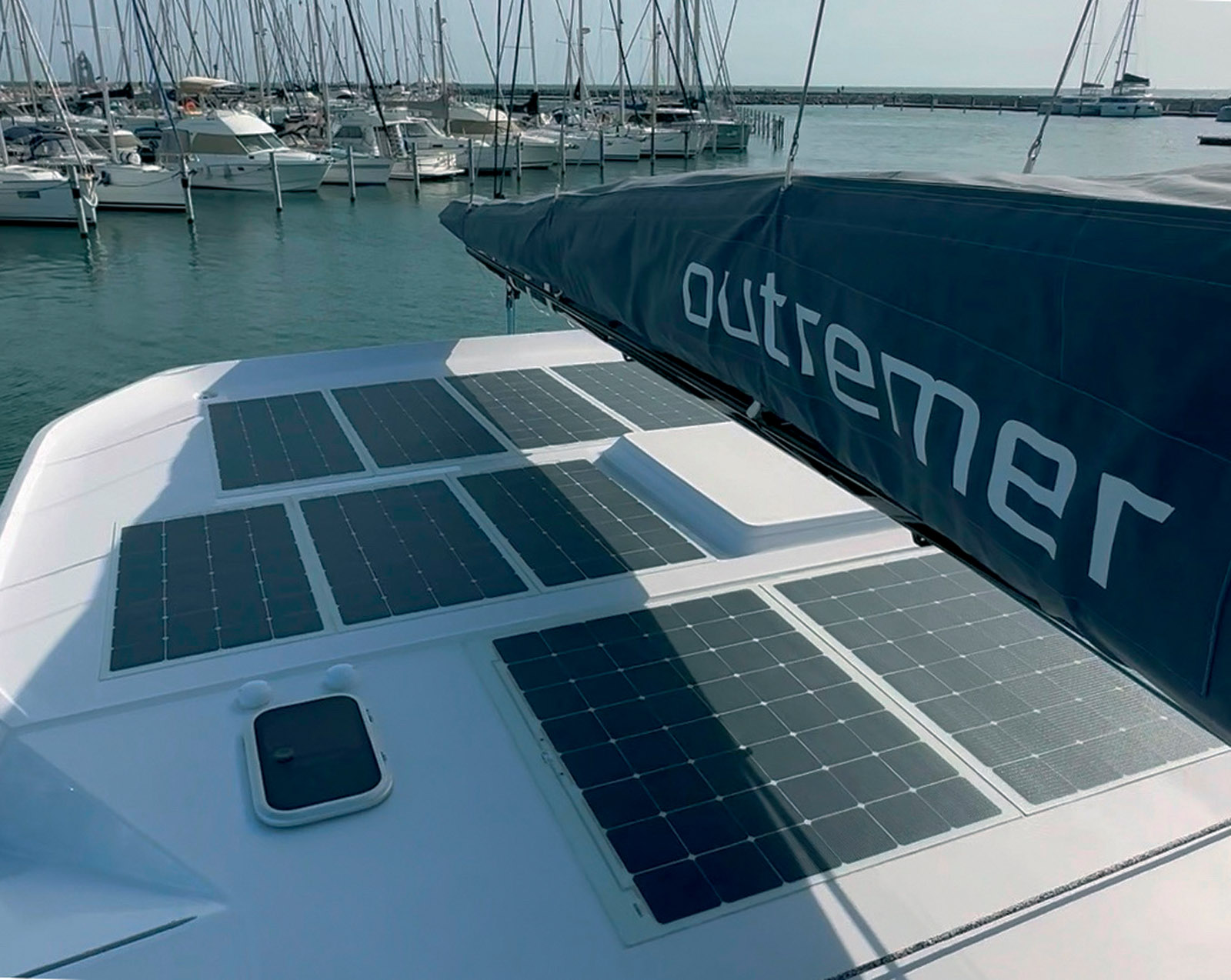
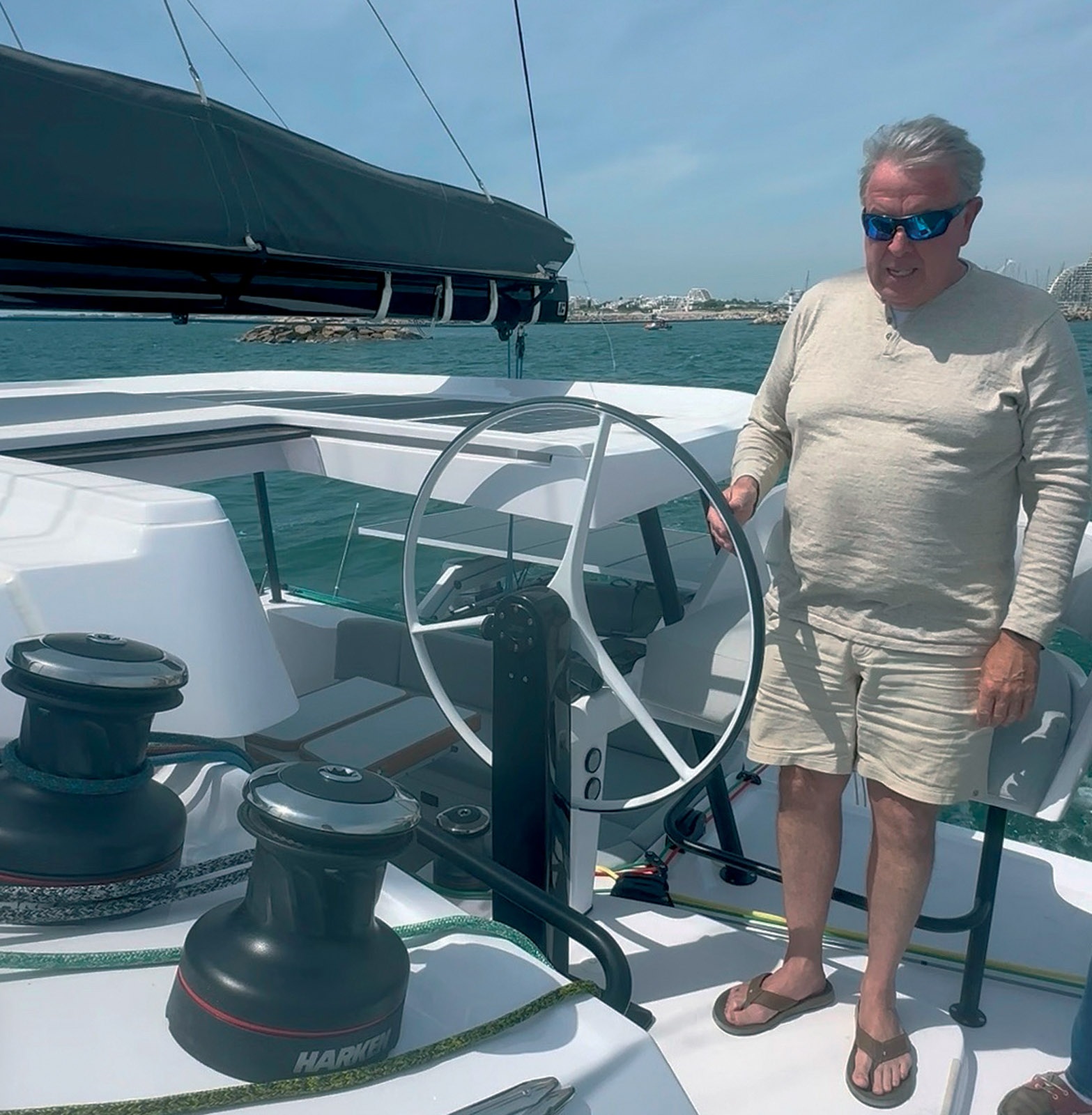
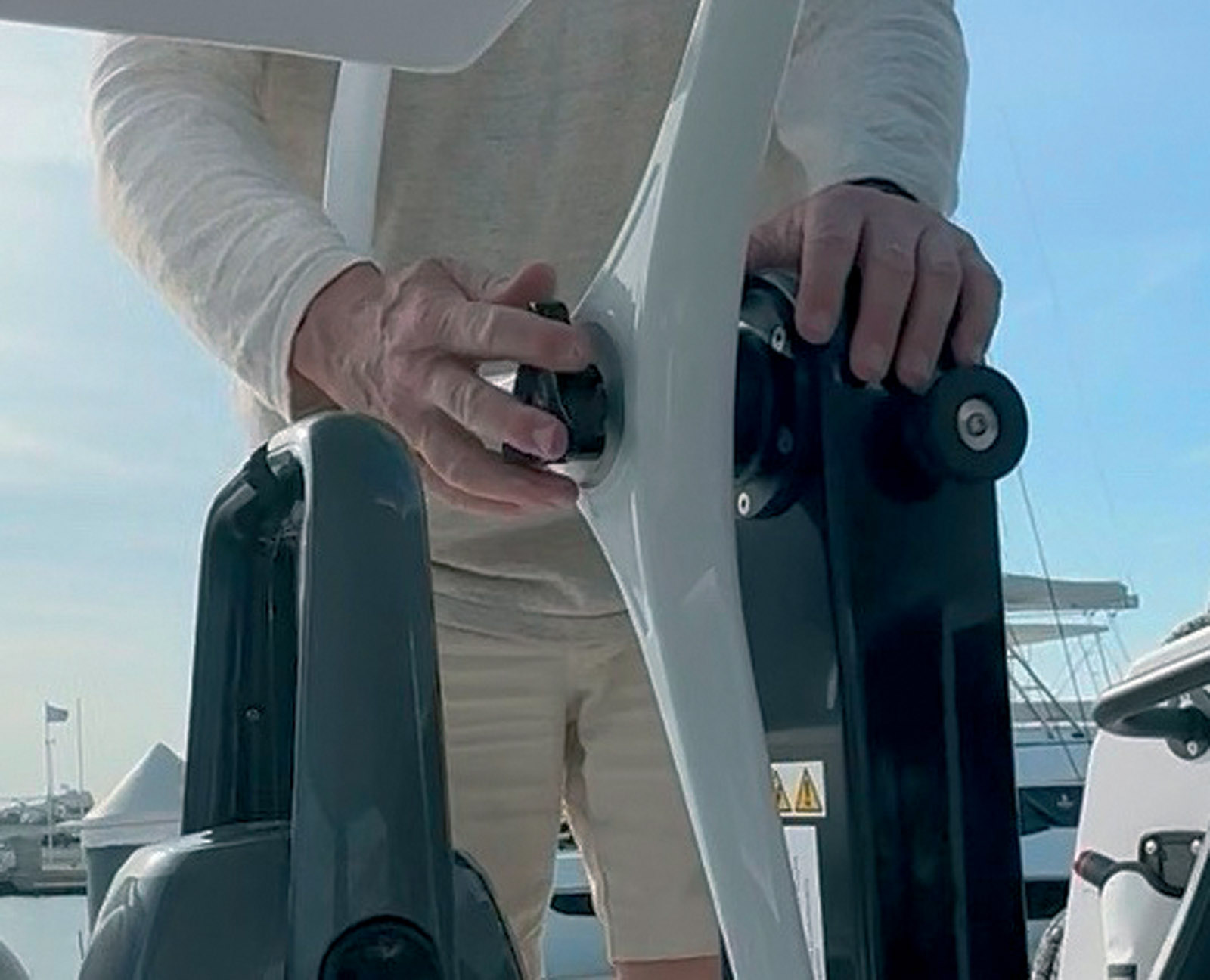
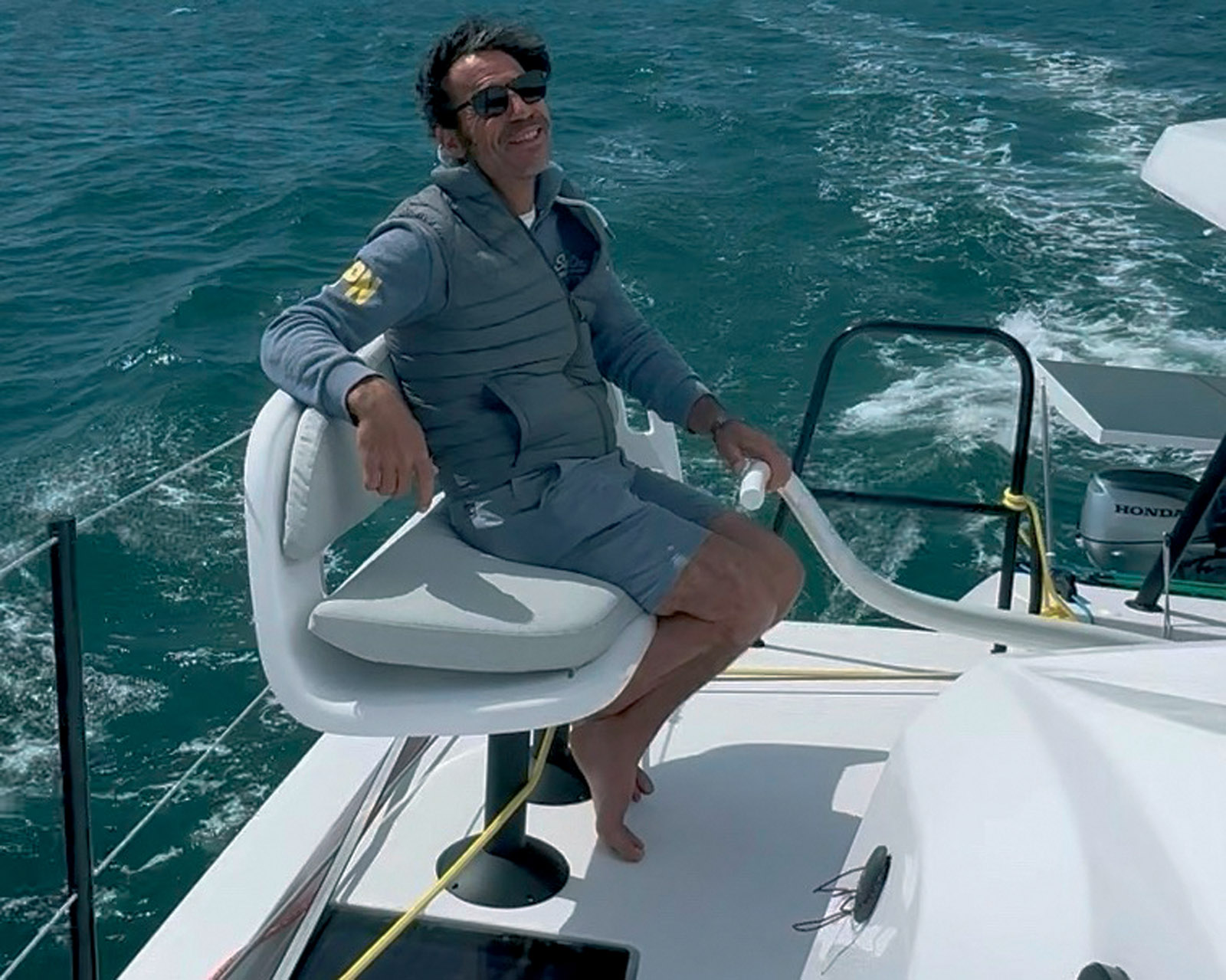
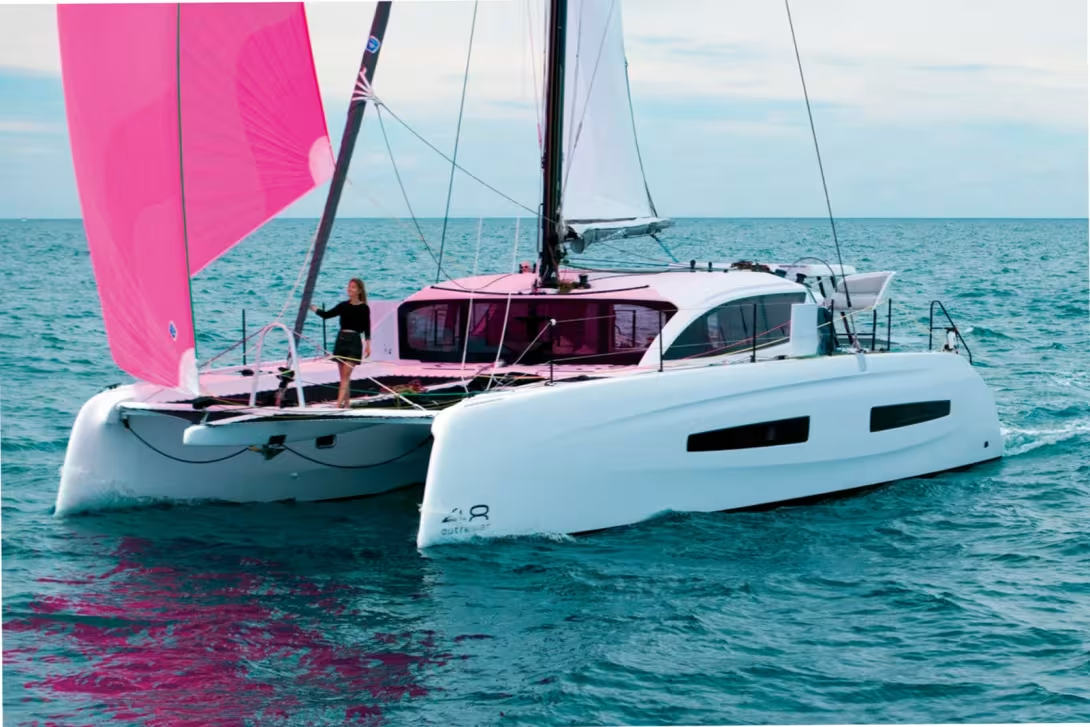
We took advantage of one tack to try out the tiller mounted on the starboard side. The connection with the rudder feels naturally more direct, the telltales are easy to read, and the steering position is particularly comfortable. You’ll just need to remember to disengage it before executing a tack from the wheel, or else you’ll limit its range of turn. For an upwind leg, the dinghy was launched in a matter of moments thanks to the davits integrated into the arch, which also supports some of the solar panels. A few photos later, it was time to head back in... under the asymmetric spinnaker. Moving forward is made easier by a handrail running along the coachroof and the absence of lower shrouds interrupting the side-decks. The spinnaker was hoisted without difficulty and as soon as it filled, the boat accelerated more sharply. In our steady 18-knot wind, the GPS quickly read 15 knots. Yet the catamaran never seemed to be overwhelmed or demanding constant attention. This is undoubtedly where the Outremer 48’s greatest success lies. The performance is definitely there, but it remains accessible. The thrills are present, without ever turning every mile covered into a high-wire act. A philosophy that perfectly aligns with the multihull’s purpose: covering the passage quickly, for long periods, and with peace of mind.
Conclusion
It’s often said that there are as many sailing programs as there are sailors. In the world of long- distance cruising, Outremer has built a unique reputation by offering catamarans capable of covering miles quickly while remaining accessible to a family crew. The 48 fits perfectly into this philosophy. More comfortable, brighter, and significantly more refined than its predecessor in terms of ergo- nomics, it retains the seafaring qualities that have made the brand such a success. Ultimately, the most remarkable feature isn’t the top speed - it’s the ease with which it’s achieved. The 48 never seeks to impress its crew; it simply invites them to cover more miles, day after day. This evolution is undoubtedly the project’s greatest achievement. Ultimately, this new 48 stands out as one of the most refined blue water cruising catamarans in its class. A vessel capable of satisfying enthusiasts of fast sailing while meeting the expectations of a crew planning to spend several years sailing around the world. A particularly successful blend of performance, comfort, and ease of use.
Figures from Multihulls World
The hull length of the Outremer 48, which succeeds the iconic 45 while maintaining dimensions compatible with most port facilities.
24’9” (7.55 m)
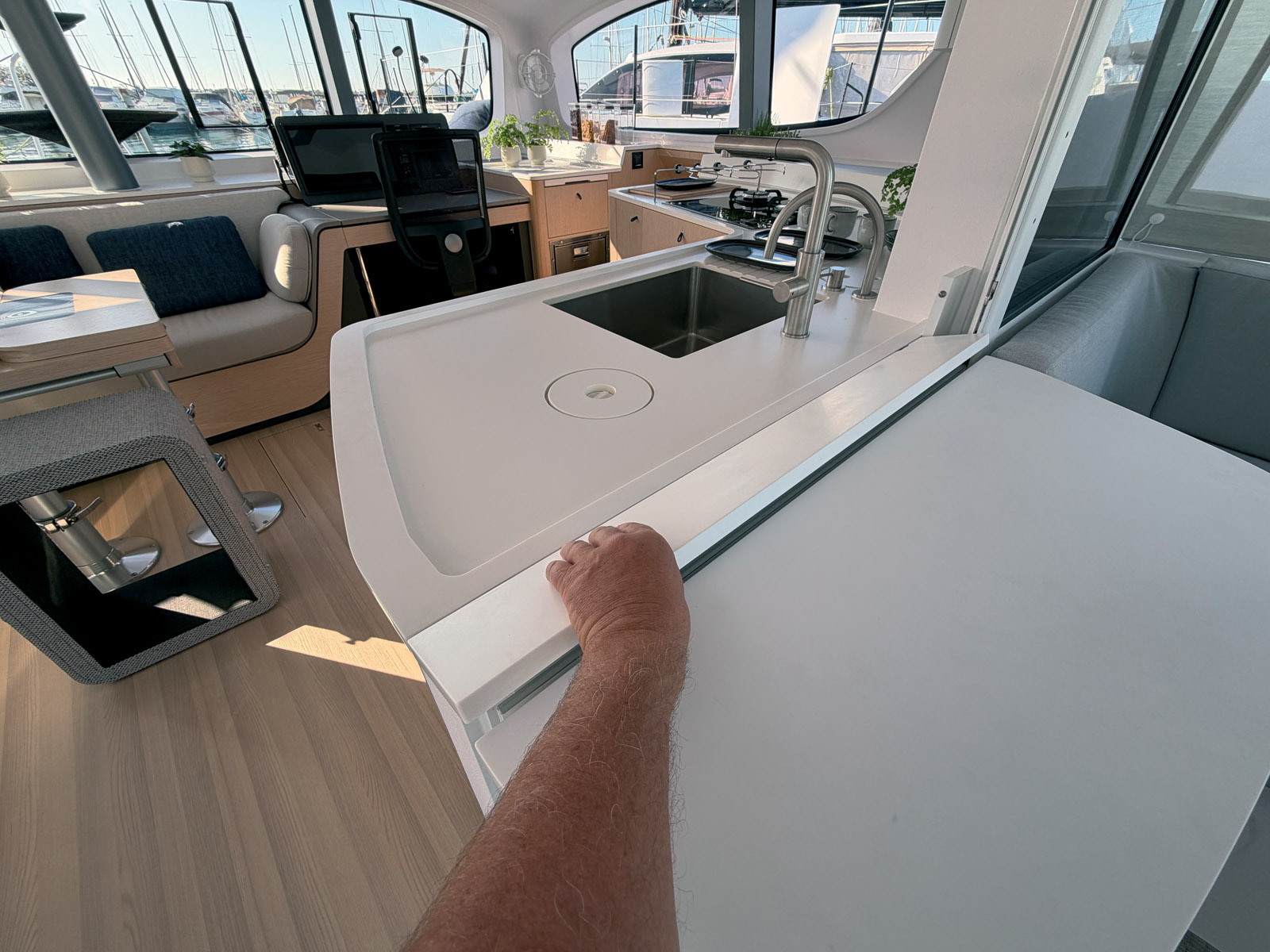
A modest beam for a catamaran of this size, but 16” (41 cm) wider than the 45 to provide more space in the cockpit and saloon.
23,150 lbs (10.5 t)
Light displacement. A measured value that remains at the heart of the Outremer philosophy.
8,800 lbs (4 t)
Maximum payload, representing nearly 38% of light displacement. A figure that speaks to the 48’s offshore ambitions, as it can carry equipment, provisions, a dinghy, and supplies without compromising its sailing capabilities.
13.33 m²/t
The sail area-to-displacement ratio under mainsail and genoa. A particularly high figure that explains the catamaran’s excellent performance, especially in light winds.
118 + 118 US gal (450 + 450 l)
The capacities of the fresh water and fuel tanks, perfectly suited for long passages.
2 × 38 hp
The standard engine installation, with a hybrid propulsion system available as an option.
1,937 sq ft (180 m²)
The sail area of the asymmetric spinnaker, enough to maintain good average speeds whenever the wind is favorable.
15 knots
The maximum speed recorded during our test under an asymmetric spinnaker in 18 knots of steady wind. A speed achieved without ever giving the helmsman the feeling of pushing the catamaran beyond its limits
.
Outremer Services: For Personalized Support
Highly refined ergonomics of the helm stations and deck layout
One of the most comprehensive owner support programs on the market
A draft of almost 8’ (2.35 m) with the boards down that must be taken into account at certain anchorages
High price, although it remains consistent with the level of features
Technical Specifications
Architects: VPLP Design
Exterior design: Patrick Le Quément
Interior design: Darnet Design
Length: 48’ (14.63 m)
Beam: 24’9” (7.55 m)
Draft: 3’3”/7’9” 1/2.35 m (daggerboards up/down)
Mast height: 70’6” (21.5 m)
Light displacement: 23,150 lbs (10.5 t)
Payload: up to 8,800 lbs (4 t)
Powertrain: 2 × 38 hp
Option: hybrid propulsion
Water: 118 US gal (450 l)
Fuel: 118 US gal (450 l)
Mainsail: 925 sq ft (86 m²)
Genoa: 581 sq ft (54 m²)
Solent: 387 sq ft (36 m²)
Gennaker: 1,615 sq ft (150 m²)
Asymmetric spinnaker: 1,937 sq ft (180 m²)
CE certification: A – 8 to 16 people
Base price: € 1,300,000 ex-tax
www.catamaran-outremer.com