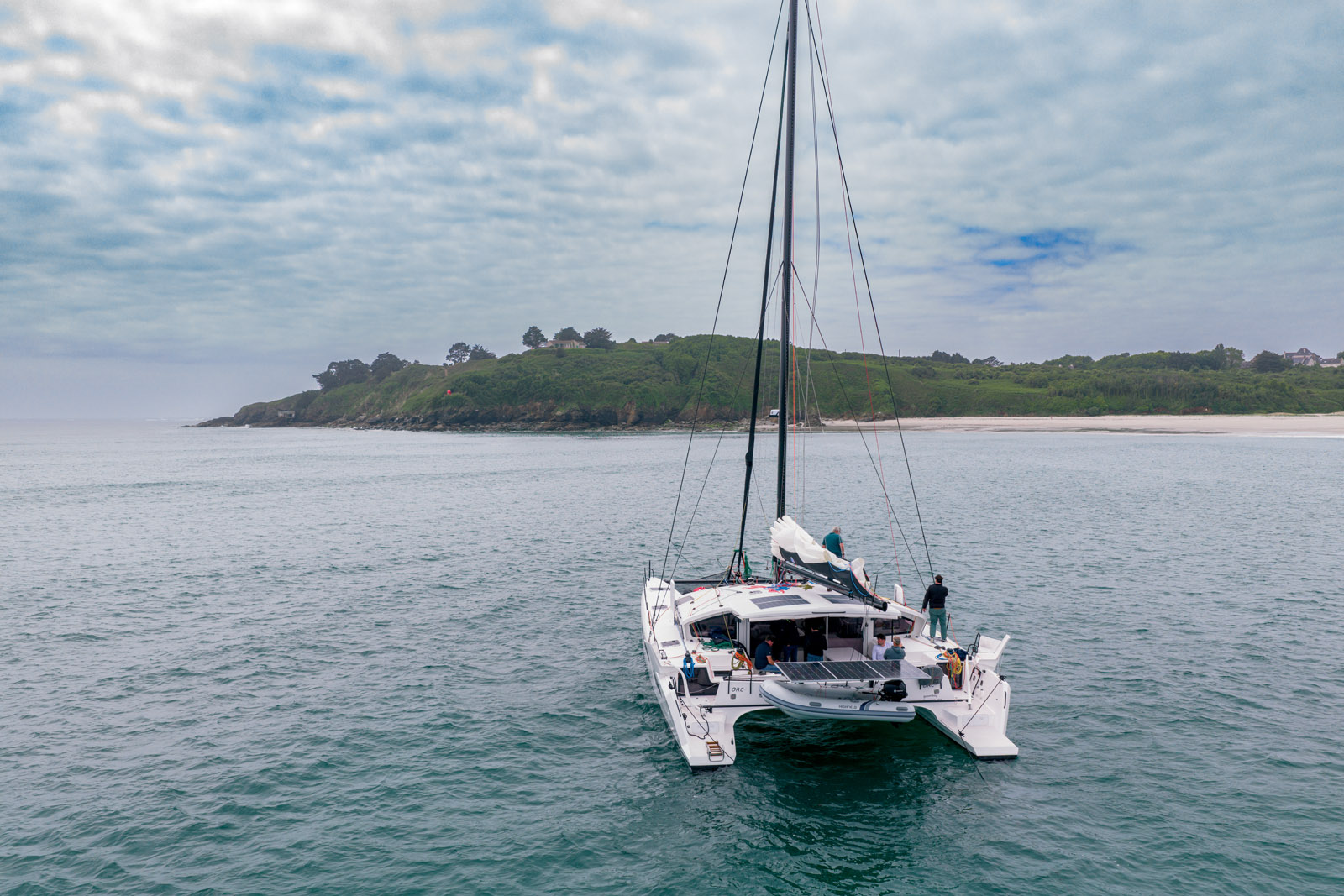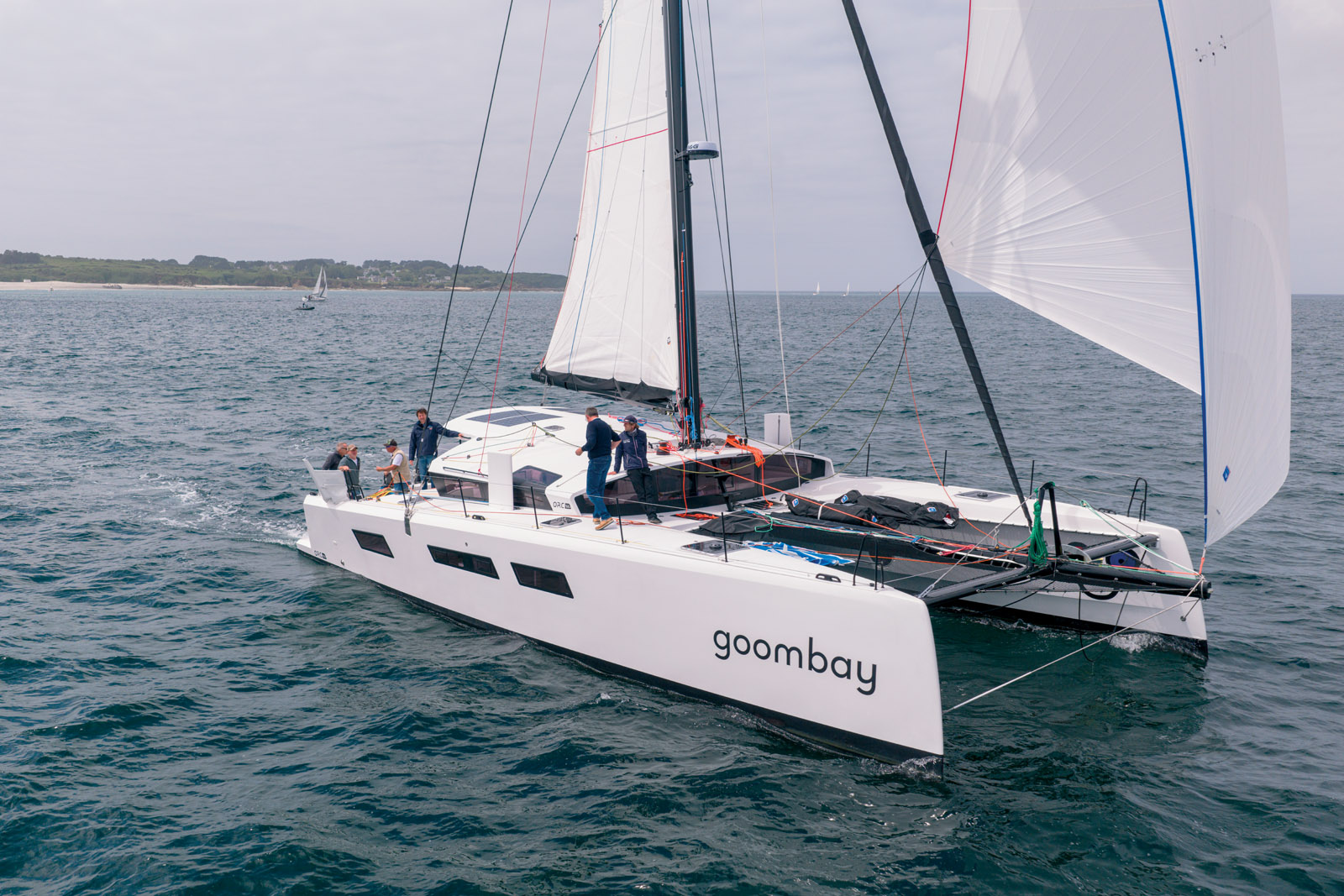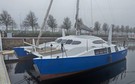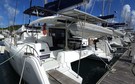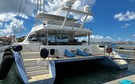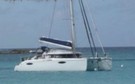
Ten years after the launch of the TS5 (today known as the ORC 50), ORC Catamarans is now a member of the Grand Large Group, and it continues to evolve its iconic model. Brighter, more welcoming, and better suited for family use, the new ORC 52.2 remains true to its heritage. A lightweight hull, high-end construction, tiller steering, and daggerboards remain at the heart of a design that continues to prioritize the joy of sailing over the pursuit of volume at any cost.
Infos pratiques
- Le chantier : ORC52.2
- La fiche technique
-
 Découvrez notre vidéo exclusive
- Financez votre ORC 52.2
- Assuez votre ORC 52.2
- Articles autour du ORC 52.2
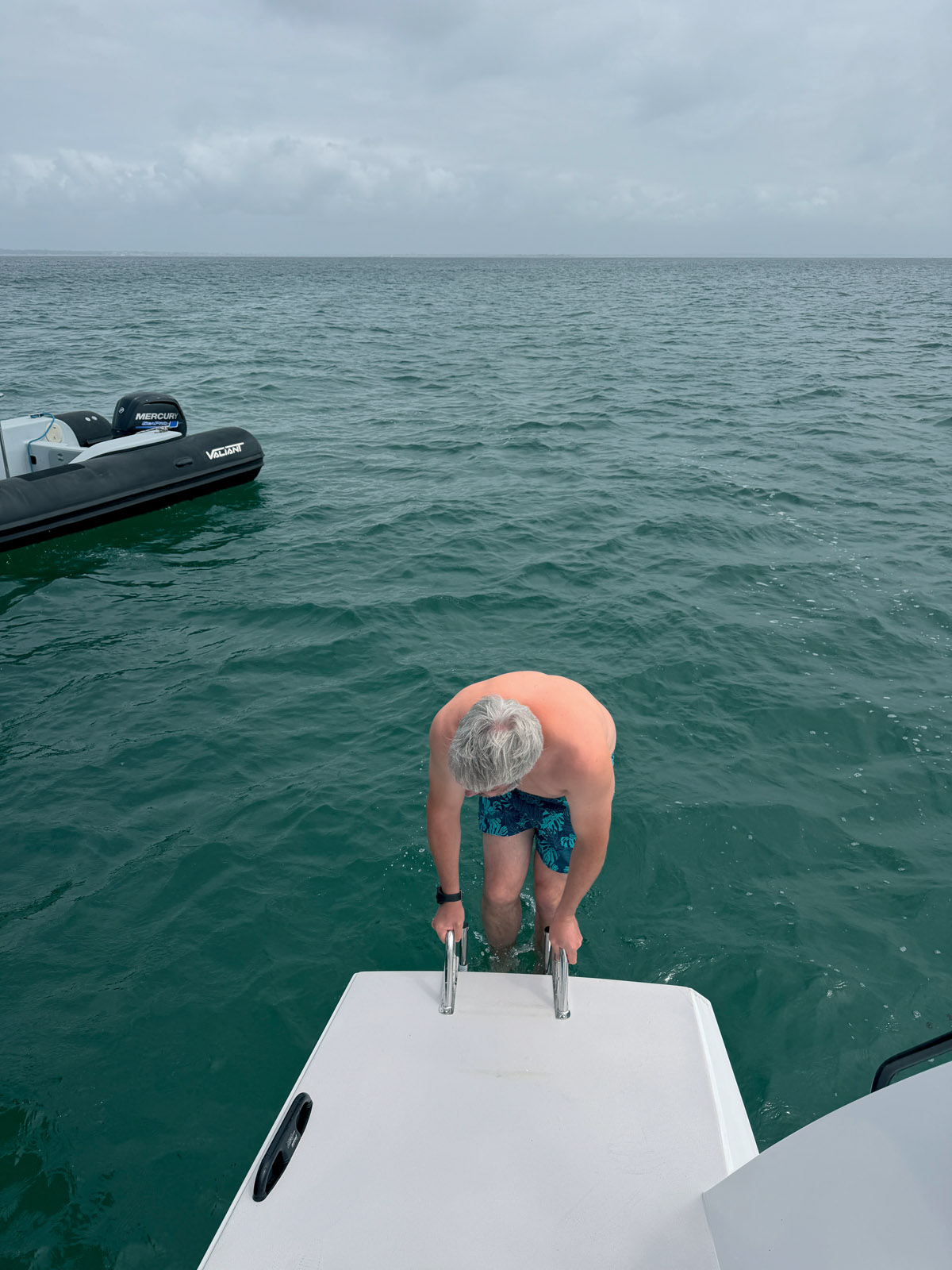
Conditions : 8 to 10 knots of wind, slight sea state, cloudy sky
More of an Evolution Than a Revolution
There are multihulls you discover for the first time. Others you recognize immediately. The ORC 52.2 undoubtedly belongs to the latter category. From the very first moments spent on board, the connection to the TS5 - which later became the ORC 50 - is immediately apparent. The lines have gained maturity, the interior layout has become more refined, and the saloon is brighter, but the spirit of the design remains intact. The shipyard never sought to break with a form-ula that had more than proven itself - it simply evolved it. And this evolution is in response to a market reality. Over the past decade or so, cruising catamarans have gradually prioritized living space, amenities, and comfort at anchor, at the expense of ever-increasing displacement. The ORC 52.2 is charting a different course. Its ambition remains that of a true seagoing catamaran, capable of covering miles quickly while remaining a pleasant place for a family to live. The shipyard sums up this philosophy with a simple phrase: “Same edge. More maturity.” After spending the day aboard in the waters of southern Brittany, it’s hard to think of a better definition.
Ten Knots of Wind: A Perfect Litmus Test
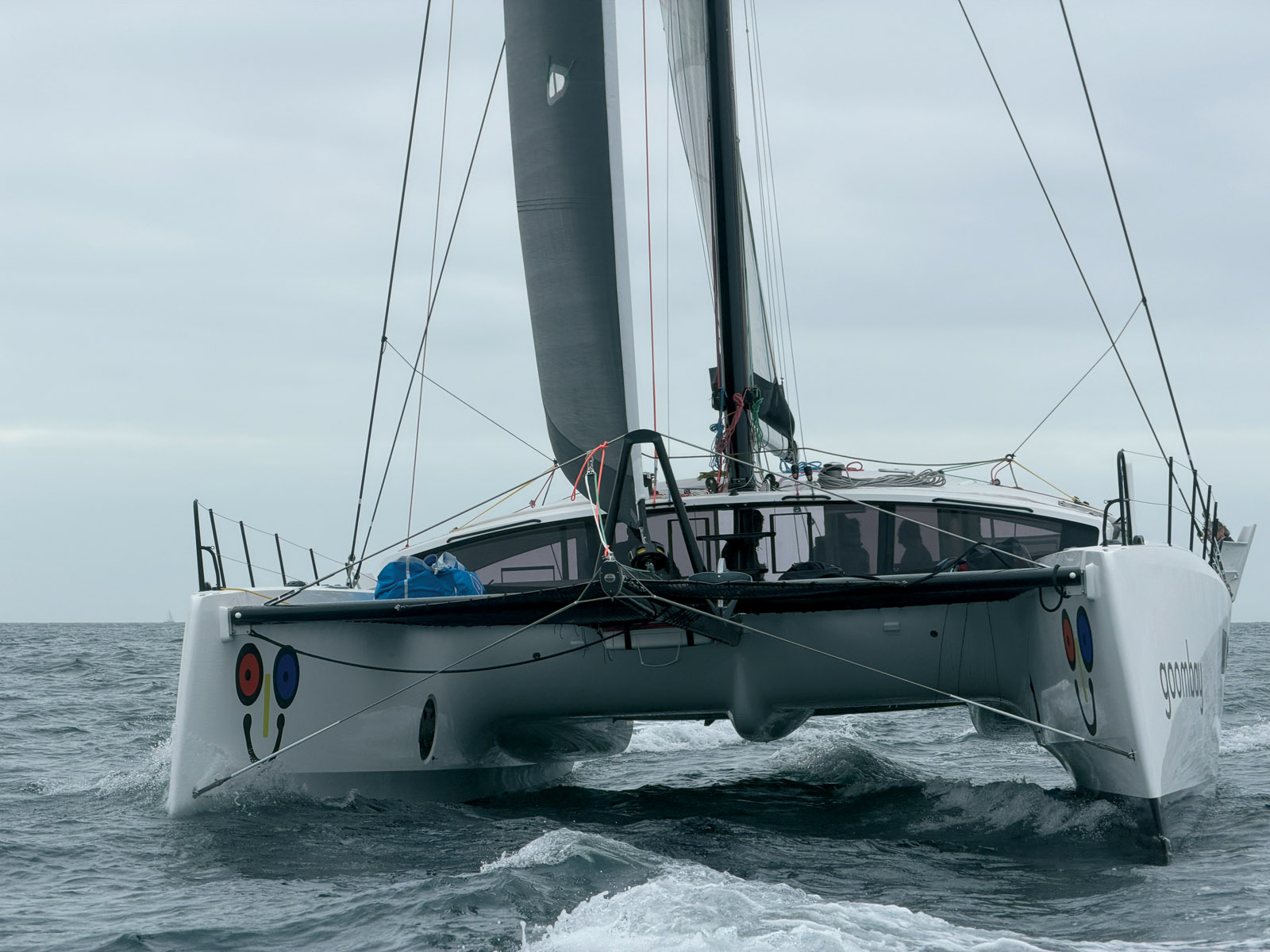
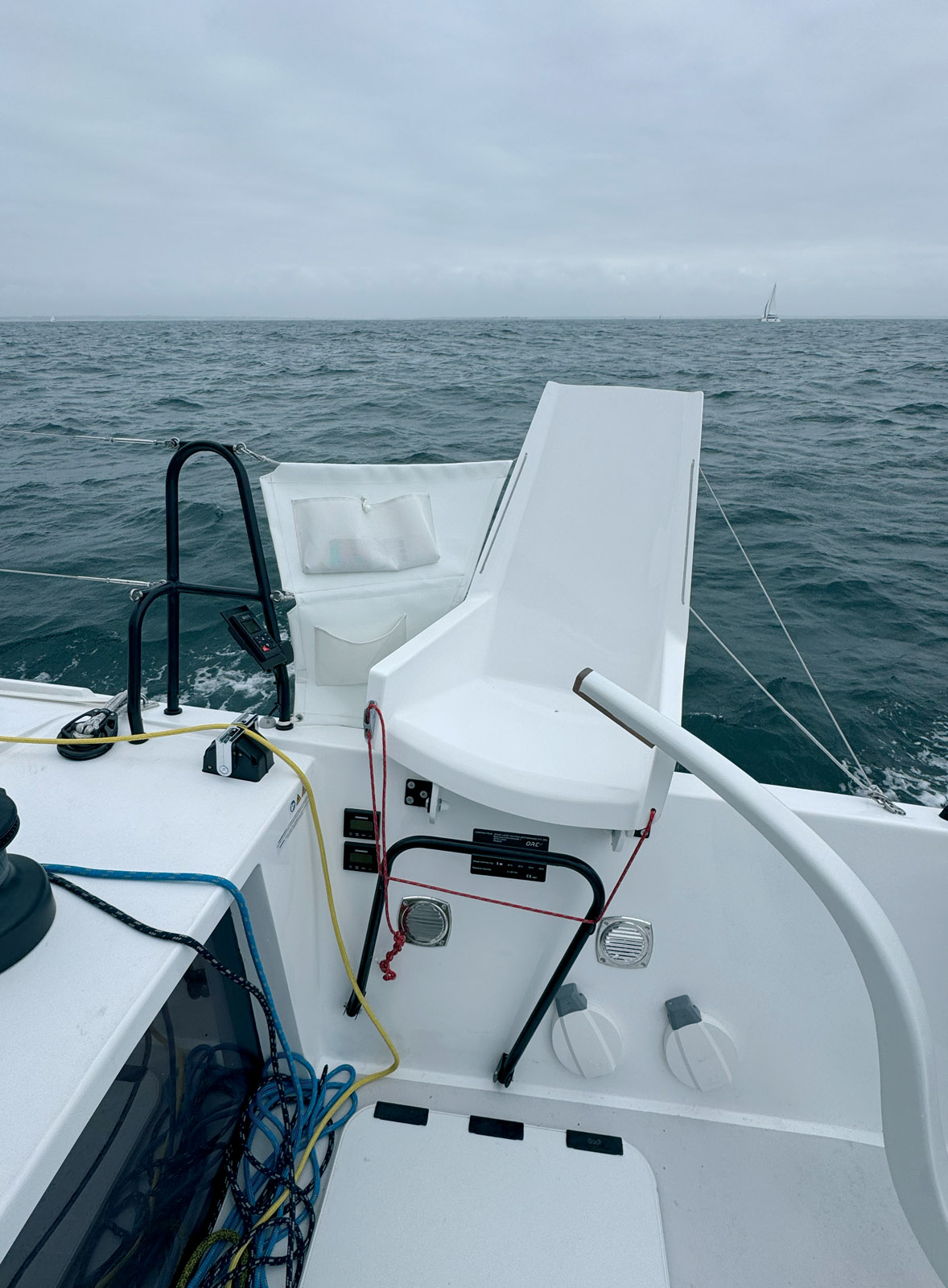
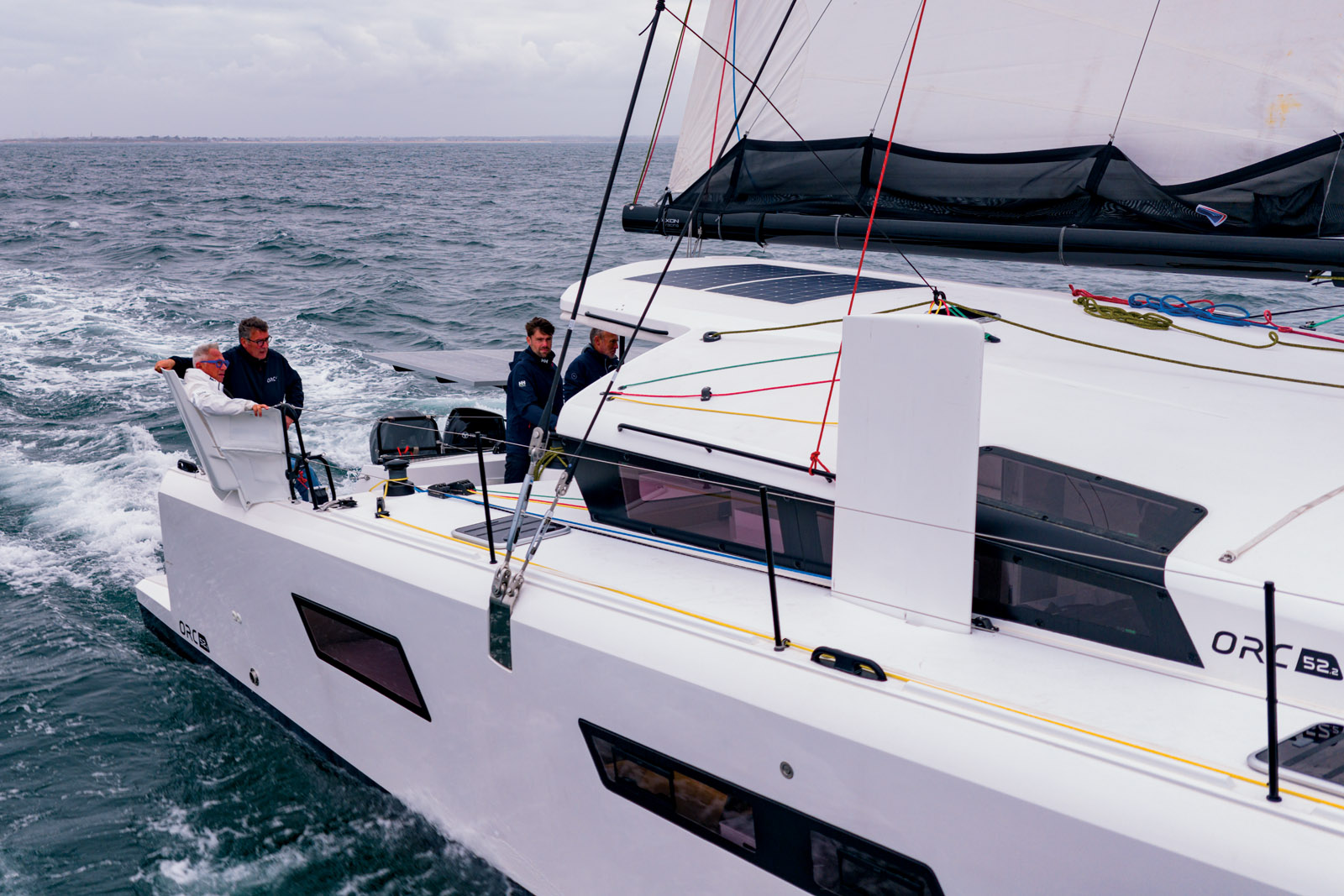
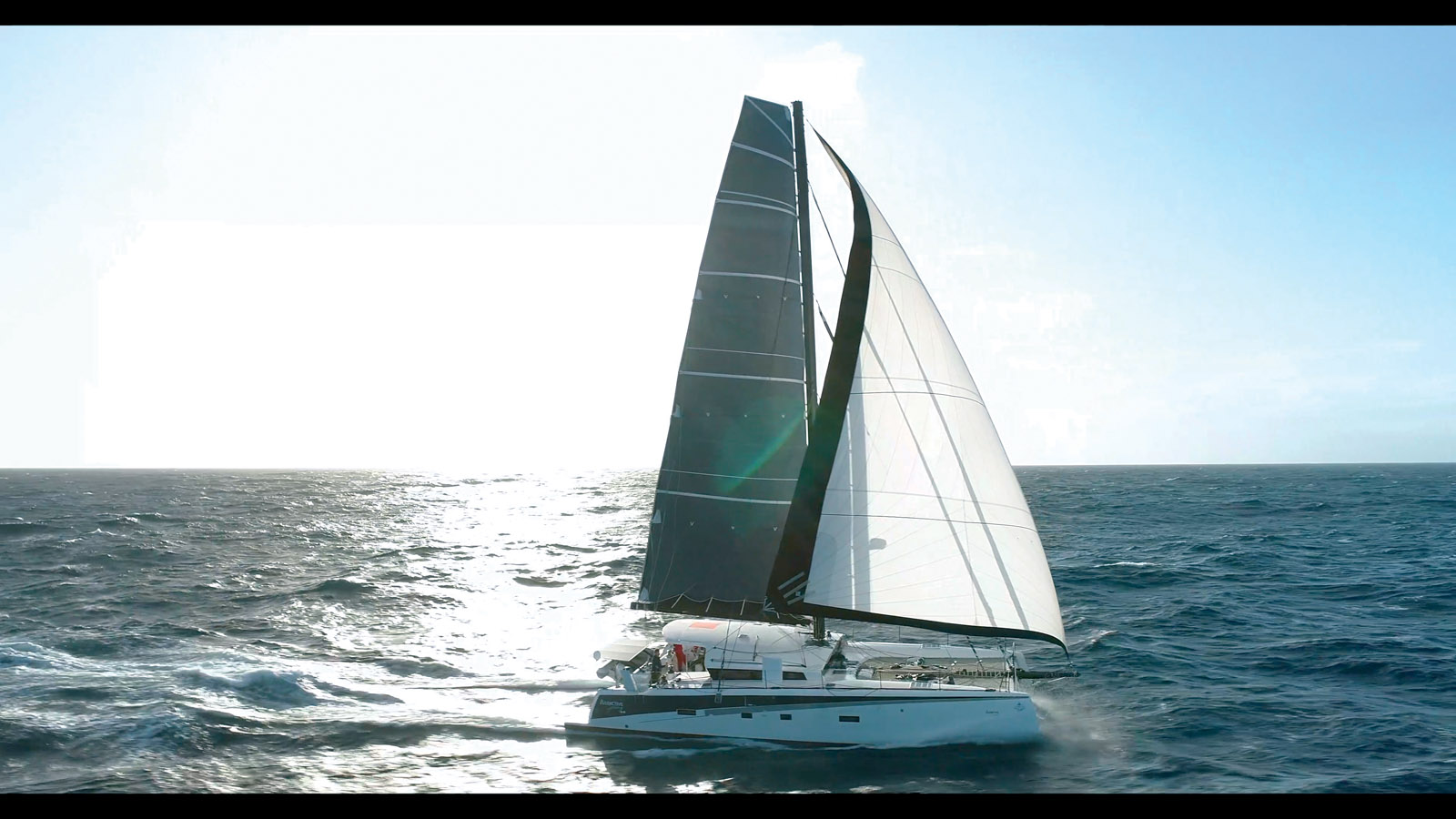
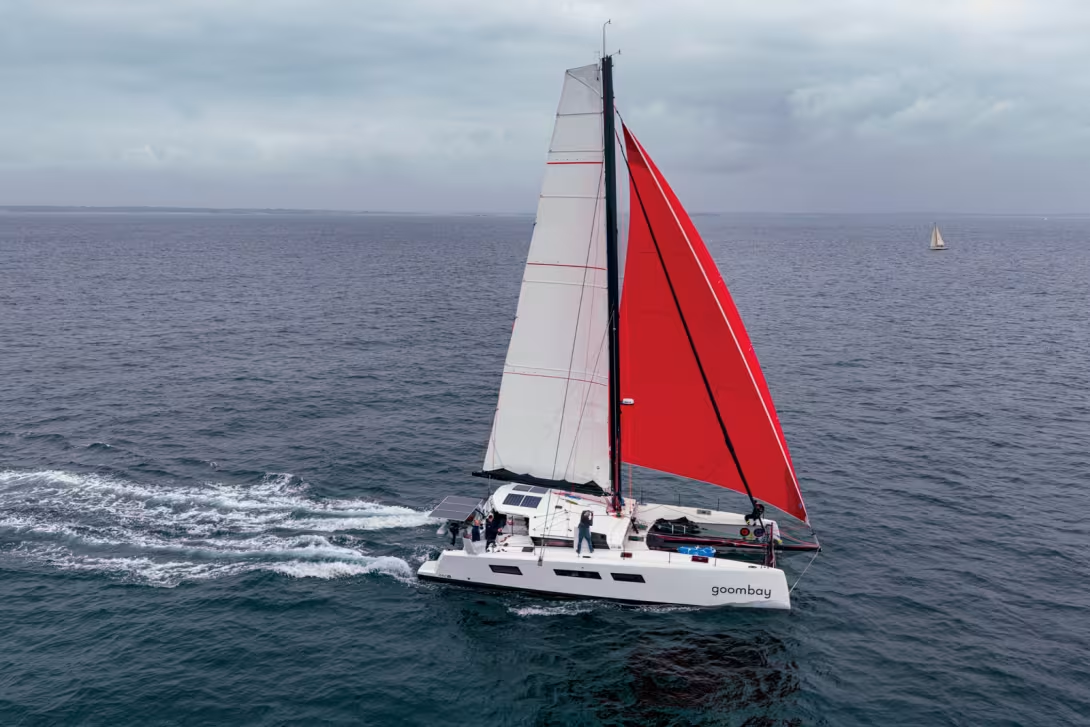
The conditions of our test, however, were far from ideal for showcasing a catamaran whose reputation rests above all on its performance. A mere ten knots of wind, a slight sea state, and a uniformly gray sky… more reminiscent of the North Sea than the waters off Lorient. And yet, these conditions ultimately serve as an excellent litmus test. For while a fast multihull naturally impresses in twenty knots of wind under a gennaker, it is in light airs that the quality of the hull, the care taken with the appendages, and the boat’s overall balance truly reveal themselves. From the very first upwind legs, the ORC 52.2 accelerates without any lag and settles into a speed very close to that of the true wind. Despite the upgrades made to the catamaran, the feel remains instantly familiar. This little rocketship’s temperament has lost none of its character, and this was by no means a given, as the builder could have been tempted to tone down the model, which had at times been pushed beyond its limits.
More Mature Without Compromising its DNA
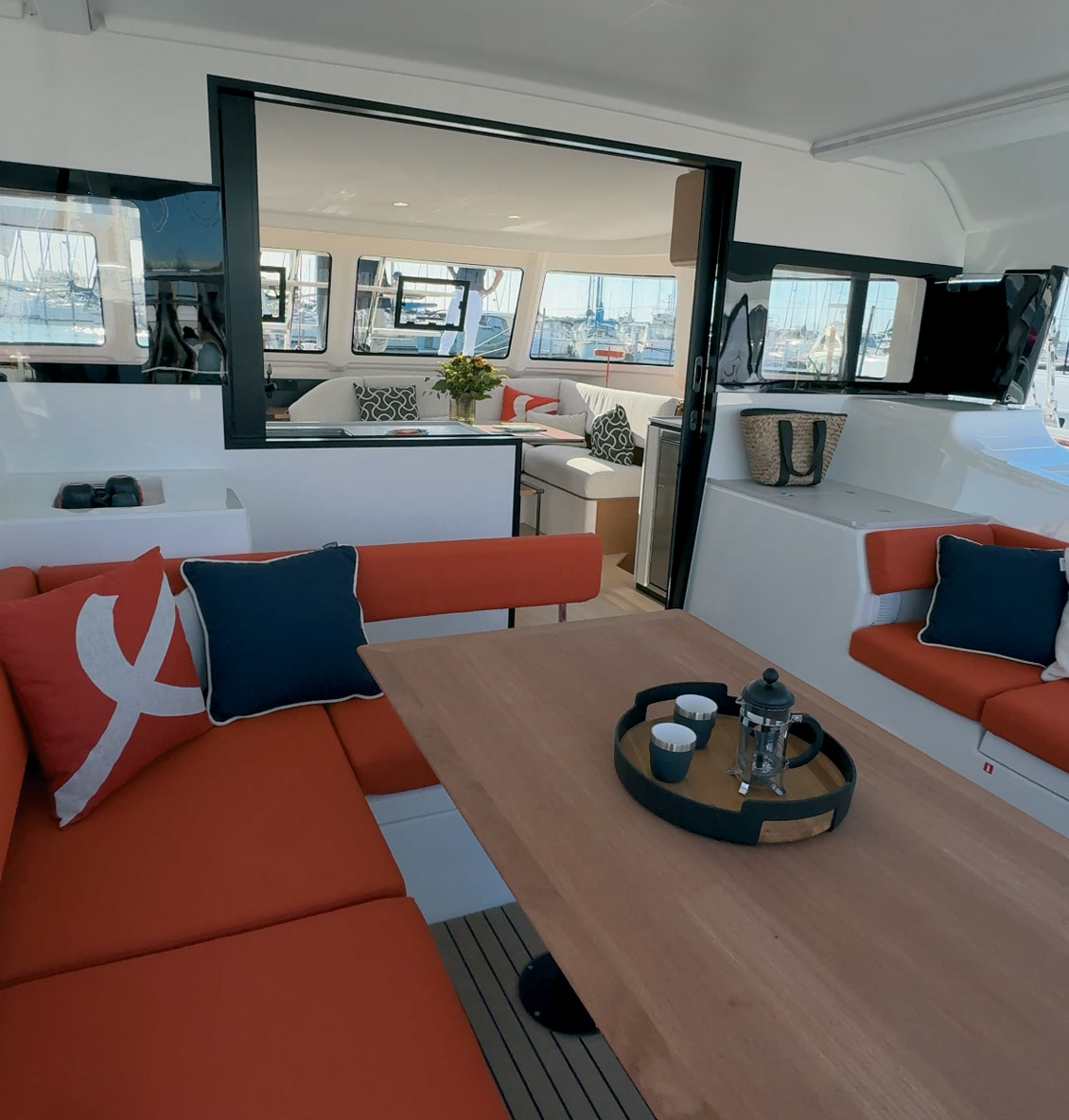
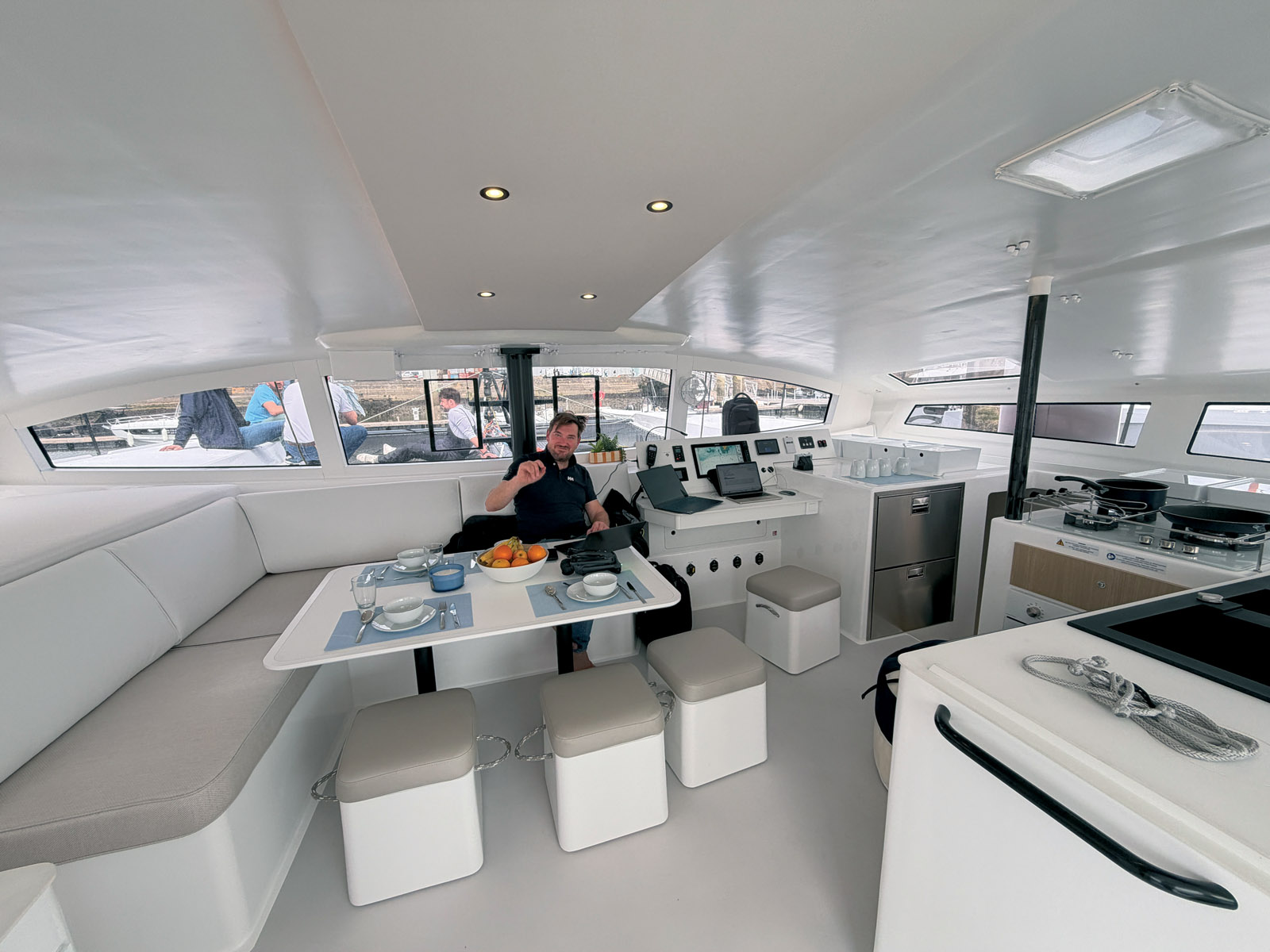
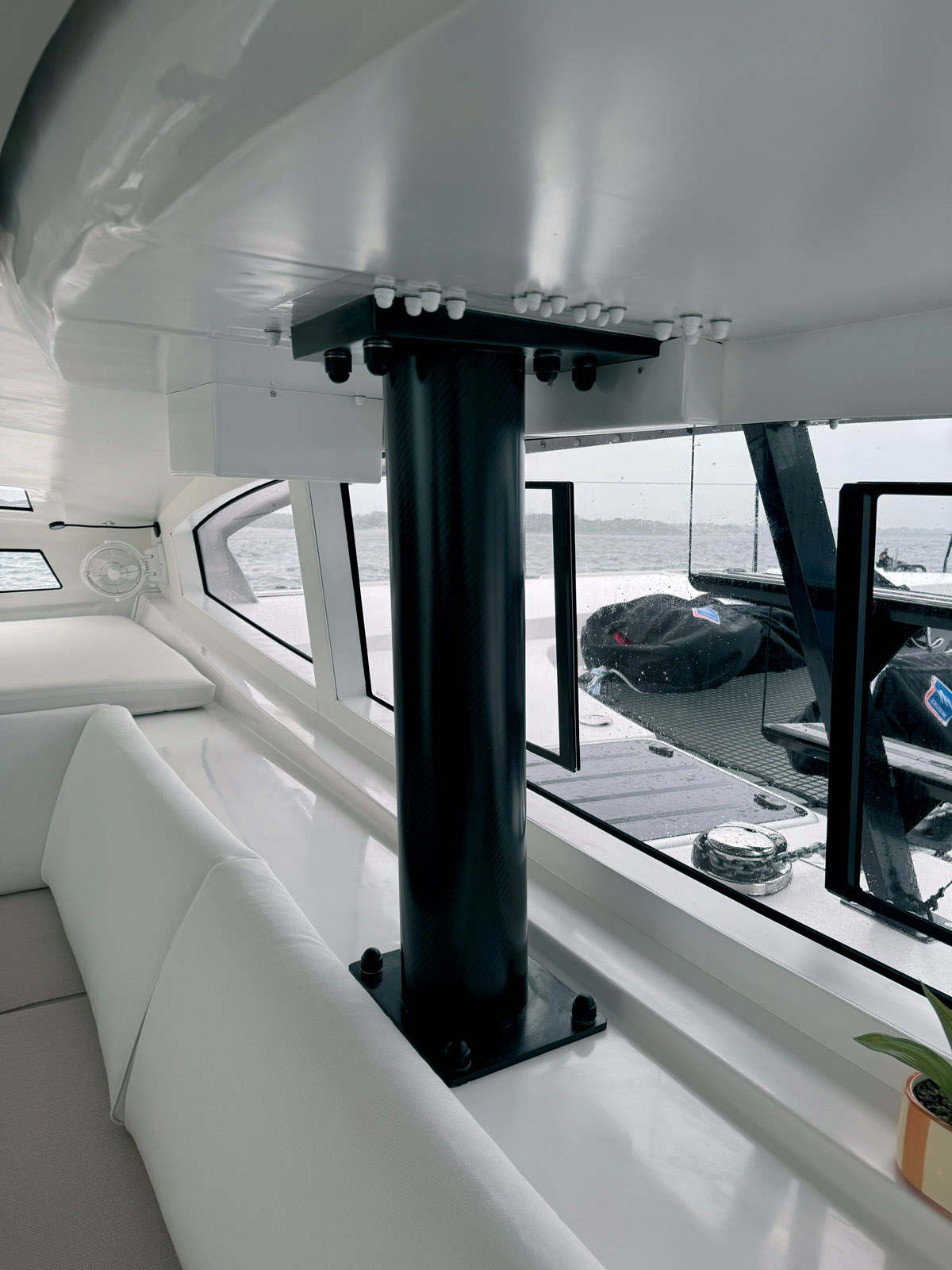
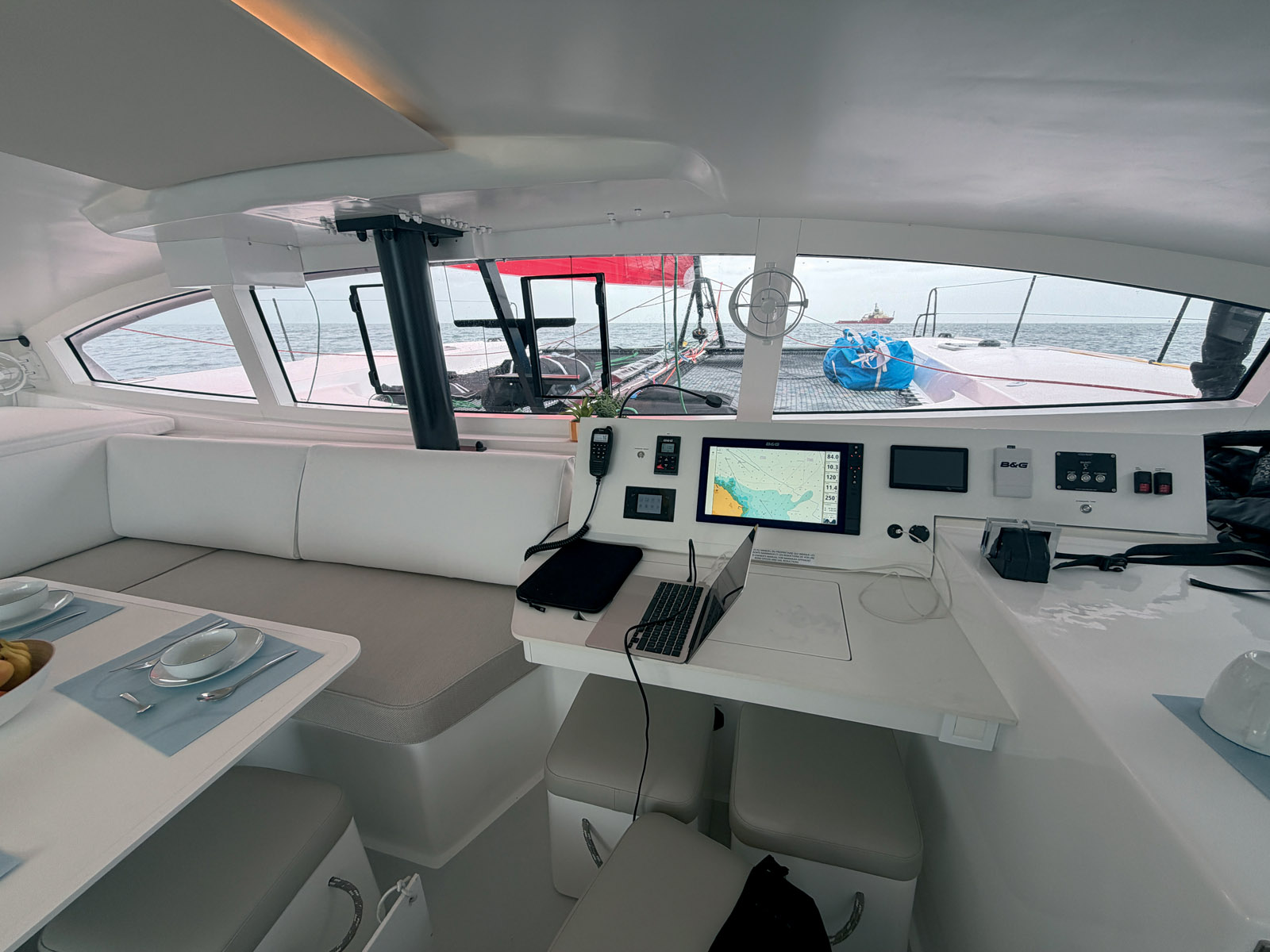
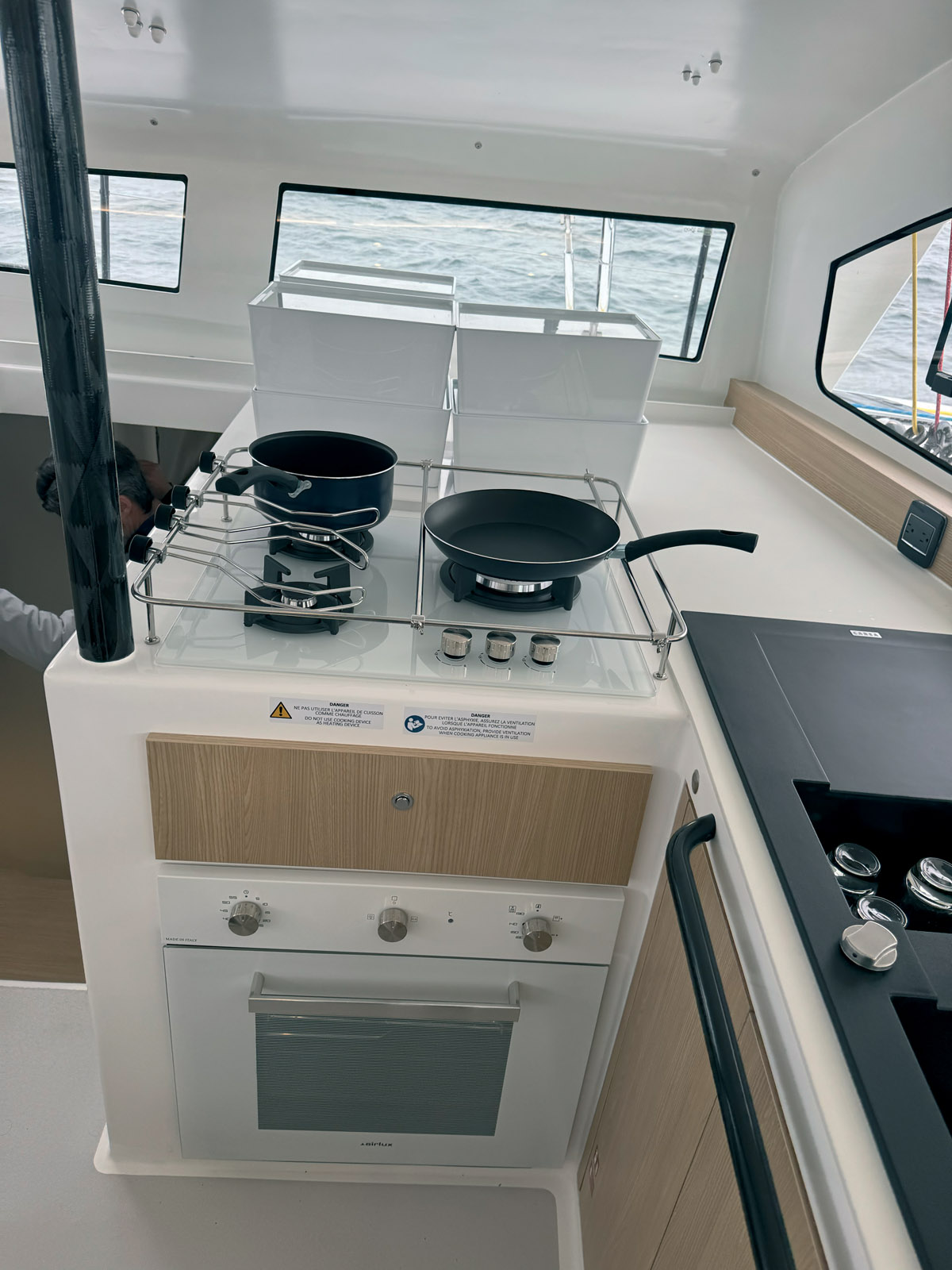
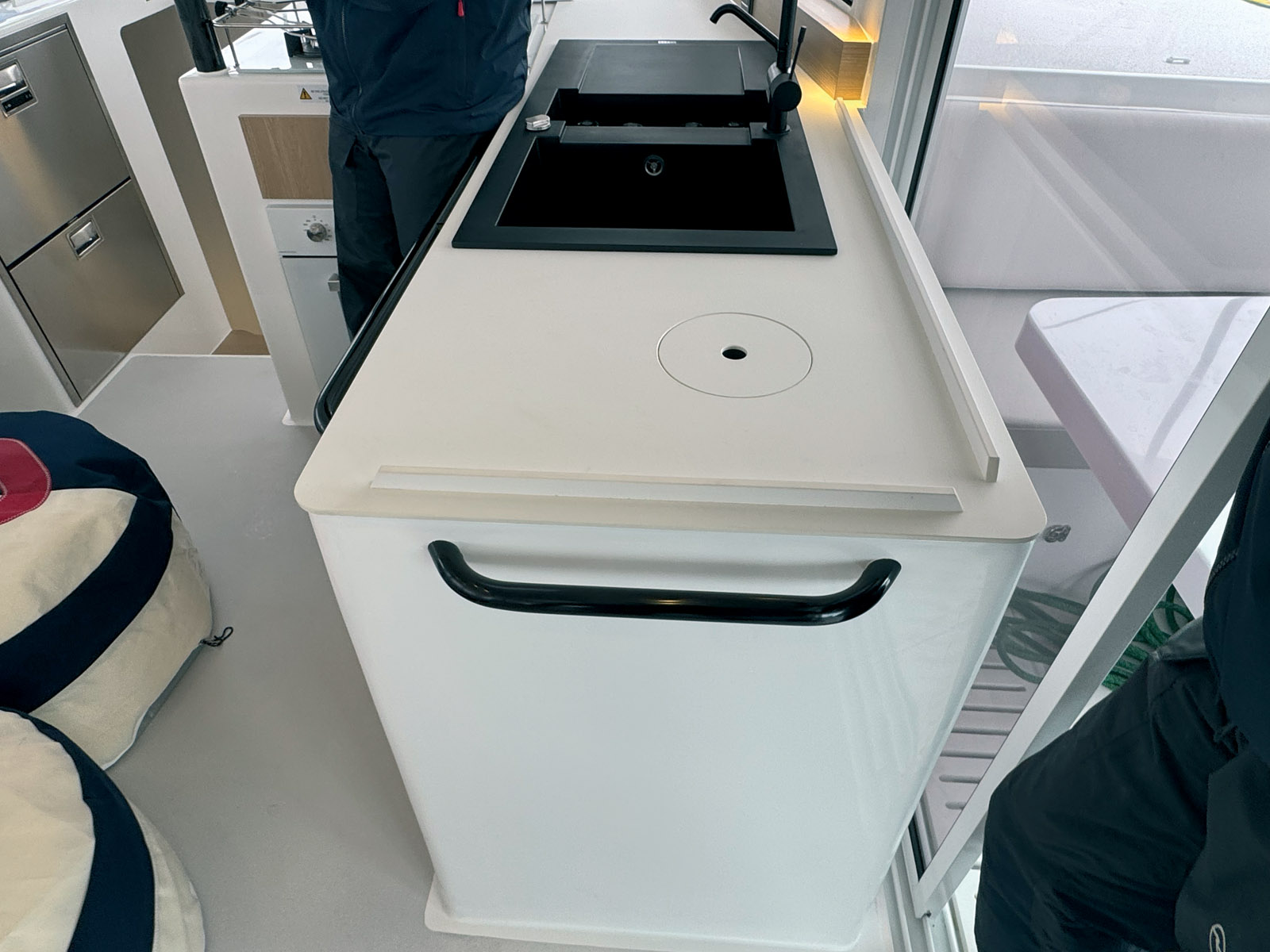
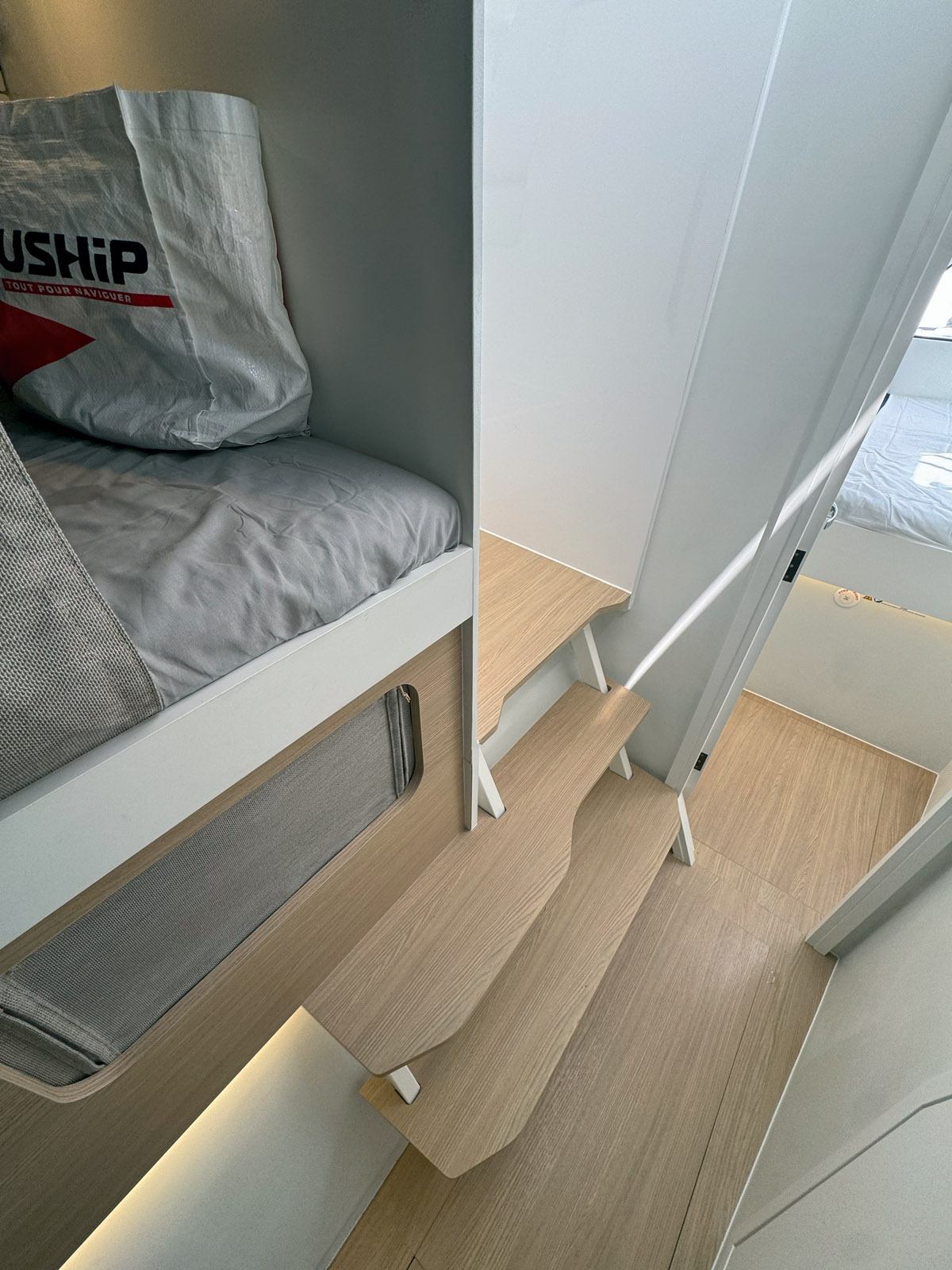
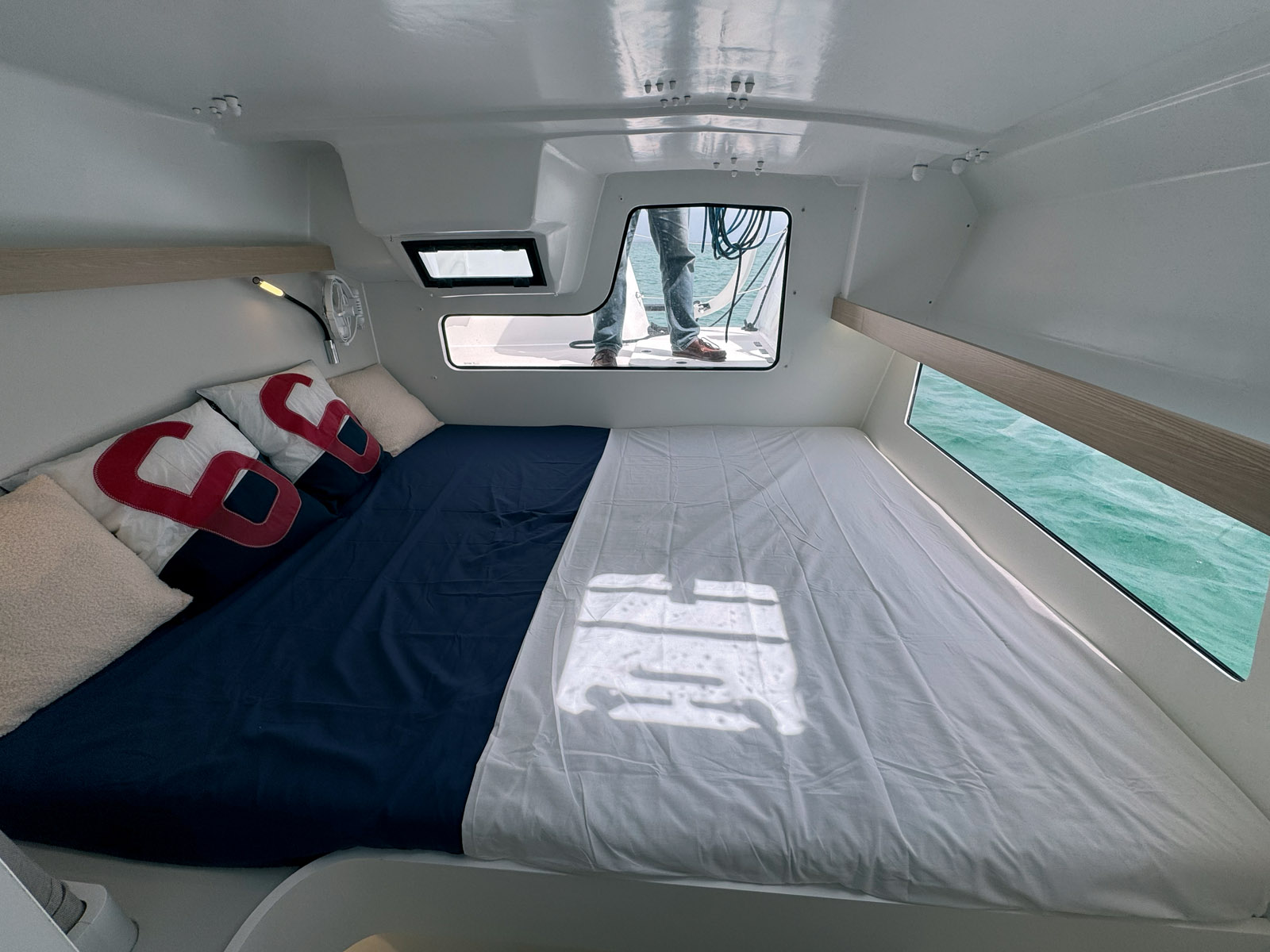
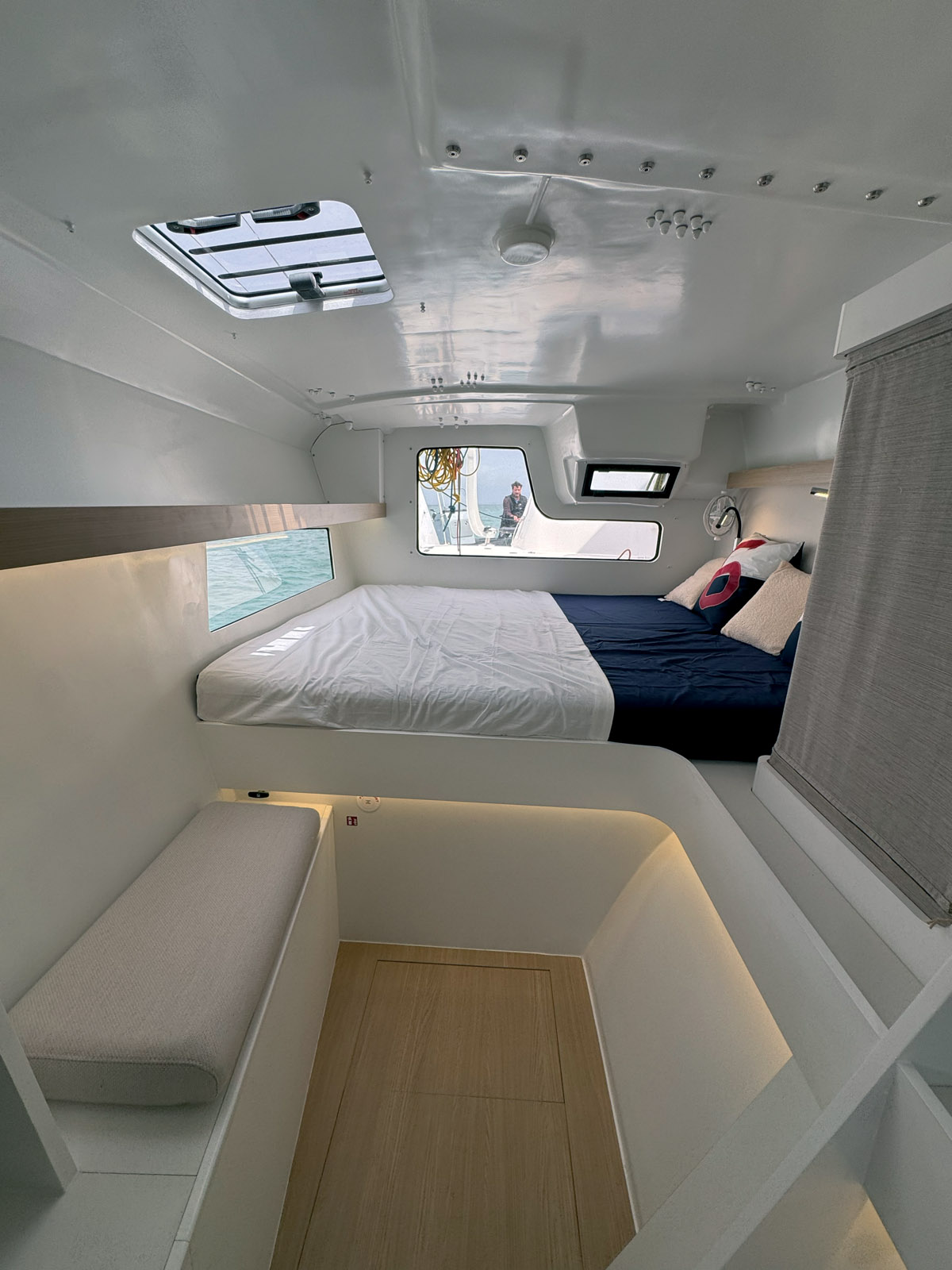
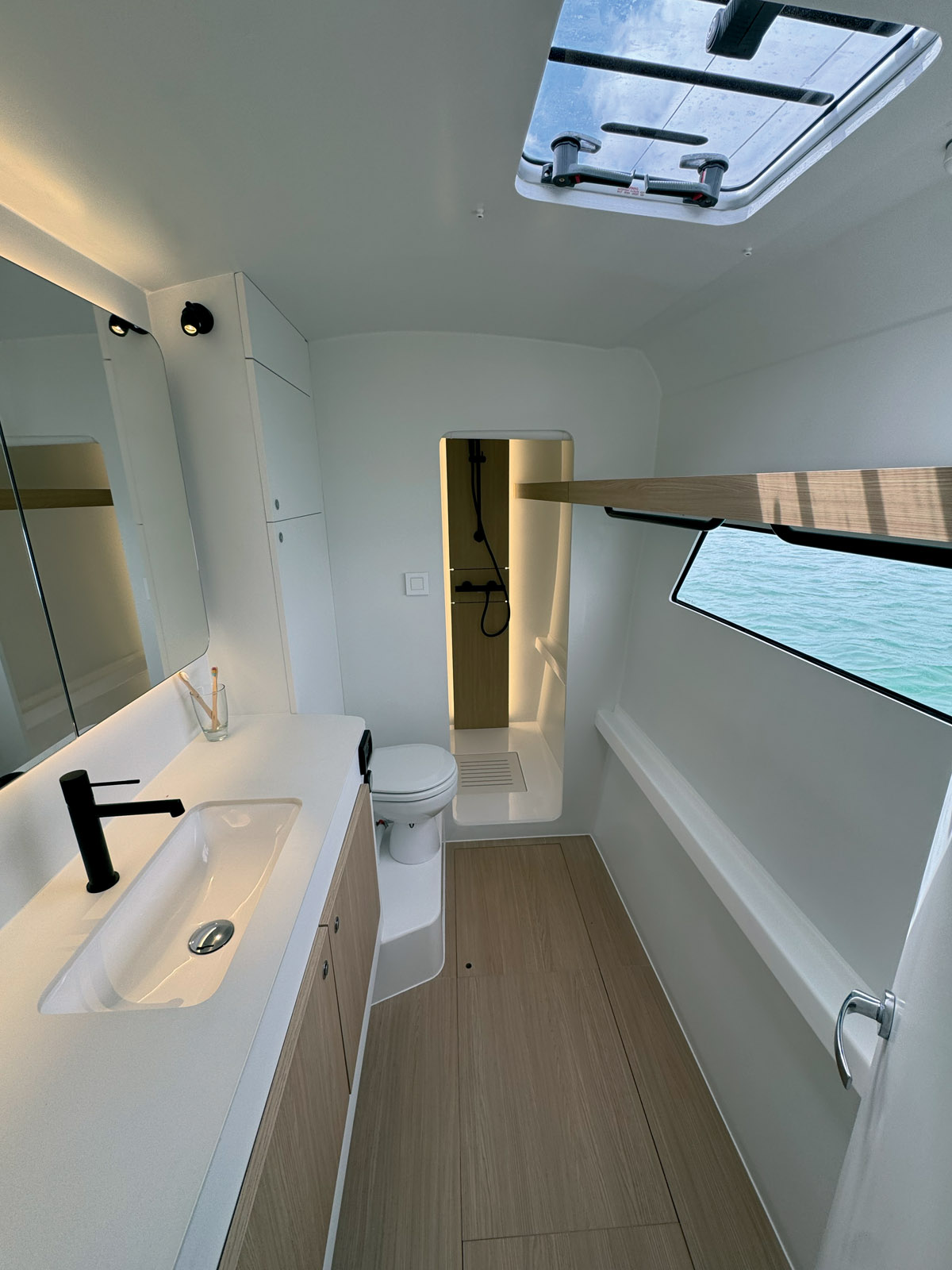
The first noticeable change is in the interior layout. The TS5 boasted a certain minimalist style inherited from offshore racing: a bright and functional interior, but with- out any unnecessary compromises for comfort. With the ORC 52.2, ORC has sought to make the multihull more welcoming without abandoning its philosophy. To achieve this, the shipyard entrusted the evolution to Darnet Design. Their work has gone above and beyond mere cosmetic changes: it addresses the perception of space, circulation, materials, and lighting. The goal is clear: to make the boat more pleasant to live on day- to-day without unnecessarily adding weight to the hull - an additional weight of 200 kg (440 lbs) was all that was permitted. The result is particularly impressive. The previous hull portholes have been replaced by three large openings that significantly increase the amount of light in the cabins while visually lightening the boat’s silhouette. Added to this is a glass panel at the front of the coachroof, which brings more natural light into the saloon and improves forward visibility. The galley, the seating, and the storage spaces have also been improved. While the saloon feels cozier, it retains its distinctly nautical character. You continue to live in harmony with the sea rather than isolating yourself from it. The most noticeable improvement is undoubtedly the access to the hulls, whose ergonomics have been redesigned to make moving around on board easier. This move upmarket is interesting because it does not rely on an accumulation of equipment or furnishings. The added comfort stems primarily from better use of space, improved circulation, and perceived quality.
Well-Targeted Technical Evolutions
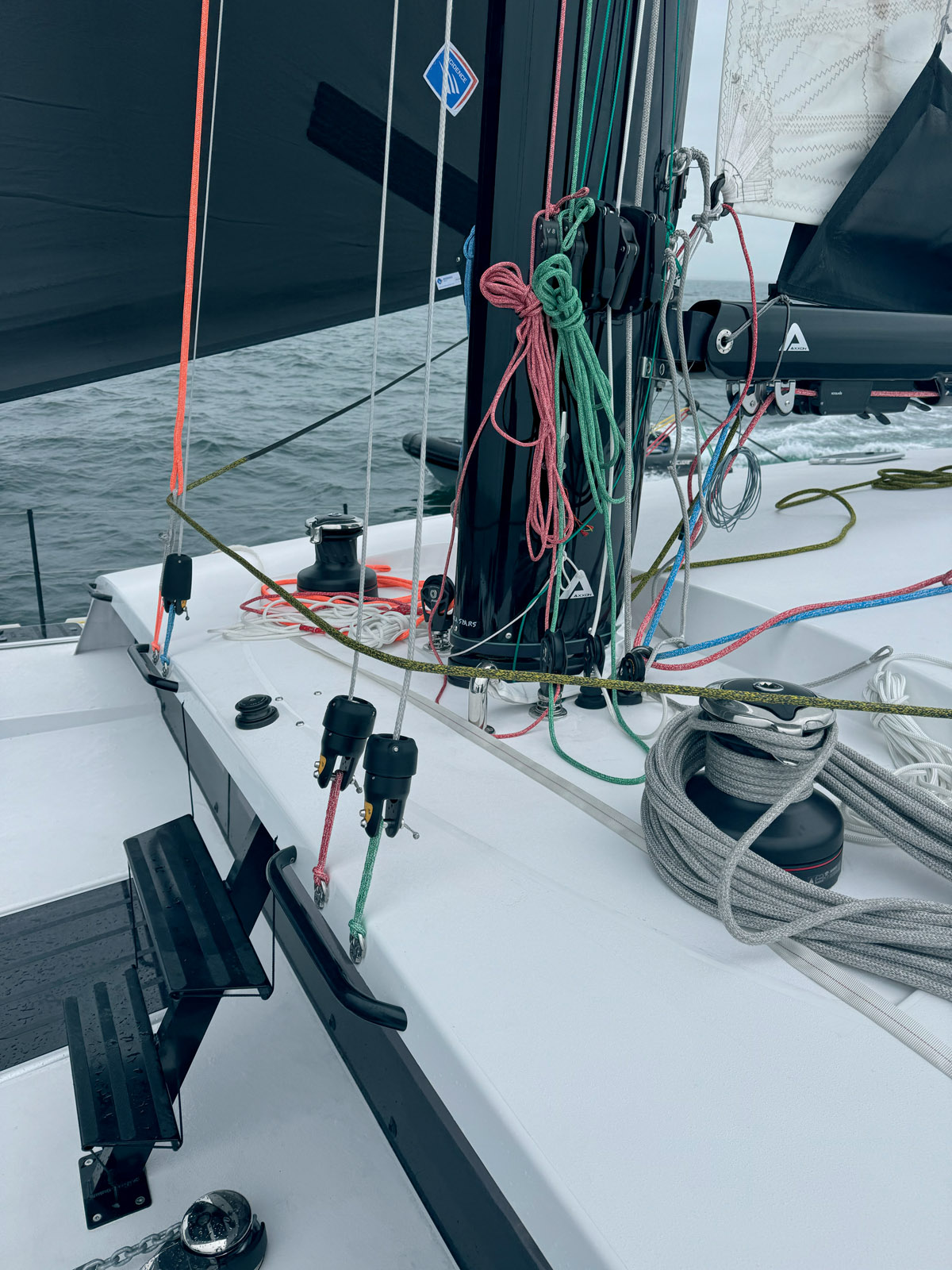
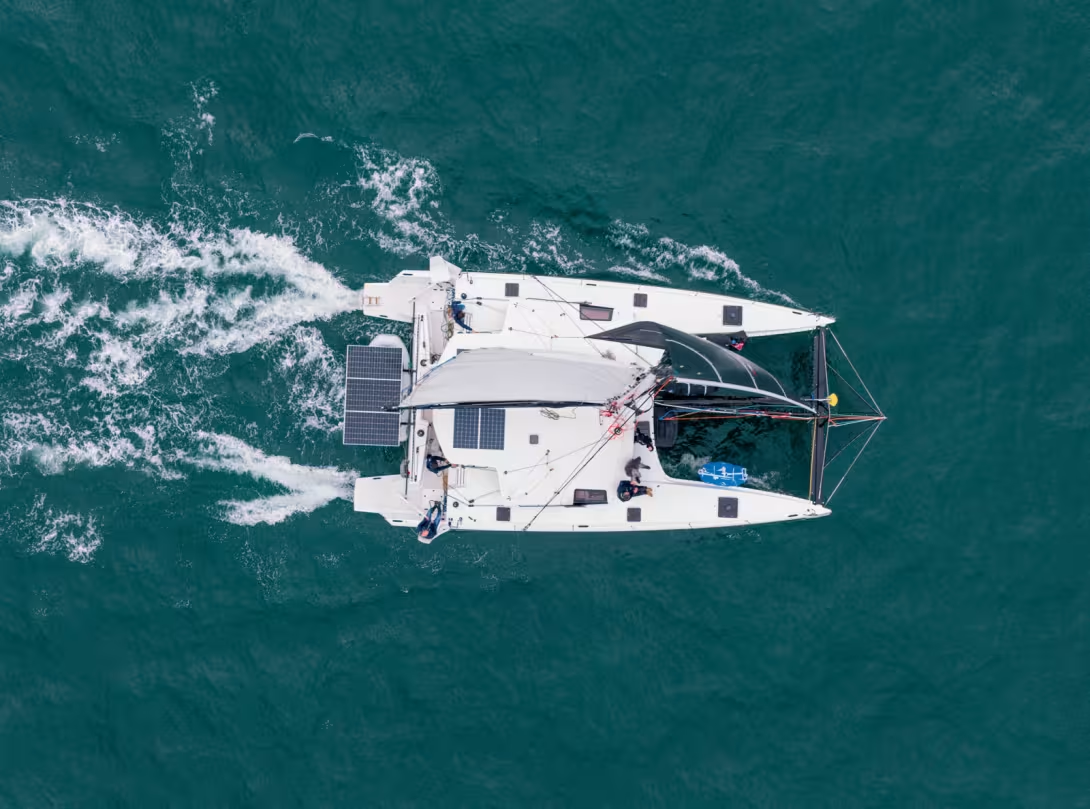
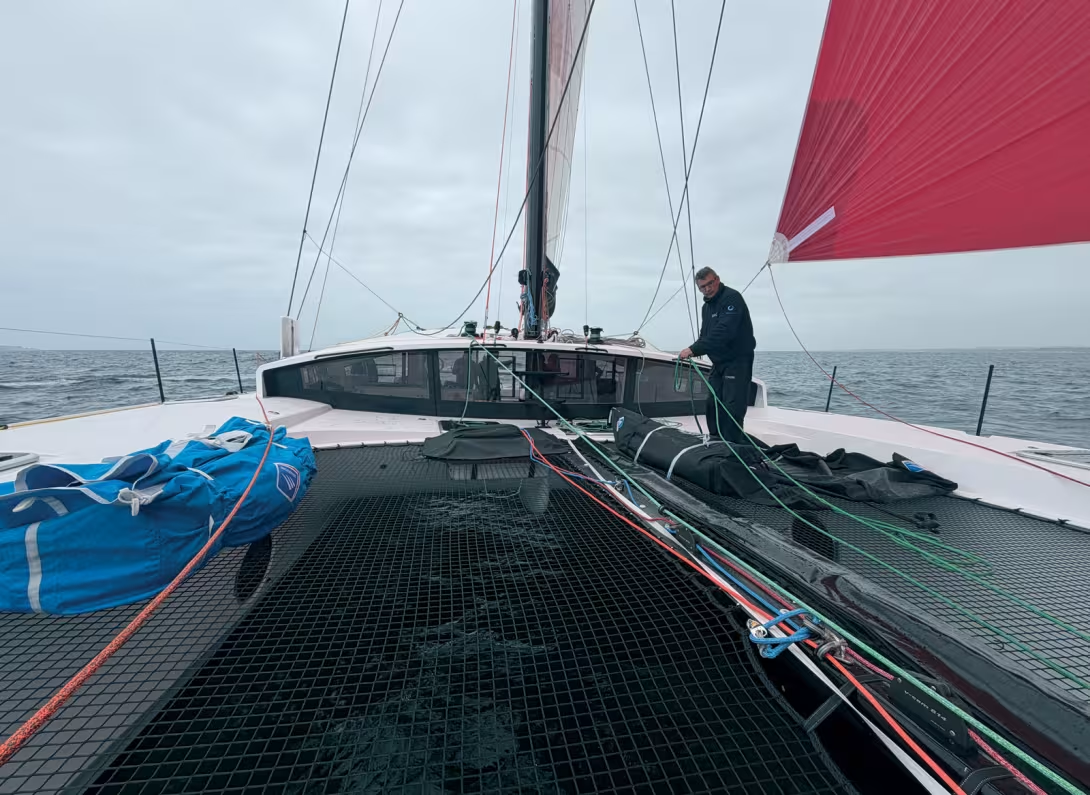
The most visible changes involve the sugarscoops, now standard equipment. Their design has been revised to improve the flow of water behind the hulls. ORC 50 owners were familiar with this minor flaw in the original design, which sometimes resulted in a slightly turbulent wake. Unfortunately, due to a lack of steady wind, our test wasn’t going to allow us to fully assess the benefits of this change. The shipyard has also redesigned the daggerboard and well assembly. The new boards, which are slightly shorter, offer more progressive handling while facilitating mass production thanks to the use of daggerboard wells already developed for the Outremer 45. Given the conditions on the day of our test, this change remained virtually imperceptible. The catamaran maintained excellent grip upwind and never gave the impression of suffering leeway. The various helmsmen on board quickly all wore the same smile. One of the most subtle changes, however, is one of the most interesting. On the early ORC 50s, the Lewmar hatches providing access to the engine compartments were frequently walked on as they were located directly along the path between the sugarscoops and the cockpit. Despite their quality, they sometimes had a tendency lose their watertight seal over time. The yard has now replaced these with composite hatches that are much better suited to the intensive use in that area. The deck layout has also been refined with discreet changes. The sheet track has been replaced by an equally effective three-dimensional system, while two built-in steps at the front of the coachroof make it easier to access the mast. The hardware features high-quality equipment from Harken, Lewmar, and Karver, while all the rigging work carried out by the shipyard reflects the same attention to detail. I’m pleased to find a design philosophy I already appreciated on my ORC 50: the halyards are still worked at the mast. While this layout does require leaving the cockpit to take in a reef or hoist a headsail, it avoids the multiple blocks that often clutter the cockpits of large modern catamarans. As a result, the cockpit remains remarkably uncluttered. The only maneuvers performed there concern the essentials: mainsheet, daggerboards, and headsail sheets. This philosophy will undoubtedly not suit all recreational sailors. It will, however, appeal to those who still view sailing as an activity in its own right rather than merely means of getting oneself from one anchorage to the next. If I had to mention just one drawback, I would simply regret that the German Sheet system (adopted by several ORC 50 owners) was not included. It significantly facilitates control of the traveler under heavy load and is a real asset when conditions get more challenging.
At Sea: Still a True ORC
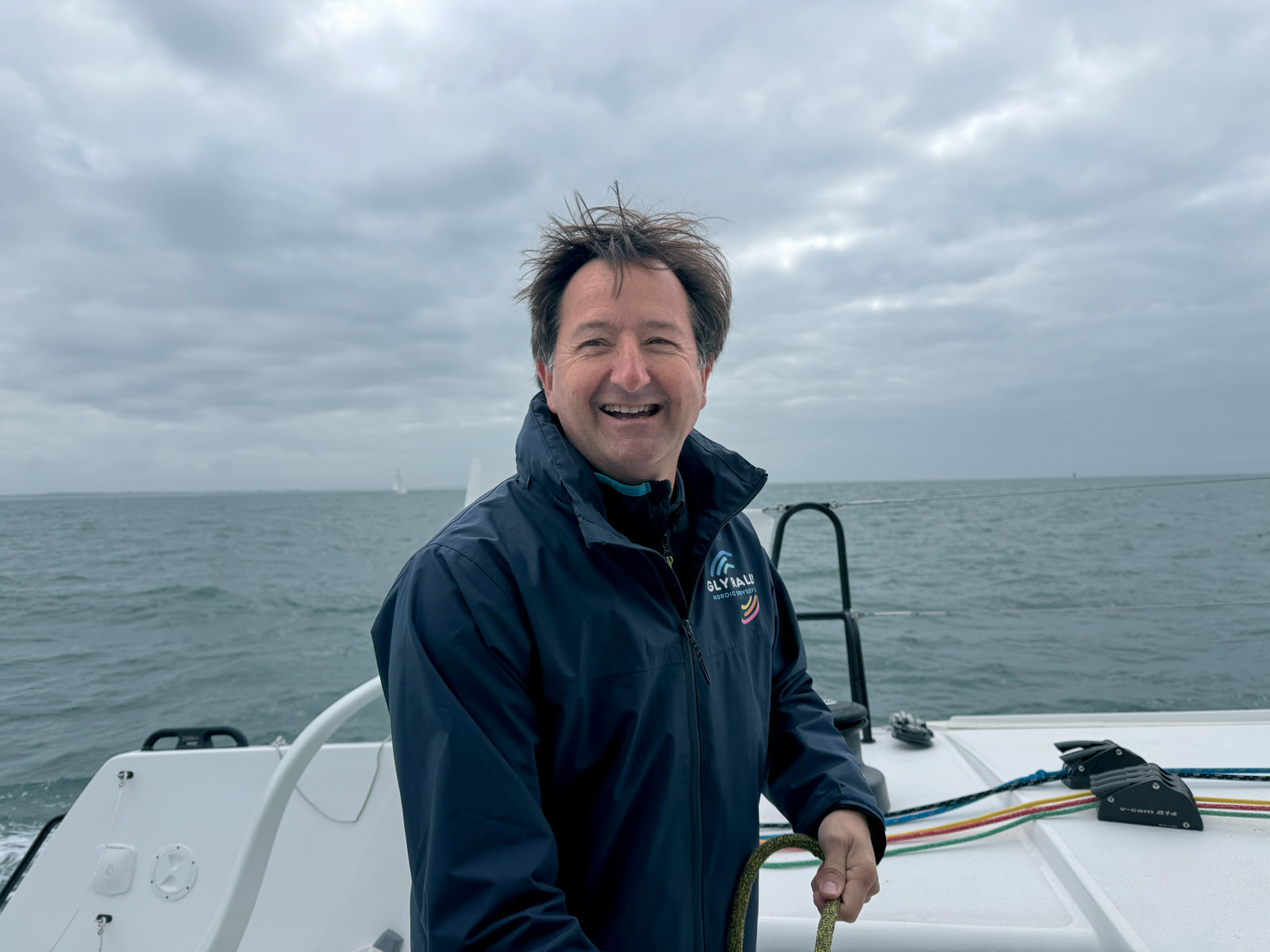
The steady 10-knot wind we experienced through- out our time on board obviously wasn’t going to allow us to gauge the catamaran’s full potential. However, it did provide an excellent indication of its overall balance. Because when a multihull accelerates naturally in light airs (without inertia or sluggish- ness), you know right away that the fundamentals are in place. From the very first leg to windward, the ORC 52.2 demonstrated what has always made this platform famous. The multihull moved freely, accelerating at the slightest gust, and quickly settling into a boatspeed close to that of the true wind. This is a quality that has become rare enough on an over-50-foot catamaran to warrant special mention. The carbon tiller plays a major role in the enjoyment of sailing. Here, it is not merely an aesthetic choice but a true piloting tool. The boat’s responses are immediately felt in the helmsman’s hands. You can sense the push on the daggerboards, the balance of the sails, and the slightest variation in pressure. This constant awareness of the boat allows you to naturally trim the sails and adjust the settings to effortlessly maintain speed. The ORC thus highlights what sets a lightweight multihull apart from a vessel more geared toward residential comfort: in light airs, it simply keeps sailing. The concept of Freesailing, dear to the shipyard, takes on its full meaning here. More than a quest for maximum speed, it’s about prolonging the pleasure of being under way and under sail. While many cruising catamarans are firing up their motors as soon as the wind drops, the ORC continues to cover the miles. We bore away to hoist the gennaker. Our test boat was equipped with a fractional sail, slightly less powerful than the masthead gennaker on my old ORC 50, but compatible with sailing with a reef without the risk of losing the rig. At about 120° to the true wind, the handling is exemplary. The catamaran gradually settled into the groove, accelerating steadily, and reached a speed very close to that of the wind. Off Ile de Groix, the few monohulls in range quickly disappeared in our wake.
A Multihull that Lets you Grow
Xavier Desmarest, co- founder and CEO of the Grand Large Group, emphasizes the progressive nature of sailing aboard the ORC 52.2, and he’s right - that’s probably where this platform’s greatest strength lies. Not all owners will immediately tap into the full potential of such a high- performance catamaran, and that’s alright. The ORC 52.2 handles cautious sailing perfectly well. You reduce sail early, maintain a good safety margin, and gradually discover how the daggerboards work, what the loads are on the rig, and how the boat responds. Then, the more you sail, the more your confidence builds. You carry a little more sail, fine-tune the settings, dare to stay under sail longer when the wind drops, and gradually discover a second, much higher-performance side to the boat. Few multihulls today offer this dual character. Reassuring enough for a blue water cruising family, the ORC 52.2 also holds the qualities required to satisfy an experienced sailor who wants to continue improving.
Conclusion
The ORC 52.2 doesn’t revolutionize a concept that has already proven itself. It evolves it intelligently. Brighter, warmer, and more inviting, it meets the expectations of a broader audience without sacrificing what has defined this catamaran’s character since it started life as the TS5: lightweight construction, a rigid platform, an exceptionally responsive helm, and a genuine ability to go fast, for long periods, and under sail. This evolution is all the more interesting because it never takes the easy way out. While many cruising catamarans are caught up in a race for more space and amenities, the ORC 52.2 continues to prioritize seagoing qualities. Its added comfort stems more from improvements in ergonomics, lighting, and circulation than from an increase in displacement or a proliferation of domestic equipment. Of course, it’s not for every recreational boater. Those seeking first and foremost a floating home will find more spacious options elsewhere. On the other hand, sailors who place the joy of sailing at the heart of their experience will discover a remarkably well- balanced boat. The ORC 52.2 remains true to the philosophy that made the TS5 a success: offering the performance of a true fast cruising multihull while maintaining a level of comfort suitable for family cruising. Ten years after the concept’s first appeared, this evolution ultimately seems more like a natural progression than a revolution. And last but not least: the ORC 52.2 is offered at a pretty competitive price compared to fully equipped boats of the same length.
A Word from the Builder
“With the ORC 52.2, we didn’t set out to reinvent our catamaran. Our goal was to evolve it based on feedback from our owners: greater comfort, improved ergonomics, and an enhanced quality of life on board, all while maintaining the performance that defines the DNA of the range.”
A Word from the Designer
Evolutions by Darnet Design
Improvements to the companionways and technical access
Stainless-steel chainplates with fiber rigging
Potential that requires a minimum of experience to be fully realized
Technical Specifications
Architects: Barreau/Neuman
Interior Design: Darnet Design
Construction: glass/PVC/vinylester sandwich via infusion molding, carbon fiber structure
Length overall: 52’ (15.84 m)
Beam: 26’11” (8.2 m)
Standard displacement: 23,150 lbs (10.5 t)
Mainsail + upwind headsails: 1,568 sq ft (145.7 m²)
Powertrain: 2 x 40 hp
CE category: A12
Base price: € 1,100,000 ex-tax
www.orc-catamarans.com